

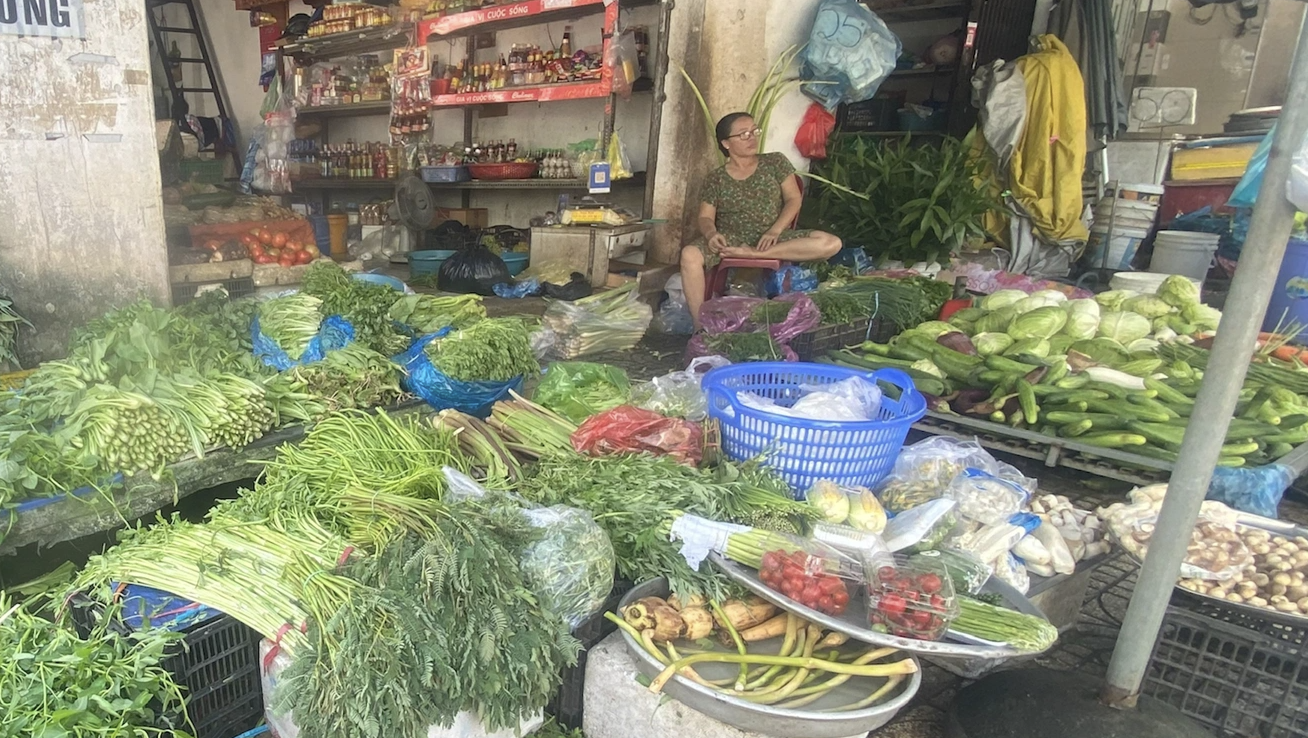
Vegetable prices in Vietnam’s largest metropolis have spiked by 40 to 50 percent in recent weeks as heavy rains and flooding disrupt supply from major growing regions, experts say. Analysts warn that this is not a temporary fluctuation but the emergence of a new price baseline for fresh produce.
Reporters at Pham Van Bach Market observed that vendors are now selling only 2-3 kilograms of each vegetable type, down from 5-10 kilograms a month ago. Prices for common vegetables have jumped sharply compared to last year: leafy greens at 35,000-40,000 VND per kilogram, green beans 60,000 VND, carrots 25,000 VND, and tomatoes 60,000 VND. Some items, like water spinach, have nearly tripled in price, reaching 40,000-45,000 VND per kilogram.
The spike is affecting both traditional markets and small grocery stores that source produce from surrounding provinces. Shop owners cite storm damage, flooding, and disrupted transport routes as key drivers of reduced supply and higher costs. Some specialty vegetables such as taro shoots and local leafy greens have seen moderate price increases of 10-20 percent.
Vendors report significantly reduced sales due to higher prices, with some returning unsold produce home for personal consumption. “In previous years, prices rose at most 10-15 percent during this season. Now a 50 percent increase is shocking for both sellers and buyers,” said a long-time merchant at Pham Van Bach Market.
At the Thu Duc wholesale vegetable market, supply has fallen by 22 tons compared to earlier levels, pushing prices up by 2,000-10,000 VND per kilogram. Experts note that roughly 60-70 percent of Ho Chi Minh City’s vegetables come from nearby provinces, meaning extreme weather directly affects urban food supply.
Economists warn that the current spike is a signal of a new normal for prices. Dr. Le Ba Chi Nhan, a retail economist, said rising vegetable costs immediately increase household living expenses, particularly for low- and middle-income families. Higher input costs for fertilizers, pesticides, and seeds — up about 20 percent — also force farmers to raise prices to maintain profitability.
“Consumers should expect that higher food prices will persist in the near term,” Dr. Nhan added, noting that this trend could ripple through the broader cost of living and inflation indicators.
Discover more from Vietnam Insider
Subscribe to get the latest posts sent to your email.