

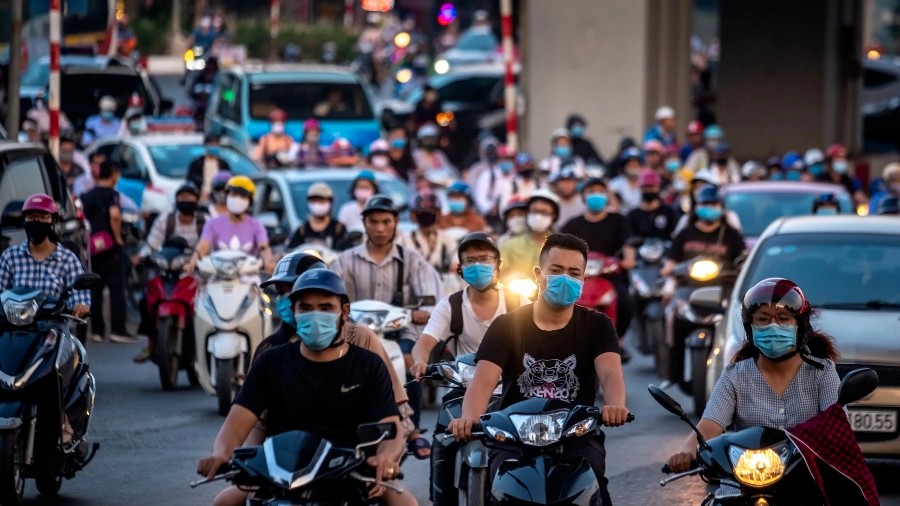
Hanoi is preparing one of the most ambitious urban transport transitions in Southeast Asia as the city moves toward banning gas powered motorbikes in core districts during selected hours. The proposal marks a major step in creating low emission zones as air pollution continues to threaten public health and investor confidence.
A new draft resolution sent to the Hanoi People Council outlines the first legally defined low emission zones under the Capital Law 2024. These zones are areas where the city can restrict vehicles that generate high levels of pollution.
The plan focuses on districts inside Ring Road 1 where congestion and poor air quality are most severe. Starting July 1 in 2026, Hanoi will pilot a low emission zone in nine inner districts including Hoan Kiem, Ba Dinh, Hai Ba Trung, and parts of Dong Da and Tay Ho.

The restrictions expand in stages. From January 1 in 2028, low emission rules will apply across all of Ring Road 1 and selected areas inside Ring Road 2. By January 1 in 2030, the zones will cover the entire area inside Ring Road 3 including thirty six wards and communes across central Hanoi.
Within these areas the city plans to restrict or ban gas powered motorbikes during specific hours and in selected neighborhoods. Motorbikes used for ride hailing and delivery will face tighter limits. Cars that fail to meet Euro 4 equivalent emission standards will also face time based entry restrictions.
The draft goes further. Hanoi will require all motorbike based transport businesses to begin their green transition before 2030. From July 1 in 2026, all new taxis must use clean energy vehicles.
The plan allows gradual implementation rather than a full time ban, which had been proposed in a previous national directive. City authorities said the change came after strong feedback from industry groups, Japanese investors, motorbike manufacturers, and local communities. Concerns centered on infrastructure readiness, social impact, and the lack of a unified national standard for public charging stations.

Hanoi officials noted that the transition is challenging and urgent. Multiple agencies are still developing policies for green mobility and charging networks. The city stressed that public communication and phased implementation will be essential to change commuter behavior in a city where almost seven million motorbikes are registered and another one million arrive daily from surrounding provinces.
Air pollution remains one of Hanoi’s most persistent problems. National environment reports show annual PM2.5 levels in the city are close to double the national standard. Emissions from road traffic account for an estimated fifty eight to seventy four percent of air pollution.
The low emission proposal will be debated at the city council session from November 26 to 28. If approved, Hanoi will become one of the first major cities in ASEAN to adopt a formal schedule for restricting fossil fuel powered motorbikes, a move that could reshape daily life and urban mobility for the capital’s more than eight million residents.
Discover more from Vietnam Insider
Subscribe to get the latest posts sent to your email.