

An unbeaten defense, a penalty-shootout hero, and a European tactician turn China U23 into the tournament’s most underestimated contender.
What looks like a mismatch on paper is rapidly becoming one of the most intriguing tactical battles in Asian football. As Vietnam U23 prepares to face China U23 in the semi-finals of the AFC U23 Asian Championship, international fans and analysts are beginning to ask a counter-intuitive question: has the tournament’s least glamorous team become its most dangerous?
From a global perspective, China U23’s journey defies modern football logic. The team scored just once in four matches yet advanced to the semi-finals without conceding a single goal. In an era obsessed with possession, pressing, and expected goals, China has advanced by doing the opposite—defending deep, absorbing pressure, and exploiting moments of psychological fragility from stronger opponents.
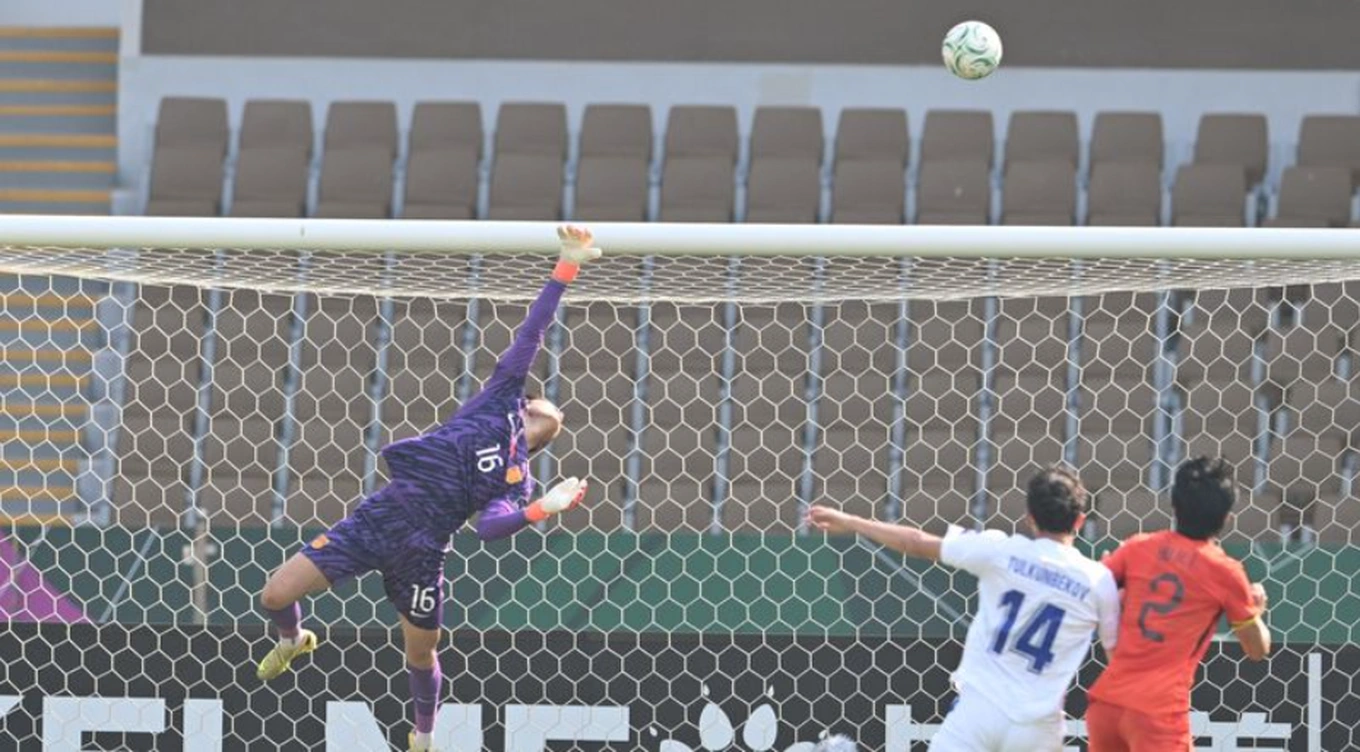
That reality was brutally exposed in the quarter-final against Uzbekistan U23, a former tournament champion and possession powerhouse. Uzbekistan dominated 78% of the ball, fired 22 shots, and forced seven saves—yet still exited the competition after a penalty shootout. The decisive factor was goalkeeper Li Hao, whose nine saves across 120 minutes and penalties turned defensive resistance into outright elimination. China U23 now stands as the only team yet to concede at the tournament.
The architect behind this discipline is Antonio Puche, a Spanish coach who has quietly built a compact 5-3-2 system around physical defenders and extreme positional discipline. Often criticized as passive, Puche’s approach has proven brutally efficient. With an average squad age of just 20.8, China’s U23 side has shown rare emotional control—waiting, frustrating, and striking only when the moment tilts in their favor. It is football intelligence, not luck, that has carried them this far.
For Vietnam, the contrast could not be sharper. Under coach Kim Sang Sik, Vietnam U23 has been one of the tournament’s most fluid attacking sides, scoring eight goals through collective movement rather than individual stardom. Forward Nguyen Dinh Bac, with three goals and one assist, epitomizes this system-driven threat. Yet that very strength may be tested hardest against China’s low block, aerial dominance, and refusal to engage high up the pitch.
The semi-final thus becomes more than a regional rivalry—it is a classic global football dilemma. Can a proactive, possession-based attack dismantle a perfectly organized defensive machine? Or will patience, structure, and psychological resilience once again neutralize flair and tempo?
For international observers, this match offers a reminder that modern football is not only about who attacks better, but who suffers smarter. If Vietnam breaks through, it confirms the rise of Southeast Asia’s tactical maturity. If China holds firm again, it reinforces a timeless truth: in knockout football, the quietest team can be the most lethal.
Discover more from Vietnam Insider
Subscribe to get the latest posts sent to your email.