

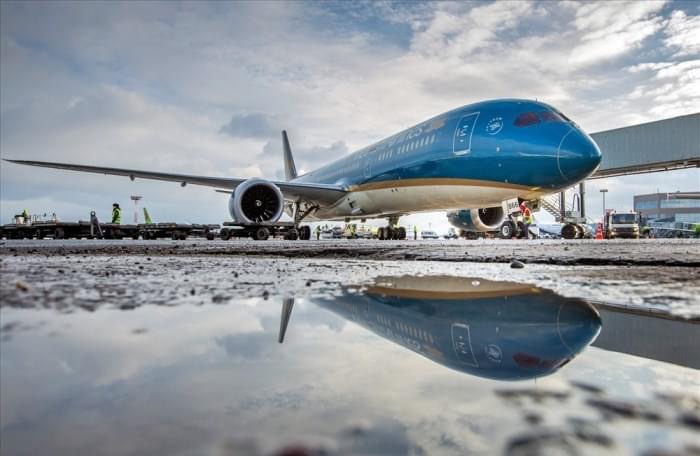
Vietnam’s aviation regulator has instructed airlines to reassess flight paths and adjust operations as escalating military tensions in the Middle East trigger widespread airspace closures and global flight disruptions.
The Civil Aviation Authority of Vietnam (CAAV) issued the directive after countries including Iran, Iraq, Kuwait, Qatar, the United Arab Emirates, and Israel restricted or shut down portions of their airspace for security reasons.
Immediate Impact on Vietnam
While Vietnamese carriers do not operate direct flights to Iran or conflict zones, ripple effects are already visible.
According to the CAAV:
-
One Emirates aircraft and two Qatar Airways flights are currently delayed at Noi Bai International Airport.
-
Multiple international airports in the Gulf, including Dubai and Doha, have suspended or limited operations.
-
Europe–Asia routes that typically transit Middle Eastern airspace face rerouting or cancellation.
Vietnam Airlines confirmed its Europe-bound routes remain geographically distant from active hostilities but continues to monitor developments.
What Authorities Are Doing
The CAAV has directed:
-
The Vietnam Air Traffic Management Corporation to develop contingency control plans for rerouted or delayed flights.
-
The Airports Corporation of Vietnam to coordinate with airlines and ground services to assist affected passengers.
-
Airports nationwide to provide timely operational updates and passenger support.
The regulator emphasized that safety remains the top priority amid rapidly shifting airspace conditions.
Why This Matters for International Business
For investors, expatriates, and companies operating in Vietnam:
-
Europe–Asia connectivity may face longer flight times due to rerouting.
-
Air cargo shipments could see delays and cost increases.
-
Insurance premiums for airlines and logistics operators may rise.
-
Passenger traffic volatility could impact tourism flows.
The Middle East functions as a key aviation corridor linking Asia, Europe, and Africa. Even temporary closures can disrupt global networks within hours.
A Global Aviation Test
Major carriers worldwide are revising routes to avoid high-risk zones, increasing fuel consumption and operational complexity. Similar disruptions during previous regional conflicts led to higher ticket prices and scheduling instability.
Vietnam’s aviation sector — one of Southeast Asia’s fastest-growing before the pandemic — is now navigating a fresh external shock, despite having no direct operational exposure to the conflict zone.
With tensions still evolving, airlines operating to and from Vietnam are expected to remain in dynamic reassessment mode in the coming days.
Related
Discover more from Vietnam Insider
Subscribe to get the latest posts sent to your email.