

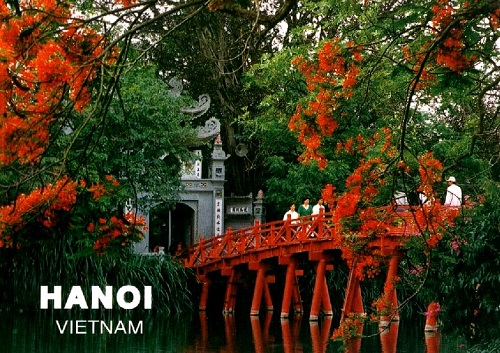
Vietnam’s capital stands alongside Paris and New York, blending heritage, culture, and rapid urban transformation
As global travelers and investors increasingly look toward Southeast Asia, Hanoi is emerging as more than just a cultural destination—it is becoming a symbol of how historic cities can reinvent themselves without losing their soul.
The Vietnamese capital has officially been named among the world’s 50 most beautiful cities by Condé Nast Traveler, placing it in the same league as global icons like Paris and New York City. But unlike these skyline-driven metropolises, Hanoi’s appeal lies in what the magazine describes as its “layers of time”—a living tapestry of lakes, colonial balconies, ancient rooftops, and tree-lined boulevards that quietly narrate centuries of history.
This distinction is more than aesthetic. It reflects a broader global trend: travelers are shifting away from polished, homogeneous cities toward destinations with authentic identity and cultural depth. Hanoi’s urban fabric—where French colonial architecture meets traditional Vietnamese neighborhoods, and street-side beer culture coexists with upscale lifestyle spaces—positions it as a rare hybrid in Asia’s fast-modernizing landscape.
The recognition extends beyond one ranking. In a separate global survey by Time Out, Hanoi ranked 25th in its “Best Cities 2026” list, based on feedback from over 24,000 residents across 150 cities and insights from more than 100 experts. The data reveals a compelling narrative: 80% of locals consider Hanoi a top destination for coffee culture, while 73% recommend its food scene—underscoring the city’s growing influence in global culinary tourism.
This rising profile is also supported by consistent appearances in international rankings from The Telegraph and Travel + Leisure, which have highlighted Hanoi as both a dream destination and one of the most cost-effective cities for international travelers. In an era of inflation-driven travel decisions, affordability combined with cultural richness gives Hanoi a competitive edge over traditional European hubs.
Yet the most consequential story lies ahead. While preserving its historical identity, Hanoi is aggressively investing in its future as a smart city. Authorities have launched a roadmap to place the capital among the world’s top 50 smart cities by 2030, with a data-driven governance model at its core. Plans include a city-wide intelligent operations center, AI-powered traffic and environmental monitoring, and a unified urban data platform designed to optimize public services and infrastructure.
This dual strategy—heritage preservation paired with technological acceleration—mirrors the trajectory of leading global cities but at a distinctly Southeast Asian scale and speed. For international investors, it signals a city transitioning from a tourism highlight into a long-term urban growth story.
The real question now is not whether Hanoi deserves its place among the world’s most beautiful cities—but whether it could become one of the most strategically important cities in Asia over the next decade.
Discover more from Vietnam Insider
Subscribe to get the latest posts sent to your email.