

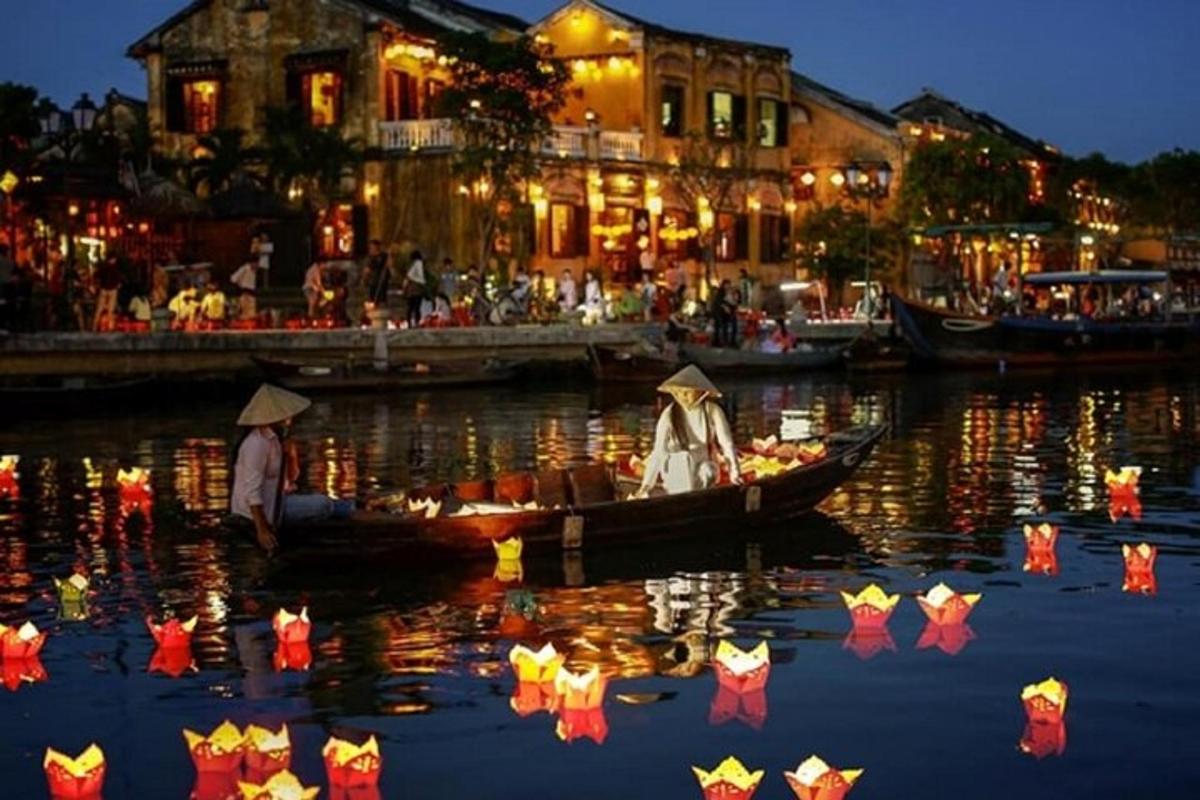
This latest installment of the New York Times’ 36-hour exploration of world-famous destinations takes travelers to Hoi An.
“Although mass tourism often overwhelms Hoi An’s old town, some of the most appealing new destinations lie outside this area, where cafes and restaurants spring up alongside tranquil rice paddies. April is particularly pleasant: the nights are breezy, the sea is inviting, and the rainy season hasn’t arrived yet,” the New York Times wrote.
Friday
5 PM: Swimming at sunset.
Locals, as a matter of wisdom, usually avoid swimming in the scorching midday sun. The ideal time is just before sunset. As you immerse yourself in the cool seawater, the misty layers hovering between the Marble Mountains and the Son Tra Peninsula to the north resemble a pastel watercolor painting, constantly shifting as the last rays of sunlight spread across the sky.

Locals swim in An Bang beach. Photo: Linh Pham
7 – 9:30 PM: Enjoy delicious food and sip cocktails in the cool breeze.
A few minutes’ drive south of the beach, near a residential community on a small island in the middle of the river called Tra Que Vegetable Village, is Mua Restaurant, an upscale restaurant whose name means “season” in Vietnamese, where you can enjoy authentic local cuisine.
Then, about 10 minutes south, across fragrant rice fields, towards the old town, you’ll find Market Bar, with views of the Thu Bon River and a towering banyan tree from its rooftop terrace – an ideal spot to enjoy a drink in the cool afternoon breeze. For those seeking a more beachfront location, Soul Kitchen and Roots Bar on An Bang Beach – along with Eight Days a Week further south – offer a rustic, relaxed atmosphere with live music.
Saturday
8:00 AM: Visit the Old Town
The ancient town is compact and easy to explore on foot. Start at the 19th-century food court in Hoi An Market, where vendors serve local specialties behind stacks of spring rolls and fresh shrimp (Anthony Bourdain ate at Hai Chien’s stall while filming “No Reservations”). Continue to the Commercial Ceramics Museum, the elaborately decorated Fujian Assembly Hall, and then visit the Duc An Old House, a well-preserved example of the narrow townhouses that shaped Hoi An’s golden age of commerce. Finish your journey at the covered Japanese Bridge, one of Hoi An’s most famous architectural landmarks, dating back 400 years.

Fujian Assembly Hall in Hoi An Photo: Linh Pham
12 noon: Enjoy white rose-shaped steamed buns.
Visit Quan Thang House to sample some traditional Hoi An dishes, such as white rose-shaped steamed buns or Hoi An chicken rice. The recipes have been passed down through generations; Diep Ai Phuong, who welcomes guests, is a seventh-generation descendant of Quan Thang, the Chinese merchant who built this house.
2 PM: Sewing clothes
Visitors can have clothes tailored at the upscale Metiseko, Yaly Couture, or BeBe Tailor, each with multiple branches, renowned for their suits and dresses (expected completion time is one to two days). For a different experience, try having shoes custom-made at Lucia Thoi’s stall in Hoi An market.
5:30 PM: Enjoy a mesmerizing bamboo circus performance.
Arrive early at Hoi An Lune Centre to see the daily Teh Dar performance at 6 pm, a mesmerizing and daring acrobatic show that blends Central Highlands folk culture with world-class circus and contemporary dance.


The cuisine and rural scenery attract tourists. Photo: Linh Pham
8 PM: Local specialties
Enjoy Hoi An’s signature dish: Cao Lau. The origins of this dish are still debated, but the thin slices of sweet, marinated pork are reminiscent of Chinese char siu, while the thick, chewy noodles are reminiscent of Japanese udon – reflecting the town’s past as a bustling trading port. However, the preparation is distinctly Vietnamese. Crispy pork skin, fresh herbs, bean sprouts, and a touch of broth make up a complete bowl of Cao Lau, with chili, lime, and fish sauce added to taste.
In Hoi An, tourists have the opportunity to sample a type of Vietnamese rice wine made from the premium ST25 rice variety in an ancient house.

Tourists pose for photos in front of the Ba Mu Pagoda gate in the Old Quarter. Photo: Linh Pham
Sunday
9 AM: Sneaking back to the countryside.
Start your morning at Café Slow, opened in 2023 in Tra Que vegetable village, where the alleys are named after herbs and plants. The café, housed in a rustic wooden building, has outdoor seating overlooking the vegetable patches – ideal for sipping an Americano while listening to the birdsong. Next, head to An Nhan, a café and cultural space housed in a wooden stilt house transported from Nghe An province. Upstairs, you’ll find handicrafts including wooden statues, brocade fabrics, and pottery made by artisans from Vietnam’s ethnic minority groups.
11:30 AM – 1:30 PM
Enjoy a meal alongside lush green rice fields in Tra Que vegetable village; meet artists and silk weavers; relax with a Vietnamese tea ceremony to conclude your 36-hour exploration of Hoi An.
Discover more from Vietnam Insider
Subscribe to get the latest posts sent to your email.