

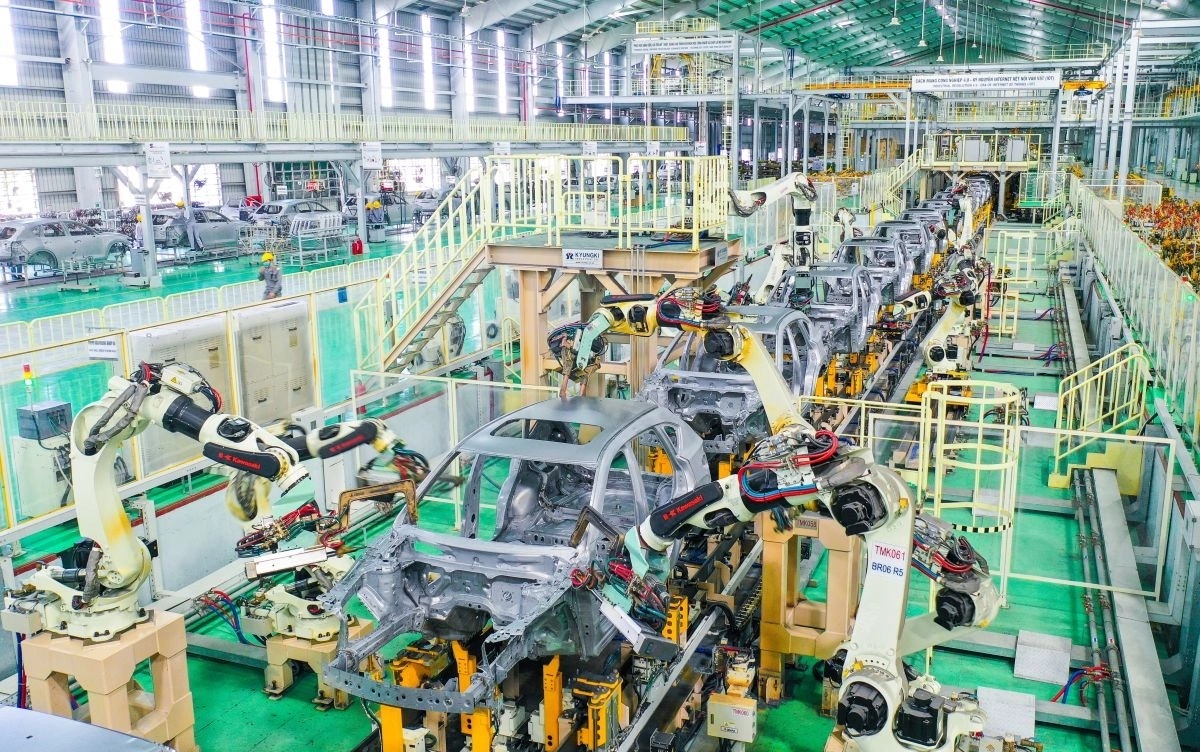
Vietnam’s biggest automotive manufacturers are urging the government not to remove auto production and import businesses from the country’s “conditional business” category, warning that deregulation could weaken domestic manufacturing and expose the market to unfair competition.
The debate comes as Vietnam’s Ministry of Finance drafts proposals aimed at cutting business conditions and simplifying investment procedures, including a plan to eliminate licensing requirements for automobile manufacturing, assembly, and imports.
In response, major industry players including Thaco, VinFast, and TC Group have formally petitioned the Prime Minister and multiple ministries to reconsider the proposal.
The companies argue that automobiles should remain a regulated sector because of their impact on public safety, the environment, and Vietnam’s broader industrial strategy.
Thaco said the industry is not comparable to ordinary consumer goods because vehicles require strict technical standards, long-term maintenance systems, and manufacturer accountability throughout the product lifecycle.
The company also warned that requirements related to factories, assembly lines, warranties, maintenance infrastructure, and spare parts are not unnecessary administrative barriers but safeguards designed to protect consumers and ensure product quality.
VinFast echoed similar concerns, arguing that physical infrastructure and technical requirements demonstrate whether a company is seriously committed to long-term investment in Vietnam’s automotive sector.
The electric vehicle maker warned that loosening regulations could allow underqualified companies to enter the market, potentially increasing risks for consumers purchasing high-value and technologically complex products.
TC Group raised another concern: competitive imbalance.
The company argued that removing mandatory business conditions would disadvantage firms that have already invested heavily in domestic production facilities while making it easier for importers to enter the market with lower operational costs.
Vietnam’s Ministry of Industry and Trade has also previously expressed caution over deregulation.
Officials warned that removing existing rules could encourage companies to import nearly completed vehicle bodies for simple assembly rather than investing in deeper manufacturing and localization. According to the ministry, this could slow the development of Vietnam’s supporting industries and weaken domestic supply chains.
The ministry further noted concerns that countries with excess manufacturing capacity, particularly China, could shift low-value assembly operations into Vietnam to bypass international origin rules and export restrictions. That scenario, officials warned, could expose Vietnam to trade investigations and possible tariff penalties from other markets.
However, the proposal has support from the Vietnam Chamber of Commerce and Industry, which argues that eliminating the business conditions aligns with global reform trends and would improve market competition.
VCCI said Vietnam already has strong post-inspection systems in place, including vehicle safety testing, environmental standards, recall mechanisms, and consumer protection laws. According to the organization, existing licensing procedures duplicate technical oversight while increasing compliance costs without delivering significant public safety benefits.
The group also argued that current regulations create high entry barriers that favor a small number of major importers and manufacturers, contributing to Vietnam’s relatively high vehicle prices compared with other ASEAN markets.
VCCI further pointed out that despite more than 20 years of protection policies, Vietnam’s passenger car localization rate remains relatively low at around 7–10%, compared with 70–80% in Thailand.
Instead of maintaining market barriers, the organization suggested Vietnam should focus on tax incentives, research support, and policies that strengthen domestic component manufacturing and supporting industries.
The debate comes at a critical time for Vietnam’s automotive sector, particularly as the country pushes to become a regional hub for electric vehicles and advanced manufacturing.
Vietnam’s auto industry currently contributes more than 3% of national GDP and supports around 200,000 direct skilled jobs in manufacturing and supporting industries. Domestic vehicle production has also risen sharply, increasing from nearly 324,000 units in 2020 to more than 500,000 vehicles in 2025.
As policymakers weigh deregulation against industrial protection, the outcome could shape the future competitiveness of Vietnam’s automotive market for years to come.
Discover more from Vietnam Insider
Subscribe to get the latest posts sent to your email.