

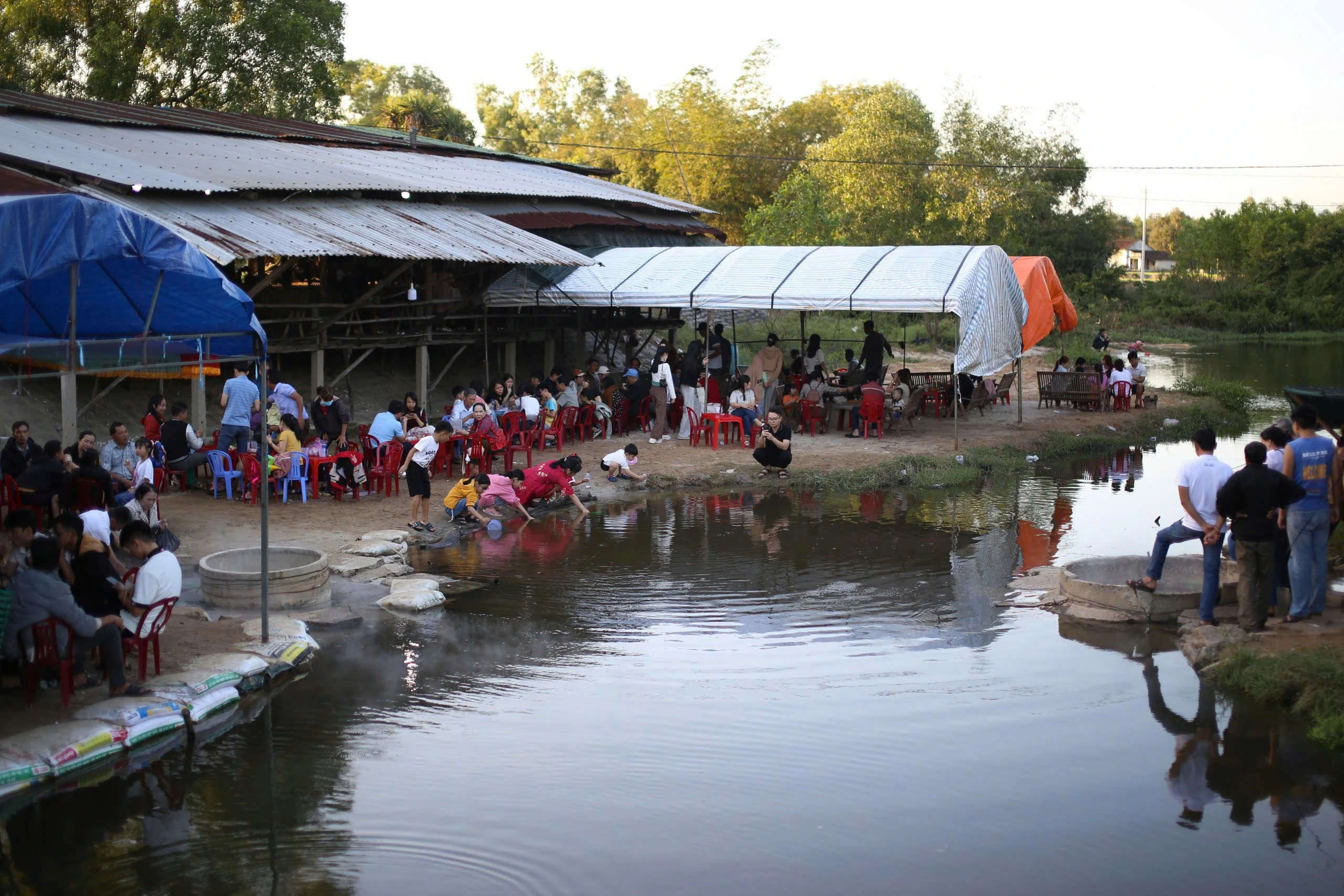
Most travelers visiting Vietnam come for the food, beaches, mountains, and bustling cities. Few expect to cook an egg using nothing but geothermal energy bubbling up from deep underground.
Yet that is exactly what visitors can do at Hội Vân Hot Spring in Gia Lai Province, where naturally heated mineral water is hot enough to boil eggs in just minutes. Tucked away amid the rural landscapes of Vietnam’s Central Highlands, the site has quietly become one of the country’s most unusual travel experiences.

Located about 40 kilometers from Gia Lai’s provincial center, Hội Vân is instantly recognizable by the clouds of steam that rise continuously from its surface. While the spring lacks dramatic waterfalls or spectacular mountain scenery, it attracts visitors for something far more unexpected: the chance to witness the Earth’s natural heat at work and even use it to prepare food.
The hot spring is far from a modern tourist attraction. Historical records suggest it has been known for centuries. Vietnam’s famous Nguyễn Dynasty geographical work Đại Nam Nhất Thống Chí described a steaming hot water source in the area, where geothermal water emerged from rocky terrain before cooling and flowing into nearby streams. Later, respected scholar Quách Tấn documented the spring in his writings on Bình Định Province, describing bubbling water, rising steam, and temperatures high enough to scald skin near the center of the pool.
Remarkably, visitors today encounter much the same scene described generations ago. The spring continues to release hot mineral water year round, creating an almost surreal landscape where steam drifts across open countryside.
For many visitors, the highlight is the opportunity to cook eggs directly in the spring. Without gas, electricity, or firewood, eggs are placed in baskets or mesh bags and lowered into the hottest parts of the water. After about eight to ten minutes, they emerge perfectly soft boiled. A few minutes longer produces a firmer texture.

What makes the experience especially appealing is its simplicity. Travelers are not merely observing a natural phenomenon but actively interacting with it. The novelty of eating food cooked entirely by geothermal heat has made the activity increasingly popular among both local visitors and domestic tourists.
Many first time visitors arrive skeptical. Some assume the stories are exaggerated tourism marketing until they witness the bubbling water firsthand and retrieve freshly cooked eggs themselves. For many, the experience becomes one of the most memorable parts of their visit.
The spring has long been woven into local life. Residents recall how earlier generations would collect hot water from the site, particularly during colder months when home water heating systems were uncommon. The spring’s temperature remains remarkably consistent throughout the year, with steam becoming even more visible during hot weather.
Local residents also believe the geothermal activity may be linked to ancient volcanic processes beneath the region. Although no obvious volcanic features remain today, the heat source continues to operate naturally, feeding the spring with mineral rich water from underground.
One of the site’s enduring mysteries is the presence of fish despite the high temperatures. Locals explain that the hottest water is concentrated in specific geothermal vents, while cooler streams continuously flow into the area and mix with the hot water, creating conditions where aquatic life can survive.
Like many geothermal destinations around the world, Hội Vân is also surrounded by folklore and stories of healing. Historical accounts from the French colonial period describe growing numbers of people traveling to the spring after reports that bathing in its waters helped relieve certain skin conditions. Word of these alleged benefits spread widely, drawing visitors from across the region.
Over time, local legends added further intrigue. Stories circulated of divine intervention and miraculous recoveries, transforming the spring into a destination associated not only with natural wonder but also with spiritual significance. While such claims remain part of local folklore and have not been verified by modern scientific research, they continue to contribute to the site’s enduring appeal.
Today, visitors come primarily for relaxation, curiosity, and the opportunity to experience one of Vietnam’s more unusual natural attractions. Some soak their feet in the warm water, others enjoy the peaceful rural setting, and many leave with photos of eggs cooked entirely by the Earth’s natural heat.
The growing popularity of the spring has also created new opportunities for local communities. Small businesses now sell eggs, refreshments, and local dishes to visitors, helping generate additional income while supporting tourism development in the area.
As travelers increasingly seek authentic experiences beyond Vietnam’s best known destinations, Hội Vân offers something refreshingly different. It combines geology, history, local culture, and a touch of mystery in a single destination. In a country famous for its food, there may be few culinary experiences more memorable than cooking an egg using heat that has been rising from beneath the Earth’s surface for centuries.
Discover more from Vietnam Insider
Subscribe to get the latest posts sent to your email.