

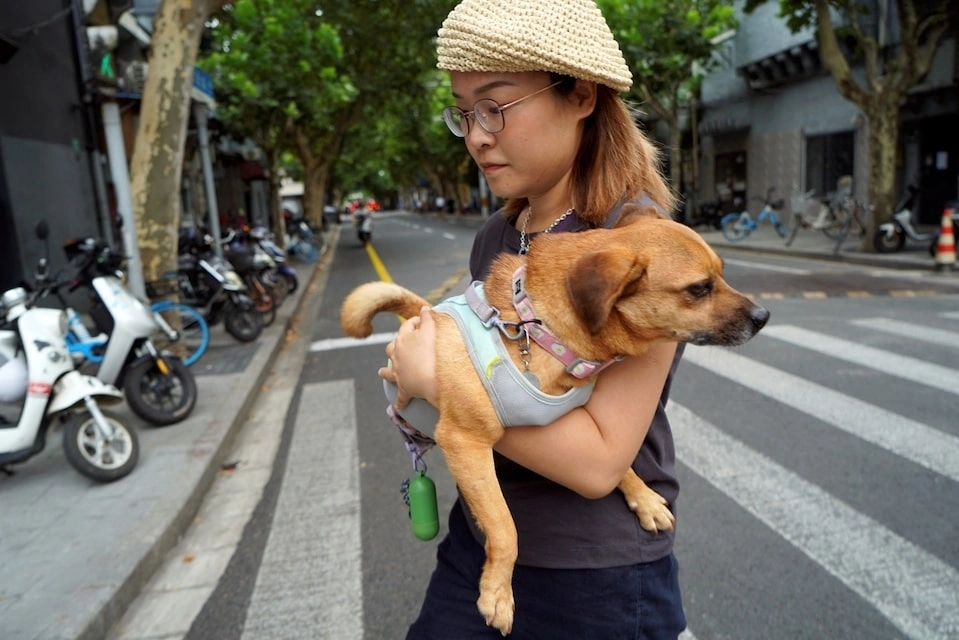
Forget daycare for children. In China’s biggest cities, a new generation of pet owners is enrolling their dogs in full day preschools complete with obstacle courses, freshly prepared meals, classical music, and even treadmills.
The trend reflects a much bigger shift in Chinese society. As birth rates continue to fall and more young adults delay or forgo having children, pets are increasingly filling the role of family members. That emotional bond is fueling one of China’s fastest growing consumer markets, with premium pet services expanding rapidly despite broader economic uncertainty.
At Paw³, a dog kindergarten in Shanghai, puppies arrive each morning for a carefully planned day designed around play, socialization, and relaxation rather than obedience training. Dogs spend their day navigating interactive games, exploring obstacle courses, enjoying handmade snacks, taking afternoon naps accompanied by live piano performances, and even exercising on specially designed canine treadmills before heading home in the evening.
For many owners, the experience mirrors how they would care for a child.
“We raise our dog like a child,” said Qian Yi, whose one year old Border Collie, Harry, attends the preschool every weekday.
Qian estimates she spends around 4,000 yuan (approximately US$560) every month on Harry’s daycare, meals, grooming, swimming sessions, and visits to dog parks. While that level of spending may seem extraordinary, it highlights the growing willingness of China’s younger urban consumers to invest heavily in their pets’ wellbeing.
According to Pet Data, a Chinese pet industry research firm, urban pet spending reached 312.6 billion yuan (US$46 billion) in 2025 and is expected to surpass 405 billion yuan by 2028. Premium services such as daycare, grooming, behavioral care, and pet wellness are among the fastest growing segments.
The business idea behind Paw³ was born from founder Jann Zhang’s own experience. His Golden Retriever, Fuzai, developed anxiety related behavioral issues, prompting Zhang to search for professional care. Inspired by dog daycare centers in the United States, he concluded that many pets simply lacked opportunities to socialize.
“I wanted to give my own dog more space to interact with others,” Zhang said. “That’s how the idea of opening the kindergarten came about.”
The concept has quickly gained traction. Since opening with fewer than 20 clients, Paw³ now serves around 200 dogs. Owners pay between 98 yuan and 138 yuan per day, depending on the size of their pet.
For customers like William Tang, whose Border Collie Cinderella has attended since the center opened in 2025, the appeal goes beyond convenience.
“What attracts me most about the place is that it gives dogs a space of their own,” he said.
As China’s pet economy continues to evolve, businesses like Paw³ are demonstrating how changing demographics and shifting consumer priorities are creating entirely new industries. For investors and businesses watching China’s consumption trends, the country’s four legged customers may represent one of the most resilient growth stories in the years ahead.
Discover more from Vietnam Insider
Subscribe to get the latest posts sent to your email.