

Fueled by continuous growth, Vietnam continues to attract record foreign direct investment. The latest data from the Foreign Investment Agency shows that FDI in Vietnam in the first seven months of the year, foreign investors pumped $20.2 billion into Vietnam.
Of the sum, nearly $8.27 billion came from 2,064 newly licensed projects, $3.42 billion came from 781 existing projects raising their capital and the remainder of more than $8.52 billion was spent by foreign players to acquire shares in Vietnamese companies.
Despite the reduction in new investment, disbursement of FDI saw a positive increase of 7 per cent to $10.6 billion compared to the same period last year, the agency noted.
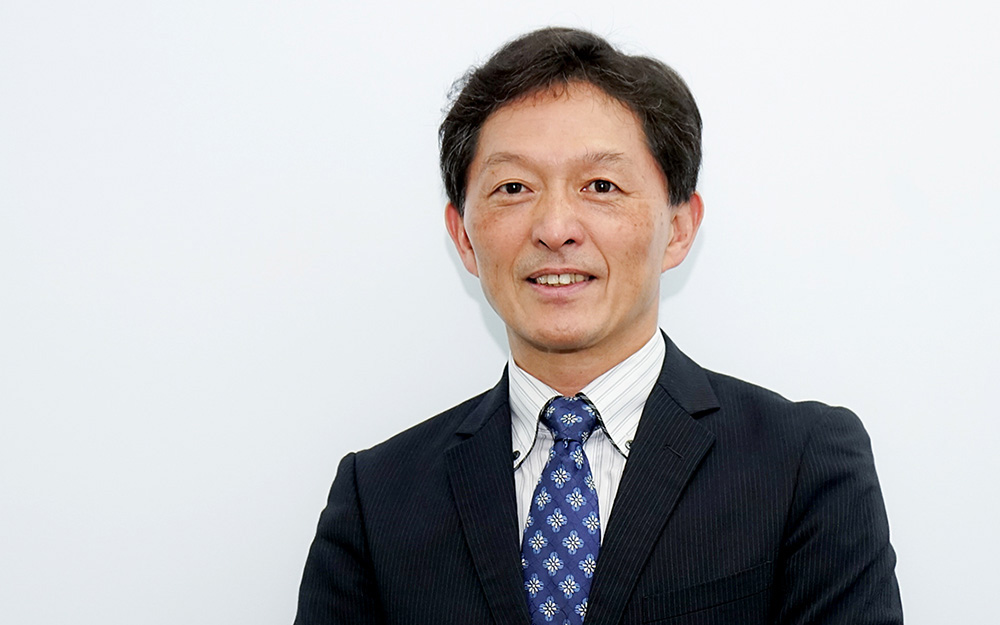
Yutaka Moriwaki, Member of the Board of Director at Vietnam’s Eximbank talks to Vietnam Insider about the point of view as a foreign investor in Vietnam .
What is your assessment on the state of Vietnam’s economy? So far, Vietnam is an attractive destination for foreign investors, including Japanese investors. Can you share your experience?
Vietnam continues to be very attractive market and a very strong economy. Even despite the US-China trade war, Vietnam continues to enjoy strong growth, which will also have a positive effect in the long run.
We feel 100% confident in this country. The first reason is the potentiality of the market. Vietnam has a large population and very rapid growth. The socio-political system is also very stable, and very safe for foreigners. The Vietnamese government continuously protects free trade, even as some countries become very protective. All of these factors enabled foreign investors to enjoy the growing economic environment.
A few years ago Japan ranked No.1 in investment into Vietnam, but nowadays it’s Korea, Hong Kong and even China.
I don’t think this is the long-term trend. I think Japan was No.1 in 2017-2018, contributed by some large projects in real estate and petroleum. In the first half of this year, there weren’t any big investments, so we fell behind, but that doesn’t mean Japan has stopped investing in Vietnam. Especially now, due to the US-China trade war, many companies are shifting their manufacturing plants from China to Vietnam. I expect Japanese investment will increase again, because among Southeast Asian countries, Vietnam is still the most favorable place for investors.
As a foreign investor in Vietnam, how do you think foreign investment has changed Vietnam’s economy, and specifically in which sectors?
Firstly, manufacturing sector. FDI contributed significantly to its growth, by bringing in new technology, which also helped to boost export from Vietnam. According to the statistics, 70% of Vietnam’s exports came from FDI companies. Another sector is infrastructure: metro lines, airports, power plants, highways, etc. And of course, the banking industry. Many local banks are now looking for partnerships with foreign investors in order to enhance equity capital and improve their business platform.
How different is the banking industry in Vietnam compared to Japan?
Firstly, I would say there are a lot of similarities between Vietnam and Japan. For example, Japanese society relies on cash. While the US, China, and Korea are becoming much more cashless economy. According to recent statistics, transactions in Japan are 80% cash and 20% cashless. I think more and more people are using cashless methods, but our mindset is still slow to change. Japan is a big society, and it is not easy to change overnight. It is amazing that such a big market like China has changed so quickly.
Regarding the differences, the banking industry in Vietnamese banks still relies more on traditional banking business such as deposit and lending. Currently I believe 80-90% of banks’ revenue comes from loans and deposit. In Japan and other developed countries, the proportion of traditional business is much less. Banks rely more on service fees, such as credit cards, investment products, loan arrangement, advisory fees, etc. I think it is because Vietnamese economy is growing very fast and therefore has more borrowing needs. Japan is growing slowly now and doesn’t have as much need for investment.
Earlier this year Vietnam Insider talked to you about Eximbank’s transformation project, “New Eximbank.” Can you give us an update on how it is going?
In our restructuring project, Eximbank has set three goals: to improve our interest margin, increase our service fee income, and improve risk management and cost efficiency. Over the first half of the year, we have seen a big improvement in net margin. Although costs of funding also increased, which is common in the market, we also improved loan margins, by shifting our loan to SME segments. So our first goal, improving net interest margin, is on the way. Regarding service fee income, we expanded fee-based businesses such as bancassurance and credit cards. Fee levels have not increased as much as expected, however, so we still need to work hard on this point.

Eximbank | Illustrated photo
On risk management, our NPL (non-performing loan) ratio has improved a lot. When we started, three years ago, the NPL ratio was 2.27%. Last year it was 1.8%, and now it is around 1.7%. Unfortunately, our expense ratio in the first half increased, probably due to seasonal reasons such as salary adjustment and bonuses, but in the second half we expect to manage costs to ensure cost-efficiency. Our productivity is still behind our competitors, because we started restructuring later than a lot of banks. But we have started our productivity improvement initiative, called the Network Restructuring Project, to optimize productivity all over the network.
So restructuring is on the way, even though we still have room to improve. Our aim is to become “the leading quality bank in Vietnam.” We don’t focus as much on asset size but on the quality of our balance sheet. We actually achieved very good growth on our deposit, but our loan balance did not increase as much as deposit growth. Rather, we want to control the quality of our asset and ensure reasonable prices.
Did you have any reservations about living and working in Vietnam as a foreign investor?
As we are allowed to live and work in Vietnam, we need to pay respect to local rules, practice, and people here. Even though there may be a conflict between you and local counterpart, I believe we must make every effort to communicate with the people well to find win-win solutions.
With assistance by Duong Ngoc Dung
Follow Vietnam Insider on Facebook, Twitter and LinkedIn. Send your story ideas to editor@vietnaminsider.vn
Discover more from Vietnam Insider
Subscribe to get the latest posts sent to your email.