

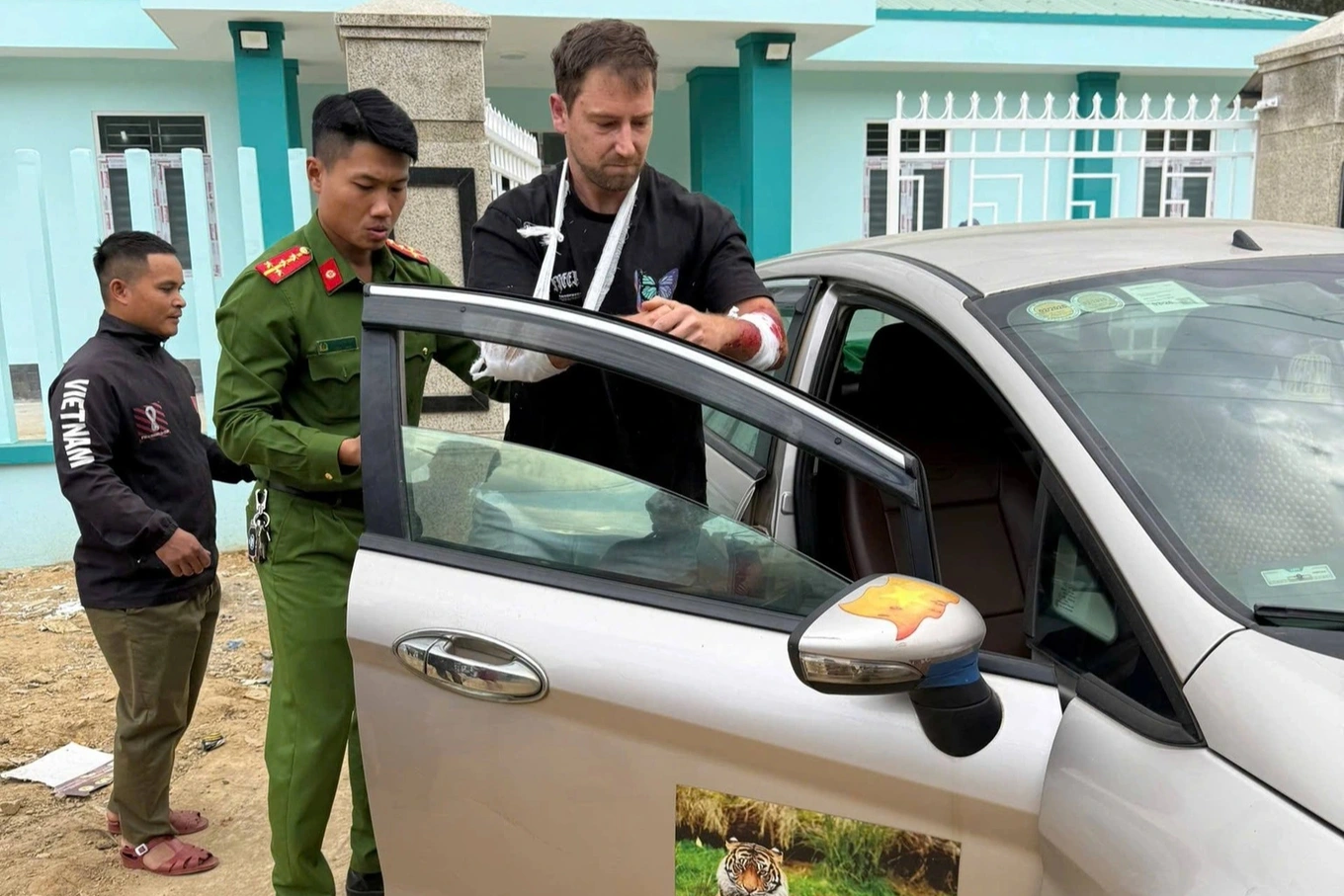
Swift police response on the Ho Chi Minh Highway underscores Vietnam’s growing readiness for international travelers
A routine motorbike journey through central Vietnam turned into a test of emergency response—but also a quiet reassurance for global travelers—after a German tourist was injured on a remote mountain pass and received prompt assistance from local police. The incident, while minor, reflects how Vietnam’s tourism infrastructure and on-the-ground public services are increasingly aligned with the expectations of international visitors.
The accident occurred on January 20 along the Ho Chi Minh Highway, a scenic but technically challenging route popular with foreign motorbike tourists exploring Vietnam beyond major cities. While on patrol, police officers from Avuong Commune discovered Stefan Weiber, 36, who had fallen from his motorbike after losing control on a steep, slippery section of the road.
According to local authorities, Mr. Weiber was traveling from Huế to Hội An, passing through mountainous terrain in Đà Nẵng. Unfamiliar road conditions led to the crash, resulting in soft-tissue injuries. Police immediately transported him to the Avuong Commune Health Station for first aid before transferring both the tourist and his motorbike to the Đông Giang Regional Health Center for further treatment.
Authorities confirmed that the traveler had all required documentation, including valid identification and a driver’s license, allowing medical care and logistical support to proceed smoothly. Mr. Weiber later expressed gratitude for what he described as the “responsible and dedicated” assistance provided by local police.
Beyond the individual incident, the story carries broader relevance. Vietnam is experiencing a surge in international tourism, particularly among adventure travelers and digital nomads seeking authentic, off-the-beaten-path experiences across Southeast Asia. Routes like the Ho Chi Minh Highway attract thousands of foreign riders annually, raising the stakes for road safety, emergency preparedness, and traveler confidence.
For international visitors —especially those considering Vietnam for long-term travel or investment in tourism-related sectors—the takeaway is clear: while infrastructure challenges remain in mountainous regions, local authorities are increasingly capable of responding quickly and professionally. As Vietnam continues to position itself as a top destination in Asia-Pacific tourism, real-world moments like this may quietly shape global perceptions more than any marketing campaign ever could.
Discover more from Vietnam Insider
Subscribe to get the latest posts sent to your email.