

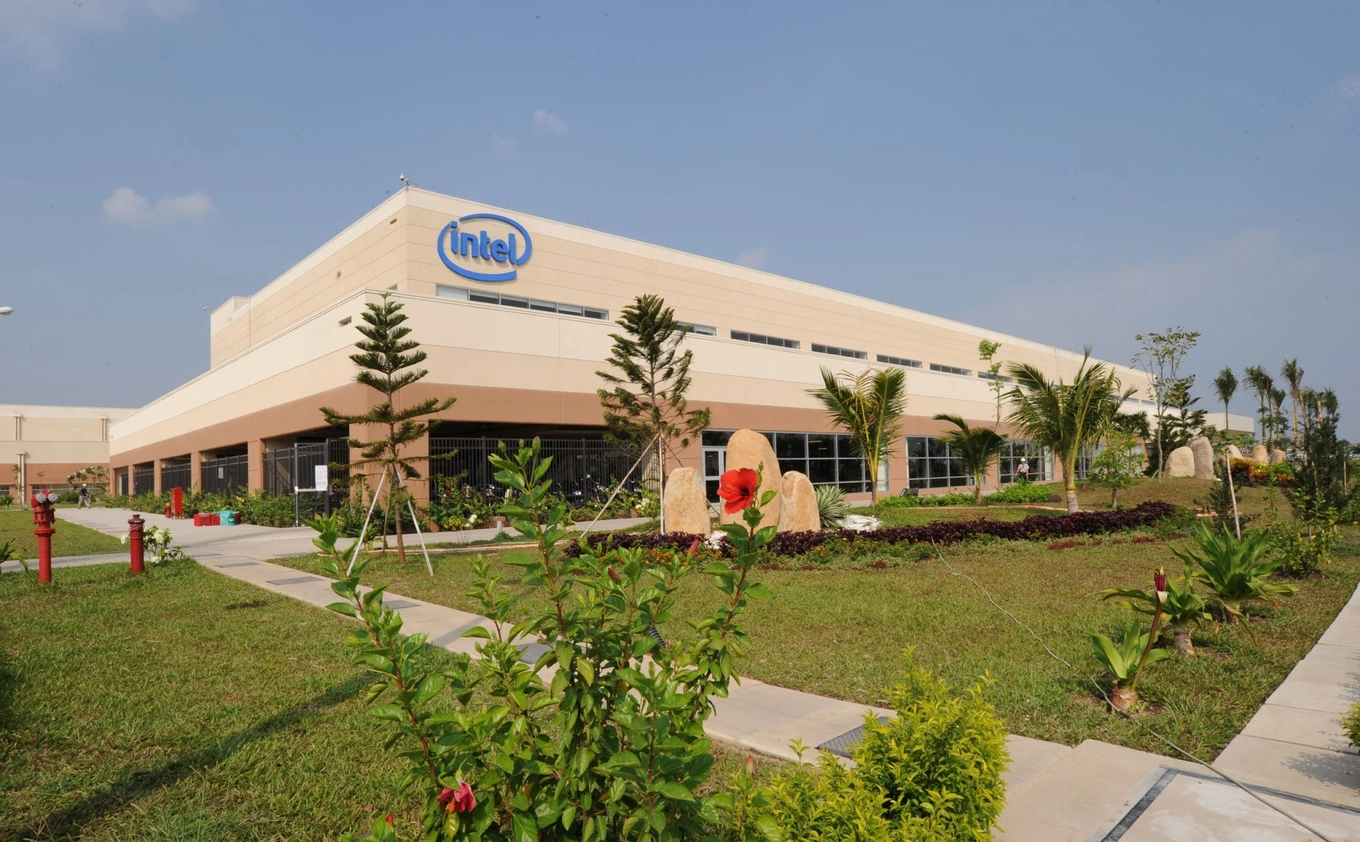
Intel has officially expanded its manufacturing hub at Saigon Hi-Tech Park, establishing the campus as the semiconductor giant’s largest operational facility globally, with annual export revenues projected to hit $14.6 billion this year.
The figures were delivered by Truong Minh Huy Vu, representing the Ho Chi Minh City People’s Committee, during a high-level government conference focused on the economic contributions of science, technology, innovation, and digital transformation. The review was hosted on the afternoon of September 28 by the Central Steering Committee on the Development of Science, Technology, Innovation, and Digital Transformation.
Vu noted that Ho Chi Minh City is rapidly modernizing its telecommunications backbone, deploying 8,541 5G base stations that now cover roughly 95% of the municipality. The city has invested over 2.9 trillion VND (around $115 million) to upgrade digital infrastructure across 168 sub-districts and special administrative areas. Meanwhile, its municipal data repository has consolidated 31 core databases, linked with 13 national registry groups, and released 78 public datasets to encourage digital innovation.
Alongside state funding, Ho Chi Minh City is actively drawing private capital into cutting-edge technology. The city has attracted $2.1 billion in registered investments for artificial intelligence data centers and hyperscale computing facilities. Most notably, Intel’s expanded presence in Saigon Hi-Tech Park cements Vietnam’s pivotal role in global semiconductor packaging and testing, generating an estimated $14.6 billion in export value this year alone.
To accommodate this technological surge, municipal planners have approved 11 dedicated digital technology zones covering over 1,231 hectares, seven high-tech agricultural zones spanning more than 1,727 hectares, and a 195-hectare expansion of Saigon Hi-Tech Park. In total, the metropolis has welcomed 274 newly registered foreign direct investment projects in science and technology, representing $1.658 billion in foreign equity.
In the microchip industry, municipal authorities are partnering with Vietnam National University, Ho Chi Minh City, to inaugurate a shared National Semiconductor Integrated Circuit Laboratory, designed to accelerate research and workforce development.
The city has also pioneered HCMC Venture Capital, a dedicated state-owned fund management firm initialized with 500 billion VND (around $20 million) from public funds. The fund operates a blended finance model, teaming up with private venture capital to finance deep-tech ventures, commercialize domestic patents, and keep high-growth Vietnamese tech unicorns within the domestic ecosystem.
Addressing human capital, Ho Chi Minh City has introduced competitive compensation policies to support international-standard Centers of Excellence, having already approved five institutions with an allocated budget of 600 billion VND. The city currently hosts more than 50 microchip design enterprises with a workforce of over 5,000 engineers. Concurrently, a grassroots campaign for digital literacy and practical AI training has reached more than 77,000 citizens, backed by 3,923 community digital units and 408 on-site field coordinators.
Accelerating Tech-Driven Economic Momentum
Vu reported that Ho Chi Minh City’s total budgetary revenue reached 670.599 trillion VND (about $26.5 billion), fulfilling 83.5% of its annual target. Total societal investment expanded by 47.63%, accompanied by an 11.1% gain in the industrial production index. To secure gross regional domestic product (GRDP) growth above 13% in the final quarter, maintain full-year growth above 10%, and pursue an unprecedented 1-quadrillion-VND revenue benchmark, municipal authorities are resolving regulatory bottlenecks. The strategy prioritizes legal sandboxes, public procurement quotas for domestic “Make in Vietnam” innovations, and targeted financial support frameworks tied to urban development statutes.
The city is also cultivating an expansive venture ecosystem by forging co-investment agreements with global investment funds. Early-stage seed capital will be channeled directly into startups working on semiconductors, artificial intelligence, biotechnology, and advanced material sciences. Key infrastructure initiatives include advancing the Northern Science and Technology Urban Area, expanding Saigon Hi-Tech Park, deploying high-performance supercomputing infrastructure, and embedding digital twin simulations into urban planning, traffic control, and municipal flood prevention.
On data governance, the administration plans deeper integration with the National Data Center, real-time monitoring of the digital economy’s contribution to GRDP, and a transition from procedural paperwork inspections to data-driven audits. Looking ahead to workforce expansion, Ho Chi Minh City will coordinate with major universities to train 10,000 semiconductor engineers and artificial intelligence specialists by 2028, while extending introductory AI coursework to all public servants and academic institutions.
(Source: dantri.com)
Discover more from Vietnam Insider
Subscribe to get the latest posts sent to your email.