

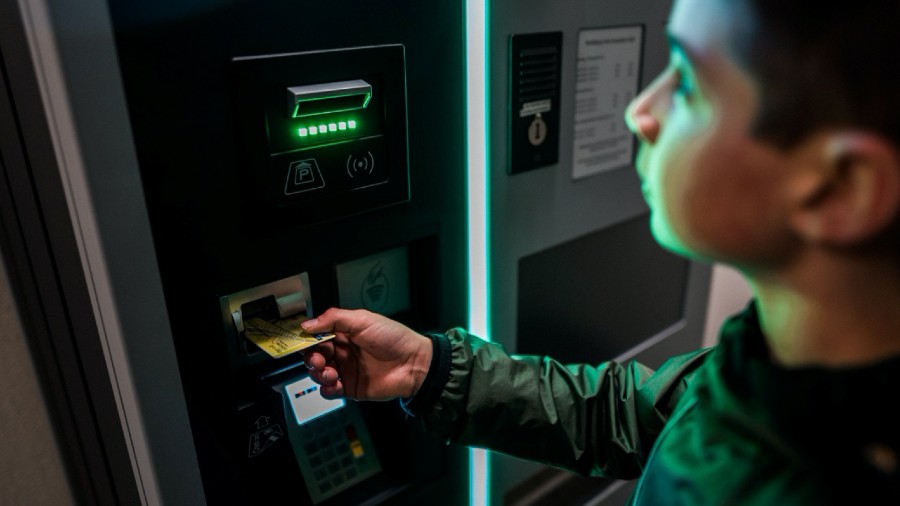
The successful management of its ATMs is essential to the growth of every bank and other financial institutions. But usually, this task turns out to be harder than anticipated and leads to losses that could have been avoided.
One of the main problem areas when it comes to ATM management is the optimization of cash across all the ATMs belonging to the bank.
Though banks and its employees have made attempts to understand the cash demands of each machine, they often fail to make accurate predictions and prevent losses. There are some general patterns such as a considerable increase in withdrawals right before Christmas, a lull during the summer months and machines nearby malls witnessing more customers during the weekends than on weekdays. Employees had to use these patterns to make decisions regarding depositing cash in each machine. But with machine learning and Artificial Intelligence, financial institutions have started to use better systems to predict cash demands in different ATMs.
Why is ATM optimization necessary?
Even if the bank has cracked the code and discovered the patterns of cash requirements at a particular ATM, they cannot use the same cash delivery model across all their other machines. Demands at each individual ATM depend on the day of the week, the time of the year, and more importantly, its location. While there would be a steady flow of customers throughout the day at a particular ATM, the machine at another site might only see users rather sporadically. So, the bank cannot create a single plan that will work for all their devices.
Suppliers and CITs the bank partners with will have regular deposit schedules based on which they visit the ATMs only on previously specified days of the week. Most suppliers require a period of several days before they can change their supply schedules. So, if an ATM unexpectedly runs out of the cash, it would be difficult to quickly refill it and counter losses.
It’s been discovered that several machines often maintain more than 40% of the cash it requires, while many others do not have enough to supply their customers. ATMs running out of necessary money well before the supplier’s schedule leads to dissatisfied customers who make use of other ATMs and a loss of ATM charges during these days. Overfilling ATMs also comes with its disadvantages. The cash, which could have been used in various other channels to gain profits, is now stagnant within the machines.
How do banks optimize their ATM networks?
Today, banks have realized the advantages of outsourcing ATM deployment and management functions to an ATM service provider. Among the many services these companies offer, they also use systems that help predict cash requirements of each machine. Banks can also independently make use of such software to predict their cash demands.
Cash optimization systems provide cash forecasting for each ATM owned by the bank. These predictions are made possible with the help of machine learning and Artificial Neural Networks (ANNs).
The system creates a forecast model based on historical data available from each machine. It examines how withdrawal trends change each day, week, month and season for every ATM. By analyzing the data presented, these systems come up with models tailored to each machine, depending on the withdrawal trends, its location and the costs involved in depositing money in the machine.
Data scientists configure ANNs with different parameters to understand how cash demand and withdrawals are affected with respect to variations in several factors. The configuration is also fine-tuned to minimize the margins of error and to come up with a plan with the least amount of inaccuracy.
With the help of ANN, banks can predict the demands for each denomination at a specific ATM. With adequate information regarding the amount of cash and each denomination required, banks can deposit the necessary amount of cash in each ATM. Experts say that around 15% more than the cash required is sufficient for each machine, in case an emergency arises.
Filling each machine only with the amount it requires will also reduce the amount of cash that sits unused in specific locations. This amount can be channelled to more critical areas where it will bring in profits and growth for the firm.
Besides providing insights regarding the amount of cash required in the machines, systems configured with ANN can also determine the ideal time to refill the machines and the schedules the suppliers must follow. They can help with creating route maps that will enable suppliers to fill multiple machines at once, reducing the expenses associated with deposits.
With greater modifications and advancements, these systems can also be configured to predict the best location for installing a new ATM in the area.

Summing up
With cash optimization, financial institutions can save millions of dollars they usually spend on servicing and refilling ATMs. While unnecessary deposits can be cut out, customer satisfaction can be increased with adequately filled machines. Besides reducing the bank’s expenses, cash optimization also positively impacts various other fields. It reduces the number of trips suppliers must take annually to replenish machines. This, in turn, reduces the fuel consumption caused by operating vehicles for cash transport. A reduction in fuel burnt annually can directly help with diminishing the pollution caused to the environment.
Therefore there are many motives for banks to opt for a cash management solution that can provide accurate information regarding the cash requirements of each machine.
By Gaby Alexander
Discover more from Vietnam Insider
Subscribe to get the latest posts sent to your email.