Bored of catching Pokemon? Catch ghosts with Ghostbusters World

Advertisements

You ain’t afraid of no ghosts?

Then the Ghostbusters World game might just be the alternative to Pokémon Go for you, as it is also location-based and uses augmented reality.

According to the Verge, a demo version of Ghostbusters World was made available at the San Diego Comic-Con last weekend, which let players blast ghosts with a proton pack to capture them, instead of using Pokéballs to catch little monsters.

Unlike Pokémon Go, which was built on top of data from Niantic’s earlier game Ingress, this game was built using Google’s Maps platform which was recently opened to developers, allowing buildings to be shown in 3D for a more immersive experience.

Verge, which got to try the demo, says players have four different proton packs that range in blast power, like how Pokémon Go has Great Balls and Master Balls that make it easier to catch monsters.

Players can get more items to fight ghost at dimension portals or can buy ammunition through in-app purchases.

The game also tracks players’ movement using the phone pedometer, rewarding long walks by hatching Ectoplasms.

The Verge writer called the game “Pokémon Go, but with ghosts”, but revealed that Ghostbusters World will also have player-versus-player fighting and a Story Mode scripted by writers of the Ghostbusters comics from IDW Publishing.

The demo also had an in-game chat feature, though it could be cut if it proves too hard to moderate.

Ghostbusters World is expected to launch later this year on iOS and Android with around 150 ghosts to capture. Got to catch them all?

Currently, the game’s website only has a trailer and links to its social media pages.

It also shows that the game was made in collaboration between Columbia Pictures Industries, Korean mobile game designing company 4:33 Creative Lab and NextAge Co Ltd who made a Walking Dead AR game.

Source: Asiaone

Lending interest rate in inter-bank market hits six-month high

Advertisements

The interest rate for Vietnamese dong loans in the inter-bank market has hit the highest level since the beginning of the year due to high demand.
Accordingly, the rate for overnight loans last week surged sharply by 1.96 percentage points against the previous week, closing the week at 3.22 per cent.
The rates for one-week, two-week and one-month loans were 3.5 per cent, 3.58 per cent and 3.78 per cent, up 2.11, 2.07 and 2.02 percentage points, respectively.

Last week, the State Bank of Việt Nam (SBV) also offered bills at five auctions at higher interest rates (at 1.75 per cent and 2.25 per cent for 28-day and 91-day bills) to withdraw money from commercial banks, however, no auction was successful.

In the inter-bank market, the interest rates for US dollar loans last week also inched up, ending the week at 2.13 per cent for overnight loans, 2.23 per cent for one-week loans, 2.33 per cent for two-week loans and 2.47 per cent for one-month loans.

Industry insiders attributed the decline in the dong liquidity at commercial banks last week to banks using the đồng to buy the dollar from SBV.

Though there has been no official report on the amount of dollar sold by the SBV, it was estimated the amount was significant. This meant that the SBV withdrew a significant amount of đồng from commercial bank through the sale.

Source: VNS

Mumuso faces fine of VND100 million from MoIT

Advertisements

Mumuso is facing a fine of VND100 million ($4,440) by the Ministry of Industry and Trade (MoIT) due to the company’s unlawful practice of deliberately misleading consumers as to the origin of its goods or providing insufficient information.

Trinh Anh Tuan, deputy director of the MoIT’s Competition and Consumer Protection Authority, said that Mumuso Vietnam will be handled in accordance with Decree No.185/2013/ND-CP, stipulating the fines for administrative violations for producing and trading in fake goods, as well as in accordance with Decree No.71/2014/ND-CP, stipulating the sanctions on violations of the Law on Competition.

Thus, according to the Decree 185, Mumuso Vietnam is set to face the maximum administrative fine of VND100 million ($1,440). Many domestic consumers consider the fine to be too small compared to Mumuso’s violations and not high enough to threaten the firm.

Several days ago the MoIT announced the results of its inspection of Mumuso Vietnam which investigated the extent to which the company complied with the laws of Vietnam between early 2016 and May 31, 2018. The inspection found that, contrary to the company’s claims, 2,257 out of Mumuso’s 2,273 goods (99.3 per cent) are imported from China, with the rest being bought from domestic suppliers.

The inspection also found that the firm’s MUMUSOKR brand was registered by MUMUSOKR Limited at 601,47 Sejongdaeero 23-Gil, Jongro-Gu, Seoul (South Korea). However, MUMUSOKR Limited has authorised Mumuso Shanghai (China) to use the MUMUSOKR brand all over the world.

According to an MoIT representative, Mumuso has violated the law on consumer protection by providing insufficient information related to its products’ origins. In addition, the information on its products relates to South Korea, but there are no legal documents to prove they were produced in South Korea.

In March 2018, the Ho Chi Minh City People’s Committee also placed a fine of over VND322 million ($14,185) on Mumuso Vietnam due to the company conducting business in illegally imported goods, including illegal cosmetic goods. This was in accordance with Decree No.176/2013/ND-CP, stipulating the imposition on administrative offences in cosmetic, drug, and medical equipment segments, as well as with Decree 185/2013.

Source: VIR

Shares to remain upward trend

Advertisements

Vietnamese stocks are regaining momentum and are expected to remain upbeat during upcoming trading thanks to improved liquidity and cash flow, analysts said.

The benchmark VN-Index on the HCM Stock Exchange (HOSE) plunged 1.12 per cent to close Friday at 933.39 points, reversing from its increase of 5.7 per cent during the previous six sessions.

It increased a total of 2.6 per cent over the week.

The HNX-Index on the Ha Noi Stock Exchange gained 1.93 per cent to end at 107.62 points. The northern market’s index notched weekly growth of 4.97 per cent.

Trading liquidity improved last week with an average of more than 225.1 million shares being traded in each session, worth VND4.7 trillion (US$205 million).

The trading figures were up 42 per cent in volume and 49 per cent in value compared to the previous trading week. That indicated investor confidence in local stocks was growing, according to analysts.

According to market expert Ngo Quoc Hung at MB Securities Joint Stock Company (MBS), the Vietnamese stock market experienced a recovery last week as forecast, with the VN-Index regaining the 930-point level.

The local market was one of the top three global securities markets with the largest rebound in the past week, Hung said.

The return of cash flow was the highlight of the past week. Trading value on HOSE reached the highest level in three weeks, standing at VND3.3 billion per session, up 46.4 per cent compared to the previous week.

Leading stock groups such as banks and real estate were still the drivers of the market.

The market is likely to stay on an uptrend this week and may rise to the point range of 975-996, Hung said.

As the half-year reports continue, disbursements are on the rise to catch up with investment opportunities. Stocks achieving satisfactory business results such as banking, real estate and the growth of mid-cap and small-cap stocks are creating the necessary support for the market and will continue to perform this role well this week.

According to Hung, concerns over the trade war seemed to have been exaggerated. In the past three weeks, the VN-Index had fallen by 3 per cent while the MSCI’s broadest index of Asia-Pacific shares outside Japan dropped slightly by 0.3 per cent.

On the Chinese market alone, the Shanghai index recorded only a modest decrease of 0.6 per cent. The Dow Jones even climbed steadily over the past three weeks with a rise of 3.24 per cent.

“I think the market will continue to maintain its uptrend in the coming week and the cash flow will continue to come back, it may also see some shaking sessions or slight correction when the profit-taking pressure increases,” said Nguyen The Minh, head of analysis at Yuanta Securities Vietnam Co.

For a broader forecast, according to Bao Viet Securities Company (BVSC)’s Strategic Report, in the second half of this year, stable macroeconomic indicators would support the stock market.

However, Viet Nam’s stock market also faced risks in the last six months. Domestic risks may come from unpredictable inflation and movements of the US dollar and the yuan, which may affect cash flow into the stock market.

External risks may derive from the Fed’s rate hikes, trade war fears and the withdrawal of capital from emerging markets.

“After carrying out analyses of these factors, we forecast that the market will stay on a downtrend in the third quarter. In the best-case scenario, if a trade war does not occur amid the stabilisation of exchange rates and inflation, the market may reverse to an uptrend in the last quarter and fluctuate at around 900 points by the end of this year,” BVSC said.

Source: VNS

83 percent of bad debts sold to VAMC came from Sacombank

Advertisements

83 percent of bad debts the Vietnam Asset Management Company (VAMC) bought last year at market prices came from private lender Sacombank.

VAMC said it bought over VND3.14 trillion ($137 million) worth of bad debts from five credit institutions at market prices last year, surpassing the government’s target. VNExpress reported.

Of the five, Sacombank was the largest seller, selling two loans worth VND2.61 trillion ($114 million) with collateral in the form of real estate and machinery in Da Nang and Ho Chi Minh City.

VAMC also bought debts of VND299 billion ($13.1 million) at market prices from the state-owned Agribank, VND40 billion ($1.75 million) from HDBank and VND10 billion ($437,000) from Viet Capital Bank, which is the smallest debt.

VietinBank sold debt worth VND191 billion ($8.34 million) at a lower price.

VAMC’s management said it has recovered VND130 billion ($5.68 million) from the debts it bought.

For the full year it targets buying VND3.5 trillion ($153 million) worth of debts and recovering VND4.9 trillion ($214 million) from the debts it bought.

A plan approved by the government last year envisages the company increasing its charter capital from VND2 trillion ($87.4 million) now to VND5 trillion ($218.5 million) by 2018 and VND10 trillion ($437 million) by 2020.

The wholly state-owned firm, established in 2013, is permitted to buy bad debts from banks, put collateral up for sale and recover and restructure debts.

Google Maps announces motorcycle mode for Vietnam

Advertisements

Google Maps has announced a new motorbike mode in ASEAN countries, including Viet Nam this week – Vietnamnet reports.

The new feature was designed to better serve markets in which motorbikes are a popular means of transport.

Accordingly, the users in Viet Nam will be able to customise their maps for motorcycles, including shortcuts and narrow roads unavailable to cars. Travel time is accurately calculated based on a machine-learning model of motor speed simulation.

Users will also be able to avoid high-speed toll stations and roads on which motorbikes are banned.

Google Maps version 9.79 is available for devices with Android 4.4 (KitKat) and above since Wednesday.

Google Maps currently has more than 1 billion monthly users and is considered a popular choice for drivers with data on 400 million km of road. The number of Google Maps users in Viet Nam is currently 40 per cent higher than last year.

The maps for motorbikes are produced using a combination of different sources, including third-party providers, public sources, and user-supplied data. Google relies on images collected from Street View to determine road limits for motorbikes.

Ozil, citing ‘racism’, quits Germany side after World Cup debacle

Advertisements

File photo taken on May 13, 2018 shows Turkish President Recep Tayyip Erdogan (right) posing with German footballer of Turkish origin Mesut Ozil (left) in London. (KAYHAN OZER/TURKISH PRESIDENTIAL PRESS SERVICE/AFP)

BERLIN: Mesut Ozil said on Sunday (Jul 22) he was quitting the German national football team, citing “racism” in the criticism of him in the side’s World Cup debacle.

Ozil, who has Turkish roots, had earlier defended his decision to pose for a photograph with Turkish President Recep Tayyip Erdogan in May which sparked questions about his loyalty to Germany’s squad ahead of the World Cup in Russia.

In a four-page statement sent out in three images on Twitter and Instagram, an angry Ozil saved his bombshell for the final salvo.

“It is with a heavy heart and after much consideration that because of recent events, I will no longer be playing for Germany at international level whilst I have this feeling of racism and disrespect,” he said.

The Arsenal midfielder blamed the German Football Federation (DFB) for failing to defend him against his most strident critics – reported in an article from Channelnewsasia

“Arguably the issue that has frustrated me the most over the past couple of months has been the mistreatment from the DFB, and in particular the DFB President Richard Grindel,” he said.

He said that Grindel and Germany coach Joachim Loew had asked him to give a “joint statement to end all the talk and set the record straight” over the picture with Erdogan.

“Whilst I attempted to explain to Grindel my heritage, ancestry and therefore reasoning behind the photo, he was far more interested in speaking about his own political views and belittling my opinion.”

Ozil, 29, said he had been unfairly blamed in Germany for the side’s shock first-round defeat at the World Cup.

“I will no longer stand for being a scapegoat for his (Grindel’s) incompetence and inability to do his job properly,” he said.

“In the eyes of Grindel and his supporters, I am German when we win, but I am an immigrant when we lose.”

Ozil had said earlier that he was true to both his Turkish and German origins and insisted he did not intend to make a political statement by appearing with Erdogan.

‘I HAVE TWO HEARTS’

“Like many people, my ancestry traces back to more than one country. Whilst I grew up in Germany, my family background has its roots firmly based in Turkey,” he said.

“I have two hearts, one German and one Turkish.”

Ozil said that despite the timing of the picture with teammate Ilkay Gundogan and Erdogan – shortly before the president won re-election in a poll endowing him with sweeping new powers – “it wasn’t about politics or elections, it was about me respecting the highest office of my family’s country”.

“My job is a football player and not a politician, and our meeting was not an endorsement of any policies,” Ozil added.

Germany is home to more than three million people of Turkish origin.

Manchester City midfielder Gundogan presented Erdogan with a signed club shirt on which he had written “to my president”.

The two players were booed by German fans in pre-World Cup friendlies over their appearance with the Turkish strongman, and Ozil said Sunday that he and his family had received threats.

After the tournament, Ozil came in for stinging criticism by DFB officials and German politicians across the spectrum.

‘RIGHT-WING PROPAGANDA’

Ozil said he could abide criticism of his performance on the pitch but not when it was linked to his ethnic background.

“If a newspaper or pundit finds fault in a game I play in, then I can accept this,” he said.

“But what I can’t accept are German media outlets repeatedly blaming my dual-heritage and a simple picture for a bad World Cup on behalf of an entire squad,” he added, calling it “right-wing propaganda”.

“This crosses a personal line that should never be crossed, as newspapers try to turn the nation of Germany against me.”

He also furiously denounced disparaging remarks by former captain Lothar Matthaeus, who he noted “met with another world leader a few days back and received almost no media criticism” in an apparent reference to an appearance with Russian President Vladimir Putin.

And Ozil railed against an unnamed sponsor, which, he said, removed him from promotional videos for the World Cup after the pictures with Erdogan emerged.

“For them, it was no longer good to be seen with me and (they) called the situation ‘crisis management’,” he said.

Source: AFP/Channelnewsasia

Homedy: Raising funds from Genesia Ventures for Vietnam’s reality portal

Advertisements

Vietnam’s real estate connection platform Homedy.com has raised its second round of funding from Japanese early stage investor Genesia Ventures, impact investment firm Access Ventures and Mynavi Corporation – DealStreetAsia reported.

Financial terms were undisclosed but Mynavi Corporation is said to have led the round.

Return backer Genesia Ventures, which injected funds in Homedy.com in June last year along with Pix Vine Capital, is the biggest investor in the startup.

Homedy was launched in 2015 by Duc Nguyen and Hieu Vu. The duo hold extensive expertise in the digital marketing and media industries in Vietnam, having run music streaming pioneer NgheNhac.info which was founded in 2003, and digital advertising company Moore.vn which was acquired by Japan’s Irep Co in 2014.

Following the fundraise, Homedy will focus on big data and mobile app, develop its real estate portal platform, hire key personnel, and expand to foreign markets. The company will also launch its interior design project, My Homedy, which will help users design their own home.

By the end of the year, Homedy.com will have branches in Da Nang, Nha Trang and targets to expand the market to Southeast Asia such as Indonesia, Philippines by 2020, it said in an announcement.

“Homedy.com has grown rapidly following the fund’s investment last year,” said Yuto, Principal of Genesia Ventures, adding that he expects Homedy to be the one-stop real estate platform with an extensive database of business as well as interior design.

Genesia Ventures was set up in August 2016 and is led by Soichi Tajima, the former CEO of Cyberagent Ventures. The firm focuses on the seed and pre-series A stages across various sectors, including new economy, digital media, AI and robotics.

The Japanese early stage investor plans to raise its second fund with a target corpus of $80-100 million next year that will focus on investments in both Japan and Southeast Asia, the VC firm’s CEO told DEALSTREETASIA in a recent interaction.

Mynavi is one of the leading Japanese companies providing human resources services and B2C information channels, including a website for renting real estate information. Access Venture is focused on supporting startups in Vietnam, Indonesia and South Korea. The VC firm is led by two management partners – Charles Rim and John Chang. Rim led the M&A deal of Yahoo and Google in Asia with extensive experience in technology investment and VC while Chang is the co-chair of APAC for Barclays and CEO of Deutsche Securities Korea.

Flash floods hit Vietnam at least 20 people dead, 16 missing

Advertisements

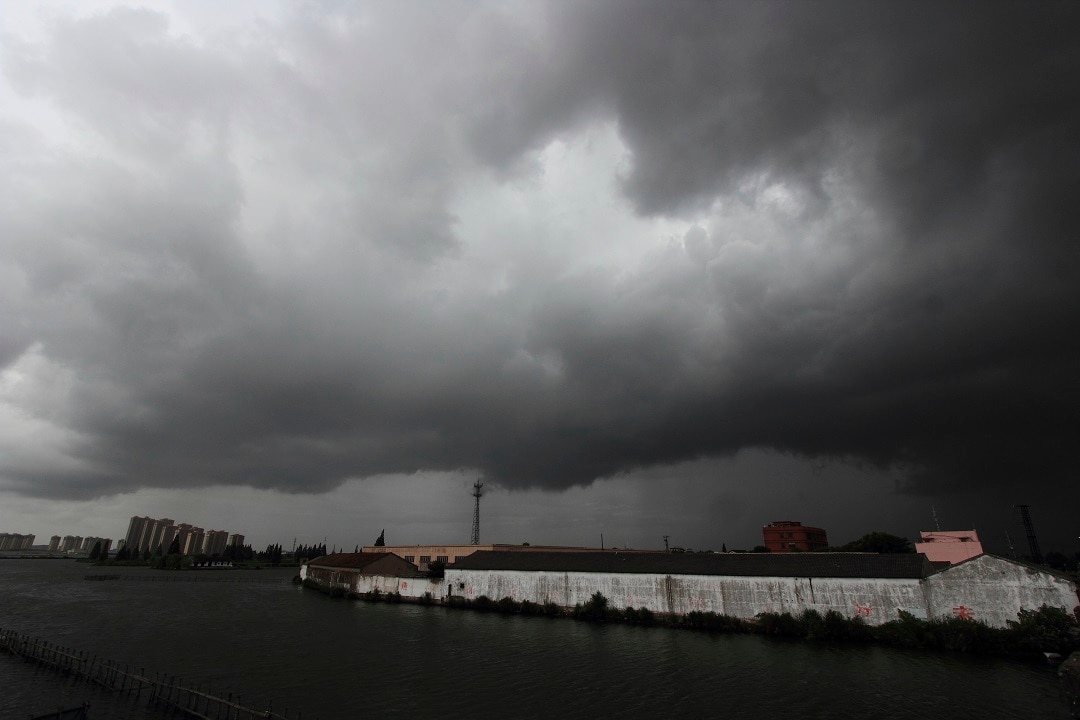
Heavy rain brought about by tropical storms have claimed more than 20 lives in Vietnam and the Philippines, while India and Myanmar are bracing for more rain in the coming days – Reporting by The Straits Times

Flash floods in Vietnam have now claimed at least 19 lives, the government said yesterday, as residents in affected areas sought safety in higher ground. An additional 13 people were unaccounted for.

Boasting a long coastline, tropical Vietnam is battered by floods and storms every year, with hundreds of lives lost from the annual monsoon barrage.

The remnants of Typhoon Son Tinh, now a tropical depression, made landfall last Wednesday night, the third tropical storm to hit Vietnam since the start of the year.

Floods and landslide from heavy rain have ranged far and wide and impacted rural and urban areas, including the capital Hanoi.

State-controlled VNExpress news site reported last Saturday that residents in Chuong My district on the outskirts of Hanoi were asked to leave their homes and get to higher ground for fear of heavy floods.

“We must be active in moving our furniture out of homes. From last year’s experience, we did not have time to run,” a local resident was quoted as saying.

Published photos showed homeowners in plastic raincoats moving bags of goods and livestock.

“My house is in a very low location so I have to move all the rice to higher places,” resident Nguyen Duy Dong told VNExpress.

“Since the afternoon, we have moved more than one tonne of rice.”

The amount of land under siege has also spiked, with over 15,000 houses damaged or destroyed and more than 110,000ha of crops inundated. Several roads have also disappeared under the water.

Many countries in the region experience their rainy season between June and November.

In the Philippines, tropical depression Josie is on its way out of the country but will continue to induce heavy rain over the western sections of Luzon and Visayas today.

The Philippine Atmospheric, Geophysical and Astronomical Services Administration urged the public, especially those living near river channels and in low-lying and mountainous areas, to be on alert for possible flash flood or landslide.

At least five people have died and more than 700,000 were affected by days of heavy rain, which caused flooding and landslides, the Philippine authorities said yesterday.

At least three tropical cyclones battered the Philippines in recent weeks. Josie is the Philippines’ 10th tropical cyclone for 2018. The country usually gets an average of 20 tropical cyclones per year.

The monsoon season is also under way across South Asia, with India bearing the brunt.

With a low-pressure area developing into a depression over the Bay of Bengal, the rain intensity may pick up in the next two days after a period of light rain in the past few days.

Since the start of the monsoon rains, hundreds have lost their lives in floods and landslides across India, which accounts for one-fifth of global deaths due to floods.

Myanmar’s coastal areas could also be hit by heavy rain as rain clouds from the storm are forecast to pass middle areas of Myanmar and reach Bangladesh, where more than half a million Rohingya are in refugee camps in low-lying areas.

Meanwhile, rescue activities are ongoing in western Japan two weeks after floods and landslides triggered by torrential rain killed more than 200 people.

There are still about 4,500 people living in emergency shelters and the authorities are considering housing the displaced people on a cruise ship, reported the Japan Times.

World Poker Tour looks to expand into Vietnam

Advertisements

The World Poker Tour (WPT) is looking to drum up business around Asia and Vietnam. The poker organization is planning a new tournament in Vietnam in September. The event is expected to provide huge payouts to both poker players and tournament organizers.

The WPT will take a 20-day trip through Asia with the help of a newly announced tournament in Vietnam. The event, WPT Vietnam, will be hosted by Ho Chi Minh’s Pro Poker Club and is scheduled to kick off on September 26. It will include a number of tournaments, including a $500 WPT Pro Poker Club Superstack Classic and a $1,000 Main Event. Erik Gibbs reported on CalvinAyre

Danny McDonagh, WPT Live Events Specialist, describes the event as a massive opportunity to satisfy the area’s “tremendous appetite for poker.” The WPT Vietnam will be preceded by a trip to Japan September 15 – 17 and another to South Korea from September 18 – 21. That trip will see the WPT Korea held at the country’s Paradise City Casino September 19 – 21 and will offer a normal lineup with an additional $5,000 team event thrown into the mix.

The team event features a maximum of 16 teams, each with four players. Players will battle it out in six NLHE and Omaha tournaments, with the winning team being awarded four seats at the WPT Korea Main Event. Several teams, including ones from the host country, Singapore, the UK, Australia and the US, have already announced their participation.

Following its Asia visit, the WPT will return to India for the second time. It will hold its second WPT India at the Deltin Royale Casino in Goa beginning November 13 and running through November 19. The WPT expects the event to further develop its presence in the country, one of the fastest growing poker markets in the world. Last year, 527 players participated in the inaugural WPT India leading to the eventual winner, Vijash Mantri, pocketing $92,000.

Poker laws in India are a current source of much controversy. Each state has its own laws, with only some authorizing the game. This could change, though, as there is a push now by the Indian Law Commission to create country-wide standards. Legalizing sports betting, according to the commission, is the only way to control the industry. The ILC recently published a report on the subject, which will now be put to review by legislators.

WPT500 Los Angeles Final Table Results

The final table of the first-ever WPT500 Los Angeles played out in May, 2017, with Dong Le – a Vietnamese oversea emerging victorious to take home the $224,500 top prize in his first WPT event.

1st: Dong Le – $224,500
2nd: Owen Crowe – $130,000
3rd: Peter Hengsakul – $100,000
4th: Richard Tae Kim – $81,000
5th: Ilya Shpiner – $65,000
6th: Deepinder Singh – $49,000
7th: Mike Eskandari – $36,000
8th: Alex Fayneshteyn – $28,000
9th: Greg Roberts – $21,000

Dong Le, a real estate broker for 20 years from Boston, Massachusetts, entered the WPT500 Los Angeles final table third in chips and making the biggest live tournament score of his career. He quickly asserted himself as the table captain, even despite not entering with the chip lead. Le’s aggression was paramount, and it was the key factor in what allowed him to come out on top. WPT reported.

[ajax_load_more]


On July 28th: A longest lunar eclipse of 21st century is able to see in Vietnam

Advertisements

People in Asia, Europe and Africa can observe the entire phenomenon while other regions can only watch a part of it.

The eclipse will last five hours, from 0:14 a.m. to 6:28 a.m., with the total eclipse extending from 2:30 a.m. to 4:13 a.m in Vietnam.

“This is the longest total eclipse of the 21st century since it lasts 103 minutes,” said Dang Vu Tuan Son, head of Vietnam Astronomy and Cosmology Association.

It is recommended that people arrange to watch the eclipse with binoculars, telescopes or cameras.

This is the second lunar total eclipse of the year. The first happened on January 31, when the Earth witnessed the first blue moon total lunar eclipse in over a century.

After July 28, Vietnamese will have to wait until May 2021 to see another lunar eclipse.

By Pham Huong

Wild weather is battering Vietnam and South-East Asia countries – Here is why

Advertisements

As heat waves, typhoons and floods devastate nations across South-East Asia, let’s see at why the region has been hit with wild weather

Extreme weather has hammered parts of Asia with deadly flash-flooding and landslides hitting Vietnam, a powerful monsoon battering the Philippines and Japan braving a sweltering heat wave. Riley Morgan reported on SBS.

Tropical storm devastates Vietnam

Storm Son Tinh kills 20, leaves 16 missing in Vietnam @AFP

Tropical storm Son Tinh has killed 20 people, left 16 missing and injured 14 in Vietnam, the country’s rescue committee says.

Floods triggered by heavy rains hit northern Vietnam after Son Tinh made landfall in northern coastal areas on Thursday, while the capital Hanoi was flooded and lashed by torrential rains.

More than 5000 houses were damaged, swept away, submerged or collapsed, around 82,000 hectares of crops were damaged and nearly 17,000 animals were killed nationwide, the Vietnam National Committee for Search and Rescue said in a report on Saturday.

Typhoon winds hit Shanghai

Typhoon Ampil has hit Chinese financial hub Shanghai, bringing heavy rain and disrupting transport and shipping.

More than 600 flights from the city’s two airports were cancelled and high-speed rail services also impacted, state broadcaster CCTV said early Sunday afternoon.

Rains in Shaoxing city. @ AAP

The typhoon first hit the island of Chongming, 45 km east of the city, with winds up to 28 metres per second near its eye, said the National Meteorological Centre.

The city had already relocated 190,000 people from coastal areas by early Sunday morning, according to a report by state news agency Xinhua.

Six killed in Philippine rains

Manila At least six people have been killed in landslides and other accidents in the Philippines following a week of heavy rains brought about by three tropical cyclones.

More than 12,000 people have also been forced to flee homes due to floods, according to the country’s disaster risk management council.

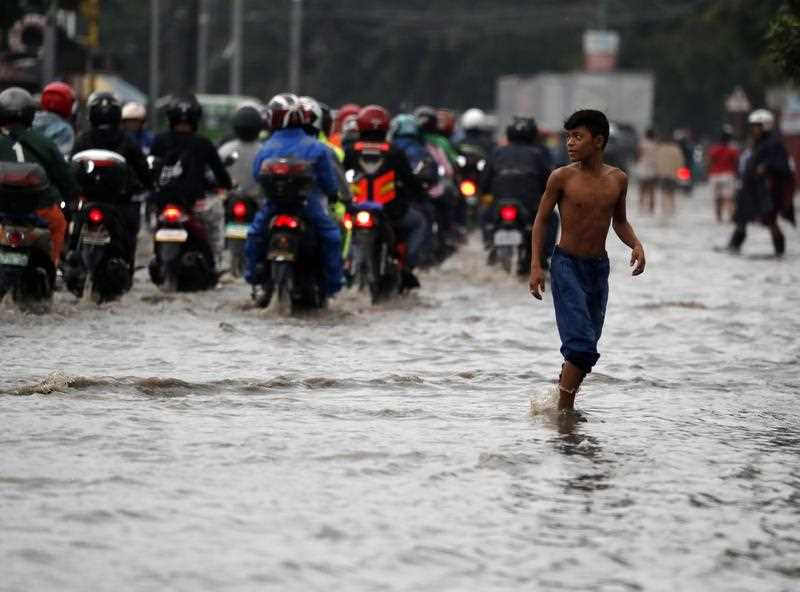
A Filipino navigates through flooded streets in Las Pinas city, south of Manila, Philippines, 18 July 2018. @AAP

Two children, aged three and six, were killed on Sunday when a landslide buried their house while they were sleeping in the town of Barbaza, about 400 kilometres south of Manila, police said.

The victims’ mother was injured in the landslide. On Friday, two brothers, 11 and 12, were killed when a portion of their house was buried in thick mountain soil after a landslide in the town of Agoo in the northern province of La Union, police said.

In the town of Bontoc in Mountain Province, a 54-year-old woman died when a passing van was hit by a boulder during a landslide on Wednesday. A 43-year-old man was swept away by a strong current as he crossed a river in the central province of Negros Oriental on July 15.

Japan heatwave

A continuing heat wave in Japan has led to temperatures as high as 40C, with the casualties climbing up as more deaths were reported.

Public broadcaster NHK reported that until Friday a number of people had been taken to hospital due to heat stroke related symptoms.

The death toll had climbed to 30, after 10 more deaths were reported on Thursday.

Some areas in central Japan registered record high temperatures of 40C, said the Japan Meteorological Agency.

On Friday, temperatures had reached a little above 35C, with the heatwave set to continue over the next few days.

The Tokyo Fire Department reported that rescue teams Thursday responded to more than 3000 emergency calls as the temperatures soared to 40C and 317 people were taken to hospital.

Why is the weather extreme?

University of Melbourne Associate Professor Todd Lane told SBS News the severity of the weather was down to the Madden-Julian Oscillation (MJO).

“This is a mass of cloudy air that essentially forms in the Indian Ocean and moves eastward through the Island regions of Indonesia, Malaysia and the Philippines and then moves into the Pacific Ocean,” Dr Lane told SBS News.

“At the moment it is particularly active so there is a big mass of cloud linked to this Madden-Julian Oscillation event over the Philippines and over the Western Pacific region. So that’s what is causing a lot of the storms in this region and even the tropical cyclones and storms that are moving off to the north to impact China and Japan.”

The MJO is a regularly occurring process and repeats itself every 30 to 60 days. The current MJO event looks likely to decay as it moves towards the Pacific Ocean, according to Dr Lane.

[ajax_load_more]

Vietnam’s state owned enterprises divestment, IPO proceeds to triple in 2018-2020

Advertisements

As a new wave of public sector reform gets underway, large-caps are seen as attractive ‘buys,’ in the current market correction, says Saigon Securities Inc (SSI).

As the Vietnamese government continues its aggressive public-sector reforms, the total funds raised from IPOs and the divestment of state-owned enterprises (SOEs) may triple in 2018-2020 compared to levels seen in the 2011-2017 period, according to SSI. Finance Asia reports.

The total proceeds from IPOs and the share sale of SOEs in the next two years are expected to reach $26.3 billion, 2.75 times higher than the funds raised for the whole period between 2011 and 2017. Specifically, the value of IPOs will reach $9.7 billion, while the total amount of divestment could hit $16.6 billion. “Vietnam could end up being the only country in the world that embarks on a new wave of SOE reform in 2018-2020, placing large and profitable SOEs on public offer,” says SSI.

Vietnam plans to make the country’s state-run enterprises more compliant with market principles and practices after following the establishment of the State Capital Management Committee in February this year, says SSI. As many as 30 enterprises and economic groups will be transferred to the committee, which will manage the restructuring and sale of any public companies.

Infrastructure Strategy

Proceeds from the divestment of SOE stakes, as well as corporate dividends, are vital funding sources for the government’s infrastructure spending. Vietnam is boosting spending on transport and logistics facilities amid rapid urban growth and domestic consumption. With a projected 2018 GDP growth of 6.7%, it boasts one of the world’s fastest-growing economies. The country’s two stock exchanges — the Hanoi Stock Exchange and the Ho Chi Minh Stock Exchange – have climbed approximately 31% and 48% respectively in the last year.

“We don’t see the stock market valuation to be particularly demanding (2018 PE at 15x), given current high growth prospects,” says SSI. The company says it is generally positive about large-cap stocks across the financial, construction, tourism and retail sectors, adding the manufacturing industry is growing at “torrential” pace. It expects up to 10 banks to comply with the Basel II requirements in 2020, a deadline set by the government’s banking reform 2016-2020 roadmap.

“We expect these banks to start preparing for capital raising,” says SSI. These include Joint Stock Commercial Bank for Foreign Trade of Vietnam, Bank for Investment and Development of Vietnam HD Bank, VP Bank and many more. SSI is keeping watch on the IPOs of Mobifone, retailer SATRA and Saigon Tourist among others.

Foreign investors needed

Foreign participation in public equities is rising steadily in both relative and absolute terms, and currently accounts for about 21% of market capitalisation. In fixed income, foreign investors hold just about 5% of the total outstanding volume of government bonds, says SSI.

The company estimates net earnings growth of 68 companies under its coverage to average 28.7% in 2018, driven by the consumer discretionary and financial sectors.

Supported by Vietnam’s robust economic growth and equity market performance, SSI, which is the country’s biggest securities firm by market value, is targeting VND3,410 billion ($149 million) in revenues and VND1,615 billion in profit for 2018. The company recently won Vietnam’s ‘Best Investment Bank in Vietnam’ and ‘Best Equity Capital Markets House’ in FinanceAsia’s 2018 Country Awards. Going forward, SSI plans to focus on capital growth and diversification.

Expanded Product Base

Notably, the company aims to develop products that suit different risk and reward profiles and expand its activities in corporate bonds, derivatives and structured products. With numerous SOEs expected to sell shares as well as an attractive pipeline of IPO activities this year, SSI has been focusing on “expanding its customer base to include large-scale private enterprises with potential growth prospects in key sectors,” says SSI.

Looking beyond 2020, SSI expects the country’s sovereign rating to be upgraded to Investment grade. “We are positive that the reforms will show good results.”

Death toll in Vietnam flooding rises to 20

Advertisements

Flash floods after Typhoon Son Tinh in Vietnam have now claimed at least 20 lives, the government said on Sunday (Jul 22), as residents in affected areas sought safety in higher ground.

Boasting a long coastline, tropical Vietnam is battered by floods and storms every year, with hundreds of lives lost from the annual monsoon barrage.

The remnants of Typhoon Son Tinh, now a tropical depression, made landfall Wednesday night, the third tropical storm to hit Vietnam since the start of the year.

The latest report from the country’s disaster office said 19 people have been killed so far, with an additional 13 people unaccounted for.

Floods and landslide from heavy rains have ranged far and wide and impacted rural and urban areas, including the capital Hanoi.

They are expected to continue in the coming days.

State-controlled VNExpress news site reported Saturday that residents in Chuong My district on the outskirts of Hanoi were asked to leave their homes and get to higher ground for fear of heavy floods.

“We must be active in moving our furniture out of homes. From last year’s experience, we did not have time to run,” a local resident was quoted as saying.

Published photos showed homeowners in plastic raincosts moving bags of goods and livestock.

“My house is in a very low location so I have to move all the rice to higher places,” resident Nguyen Duy Dong told VNExpress. “Since the afternoon, we have moved more than one tonne of rice.”

The amount of land under seige has also spiked, with more than 15,000 houses damaged or destroyed and more than 110,000 hectares of crops inundated. Several roads have also disappeared under the water.

Vietnam’s rainy season, like other countries in the region, is between June and November, but the death toll from stormy weather has often exceeded its neighbors.

Last year, 389 lives were claimed by natural disasters, with material damages reportedly reaching US$2.6 billion, according to the government.

5 million Vietnamese will lose jobs in the 4.0 industrial revolution?

Advertisements

The risk of losing jobs has increased in the 4.0 industry revolution era.

Tran Anh Tuan, deputy director of the HCMC Center for Human Resources Forecasting and Labor Market Information said.

Vietnam has been warned that 5 million jobs may be lost by 2020 as it has a 3.79/10 score for the quality of the labor force, ranked 11th out of 12 countries in Asia, and a 4.3/10 score in human resources competitiveness index. Chi Mai reported on Vietnamnet.

Other indicators for Vietnamese workers are also low. Only 20.3 percent of Vietnamese workers had training or degrees/certificates in 2015. Vietnamese are weak at soft skills, such as foreign language, IT, teamwork, communication, and professional ethics.

It is expected that 56 percent of workers in five South East Asian countries, including Vietnam, may lose their jobs because of robots.

Other indicators for Vietnamese workers are also low. Only 20.3 percent of Vietnamese workers had training or degrees/certificates in 2015. Vietnamese are weak at soft skills, such as foreign language, IT, teamwork, communication, and professional ethics.

The ILO report also pointed out that 86 percent of workers in the textile & garment industry in Vietnam, 64 percent in Indonesia and 88 percent in Cambodia will face the risk of losing jobs in the context of growing automation.

The early warnings about the appearance of robots which would replace people in production lines were ignored by Vietnamese. They thought that robots could exist only in foreign factories, not in Vietnam, where manufacturers are not rich enough to buy robots.

But more robots have appeared at Vietnam’s manufacturing workshops.

Pham Van Viet, general director of VitaJean, said modern machines are expected to replace 60-80 percent of workers. The modernization has allowed the company to cut staff from 1,800 to 1,250 and then to 800.

“In the future, we will retain 450 high-quality workers only,” Viet said, adding that the installation of the automatic production line is scheduled to be completed by 2019.

It would allow VitaJean to cut production costs by 20 percent. The company plans to take back investment capital after five years.

Namilux, a gas cooker manufacturer, has been automating its production line for the last six to seven years. With the new production line, two workers can handle the workload of eight workers.

Namilux’s general director Nguyen Manh Dung said enterprises can cut the labor cost by three to four times, while the figure could be 10 times in some industries.

Vu Quang Tho from the Vietnam Labor Federation said Vietnam needs to begin applying measures to support workers now. He suggested that enterprises, especially foreign invested ones, make commitments about the number of workers they will use.

Exit mobile version