If you only have one night to spend in Vietnam, make it Ho Chi Minh City. According to travel booking platform Agoda, the southern metropolis is the most popular destination for a one-night stay in Vietnam, based on data from the first five months of 2025.
Agoda describes the city as “a vibrant metropolis that never sleeps,” ideal for a quick recharge. Whether it’s rooftop cocktails overlooking the skyline, sizzling street food adventures, or a whirlwind night on bustling Bùi Viện Street, Ho Chi Minh City packs high-energy charm into every hour.
The city’s dynamic mix of colonial-era architecture, war history, thriving café culture, and lively nightlife makes it perfect for travelers seeking to make the most of a short stop. Agoda recommends staying in District 1 or District 3, which offer easy access to key landmarks like the Notre-Dame Cathedral, Ben Thanh Market, and the War Remnants Museum.
Coming in second on Agoda’s list is Da Nang, a coastal gem where travelers can enjoy golden beaches, iconic bridges, and vibrant café scenes—even in just 24 hours. The city offers a seamless blend of seaside relaxation and urban appeal.
Hanoi, the capital, ranked third. Agoda suggests exploring the lantern-lit streets of the Old Quarter, slurping a hot bowl of pho, or catching a performance at the historic Hanoi Opera House—all within a single day.
Just a few hours’ drive from Ho Chi Minh City, Vung Tau secured fourth place. This seaside town is favored for quick getaways, where visitors can walk along the beach at sunset, feast on fresh seafood, and soak in the laid-back vibe.
Rounding out the top five is Da Lat, a cool-climate retreat in the Central Highlands known for pine forests, flower gardens, and misty hills. While it’s often a haven for slow travelers, Da Lat still offers a refreshing escape for those on tighter schedules.
So whether you’re after neon-lit energy or mist-covered tranquility, Vietnam has the perfect overnight stop for every kind of traveler.
In a major step toward tackling plastic pollution and promoting a circular economy, Vietnam is considering the adoption of a Deposit Return Scheme (DRS) — a system that incentivizes the return of recyclable beverage containers — with support from the Norwegian Embassy in Vietnam and Innovation Norway.
Unveiled during a launch event in Hanoi on June 16, the Scoping Study for a Nationwide DRS in Vietnam outlines how a well-designed scheme could significantly reduce plastic waste, support green job creation, and contribute to Vietnam’s net-zero emissions goal by 2050.
“A Deposit Return Scheme could be a game-changer for Vietnam,” said H.E. Hilde Solbakken, Norwegian Ambassador to Vietnam. “It offers not only environmental benefits but also socio-economic opportunities by stimulating a new recycling industry.”
A Proven Model with Local Potential
Globally, DRS systems have proven successful in over 40 jurisdictions, achieving high recycling rates and reducing the volume of waste entering landfills and natural ecosystems. However, no Southeast Asian country has yet implemented a national DRS for single-use beverage containers—making Vietnam a potential trailblazer in the region.
The study emphasizes that Vietnam will require a DRS tailored to its unique conditions, including beverage market dynamics and existing waste management infrastructure. The report includes detailed technical specifications and policy recommendations to ensure the model’s practicality and effectiveness.
If implemented effectively, the system could: Divert 77,000 tons of packaging waste from landfills annually; Cut 265,000 tons of CO₂e emissions; Create around 6,400 formal jobs and 9,600 freelance employment opportunities in the waste sector
Alignment with National and Global Environmental Goals
The proposed DRS aligns with Vietnam’s Extended Producer Responsibility (EPR) policy and the 2020 Law on Environmental Protection. It also supports the country’s National Action Plan on Marine Plastic Litter Management, which aims to reduce marine plastic waste by 75% by 2030.
“For Norway, clean and healthy oceans are a national priority and a global responsibility,” noted Ambassador Solbakken. “As a maritime nation, we have committed over $200 million to tackle marine litter and microplastics, with Vietnam as a key partner in these efforts.”
The Ambassador emphasized that DRS operationalizes the “polluter pays” principle under EPR, ensuring that private companies are held accountable for the lifecycle of their products. In Norway, Producer Responsibility Organizations (PROs) are mandated to manage EPR and DRS frameworks, setting a model of public-private collaboration.
A Call for Private Sector Engagement
Ambassador Solbakken underscored the critical role of the private sector in making DRS and broader EPR initiatives effective:
“Experience shows that mandatory schemes with ambitious targets drive private sector innovation and maximize system efficiency. We look forward to supporting Vietnam as it explores such policy innovations and transitions toward a greener, more circular economy.”
Vietnam’s efforts to adopt a Deposit Return Scheme signal not only a commitment to environmental sustainability but also a promising opportunity for investors and stakeholders in the green economy to participate in shaping a cleaner, more resilient future for the region.
From a simple stopover to a destination of choice, Vietnam is establishing itself as a land of promise for international project leaders. With its dynamic economy, high quality of life, and business-friendly environment, the country is attracting a new generation of entrepreneurs from all over the world.
Why Global Entrepreneurs Are Turning to Vietnam
In this video, international entrepreneurs share how they came to Vietnam and chose to stay and build their businesses here. Industry experts also offer insights into why the country is increasingly seen as a “promised land” for startups and global businesses.
Thanks to its fast-growing economy, stable political landscape, affordable living costs, and modern urban lifestyle, Vietnam has become a natural choice for those looking to balance business development with lifestyle goals. After traveling across Europe and Asia, many international entrepreneurs have discovered in Vietnam not just a place to launch their business—but a place to settle and grow.
In neighborhoods like Thao Dien—set along the banks of the Saigon River in Ho Chi Minh City—a Belgian entrepreneur arrived here and opened a restaurant just three weeks later, inspired by the welcoming community and the unique rhythm of life in Vietnam. With a growing support network and an environment that encourages creativity and ambition, Vietnam offers more than just opportunity—it offers a true sense of belonging.
A meeting between the founder of MoveToAsia and a Belgian entrepreneur at Satsuma Thao Dien
Simplified Procedures: Vietnam Eases the Way for Foreign Entrepreneurs
Vietnam is becoming an increasingly attractive destination—not only for launching new ventures but also for building long-term lives. In the first quarter of 2025 alone, total registered foreign investment surged by 34.7% year-on-year, a clear sign that Vietnam is gaining traction among both major corporations and small business owners looking for a strategic base in Asia.
Vietnam continues to strengthen its position as a manufacturing hub by offering attractive government incentives and simplified procedures for investors. One key measure is the 100% import duty exemption on machinery, equipment, and materials used to create fixed assets in manufacturing projects—helping reduce upfront capital costs for factory setup. On June 14, 2025, Vietnam’s National Assembly passed an amended Corporate Income Tax Law, introducing preferential tax rates of 10%, 15%, and 17% for qualifying manufacturing sectors. These incentives are part of Vietnam’s broader strategy to attract large-scale, value-added production and reduce reliance on imported inputs.
To navigate the relocation process, many turn to companies like MoveToAsia, which help simplify critical steps such as business registration and visa applications. At the forefront of this support network is Guillaume Rondan, founder of MoveToAsia, who has guided many expat entrepreneurs through their transition to Vietnam. He highlights several reasons why Vietnam stands out: strong economic growth, regulatory clarity, and the ability to start a business without a local partner.
Global Integration: New Opportunities for Entrepreneurs
As Vietnam becomes more connected to the global economy, international entrepreneurs are finding more opportunities to grow their businesses. Thanks to its participation in over a dozen Free Trade Agreements (FTAs), the country is lowering trade barriers, aligning with global standards, and opening doors to major markets in Europe and the Americas.
Vietnam’s open trade policies are not only boosting exports, but also attracting entrepreneurs who want to build businesses that can compete on a global scale. With affordable production costs and access to preferential trade terms, Vietnam offers a strong foundation for companies looking to expand beyond borders.
Vietnam’s growing role on the world stage is also supported by stronger diplomatic relationships. In May 2025, the official visit of French President Emmanuel Macron led to the signing of 14 new cooperation agreements, showing just how committed Vietnam is to being a key business partner internationally. These developments send a clear message to global investors: Vietnam is open for business, globally connected, and ready to lead in regional trade.
Beyond economic indicators, many expats are drawn to Vietnam by its distinctive quality of life—something not easily measured, but deeply felt. The country boasts a rich cultural heritage that blends tradition with modernity, a globally celebrated food scene that turns everyday meals into memorable experiences, and a tropical climate that offers year-round warmth and vibrancy. Add to this the genuine hospitality of the Vietnamese people and a more relaxed, less pressured lifestyle compared to other major business hubs in Asia, and it’s easy to see why Vietnam stands out.
These lifestyle advantages, paired with tangible business benefits—such as an open and fast-growing economy, low barriers to entry, and increasing support for foreign-led ventures—create a uniquely fertile ground for entrepreneurship. For global founders seeking both opportunity and a better quality of life, Vietnam is fast becoming a destination of choice.
Final Thought: A Promising Future for Entrepreneurs in Vietnam
Vietnam is becoming more than just a place to visit—it’s quickly turning into a global center for startups and innovation. With government support, growing international ties, and an energetic lifestyle, Vietnam is creating the right conditions to attract and support foreign entrepreneurs.
For founders around the world, Vietnam offers not only immediate opportunities but also long-term strategic advantages. Those who establish themselves here today are well-positioned to take advantage of Vietnam’s current growth and tap into global markets.
Hai Phong City, a rising economic hub in Northern Vietnam, is set to host the 3rd Meeting of the APEC Business Advisory Council (ABAC III) and a series of high-level business events from July 15–18, 2025.
This milestone event will welcome approximately 250 international and Vietnamese delegates, including senior executives from global corporations, trade and investment promotion agencies, and business leaders from the 21 APEC member economies.
The gathering serves as a critical step in Vietnam’s roadmap to assume the role of APEC and ABAC Chair in 2027.
A Strategic Gateway for Engagement and Investment
According to Mr. Pham Tan Cong, Chairman of the Vietnam Chamber of Commerce and Industry (VCCI) and Chairman of ABAC Vietnam, the meeting presents a unique opportunity for Vietnamese enterprises to engage directly with regional economic leaders, discuss development strategies, and propose policy recommendations on trade liberalization, investment facilitation, digital transformation, and sustainable growth.
“This year’s ABAC theme, Bridge. Business. Beyond., embodies the spirit of connection and forward-looking cooperation. Vietnam aims to play a pivotal role as a bridge between APEC economies in this process,” Mr. Cong emphasized.
Hai Phong – Poised to Host the Region’s Business Elite
Hai Phong has completed all logistical, security, and communications preparations to host the ABAC meeting. More than just an international forum, the event also serves as a prime opportunity to showcase Hai Phong’s strategic potential to global and domestic investors.
As part of the broader program, several investment and diplomatic promotion activities are planned. The highlight will be the Hai Phong Trade and Investment Promotion Conference on the afternoon of July 15, held at the Hai Phong Conference and Performing Arts Center, with an expected attendance of 700 distinguished guests.
An accompanying exhibition on Hai Phong’s economic achievements and flagship products will be held at the Pullman Hotel from July 15 to 18, featuring key sectors such as industrial manufacturing, high-tech agriculture, logistics, port services, and tourism.
Shaping Policy Recommendations for APEC Leaders
ABAC III is one of four major annual meetings of the APEC Business Advisory Council. The outcomes and policy recommendations discussed during this session will be submitted to APEC Leaders for consideration at the 2025 APEC Summit.
Following the Hai Phong meeting, ABAC IV and the APEC CEO Summit 2025 are scheduled to take place in South Korea in October, ahead of the APEC Economic Leaders’ Meeting.
The Middle East is on the brink of historic escalation as Israel launches a bold wave of airstrikes deep into Iranian territory, prompting fierce warnings from Hezbollah and a chilling nuclear alert from Russia. A new geopolitical axis—Iran–Hezbollah–Russia—is rapidly forming, signaling the most dangerous regional escalation since World War II.
✈️ Tehran Under Attack: Israeli Air Force Bombs Capital
In the early hours of June 20, explosions rocked Tehran as Israeli warplanes struck the Lavizan district, home to several top-secret Iranian military installations. This marks Israel’s first direct strike into the heart of Iran’s military command in years.
Separately, a Revolutionary Guard base in East Azerbaijan province was hit by drones, resulting in multiple casualties.
Analysts confirm this is no longer a tit-for-tat exchange—it’s a coordinated campaign targeting the core of Iran’s defense infrastructure.
Hezbollah: “We Will Not Stand Aside”
Following the attacks, Hezbollah’s deputy leader, Naim Qassem, issued a fiery statement:
“The U.S. President’s threats to strike Iran’s Supreme Leader are not just provocative—they’re a declaration of war on the entire Middle East. Hezbollah will not remain neutral and will respond appropriately to any act of aggression.”
This declaration raises the specter of a new front opening in northern Israel, where Hezbollah holds significant power along the Lebanon border.
☢️ Russia Issues Nuclear Warning: “A New Chernobyl Is Possible”
In a stark and unprecedented warning, Russia’s Security Council Deputy Chair Dmitry Medvedev stated:
“Israeli strikes on Iran’s nuclear facilities risk triggering a large-scale nuclear catastrophe—potentially another Chernobyl, this time in the Middle East.”
Beyond a humanitarian alert, Medvedev’s message hinted that Russia may intervene directly if regional stability—or Russian interests in the Caucasus—are threatened.
Global Fallout: Oil, Markets, and Financial Panic
Oil prices have spiked sharply amid fears of supply disruption across the Gulf region.
Stock markets worldwide have begun to wobble, pricing in the risk of full-scale war.
Gold and safe-haven assets are seeing surging inflows, as investors brace for a prolonged crisis—not just a short-term flare-up.
Two Scenarios Lie Ahead
Full-Scale War: If Israel targets Iran’s nuclear infrastructure and Tehran retaliates with ballistic missiles, a direct U.S.–Iran conflict could erupt—dragging in Hezbollah, Russia, and other regional proxies.
️ Negotiation Amid Chaos: A tactical ceasefire could still be brokered—possibly by China or Turkey—but only if Israel halts before crossing Iran’s red lines.
Conclusion: The Proxy War Era May Be Over
The Middle East is no longer a simmering flashpoint—it’s now the epicenter of a looming global conflict.
With nuclear warnings, expanding alliances, and open declarations of war, the boundary between proxy warfare and direct confrontation between nuclear powers is vanishing. The world must prepare—not just diplomatically, but economically and militarily—for the worst-case scenario.
Ho Chi Minh City — Bùi Viện Walking Street, known as the “Backpacker Street” of Saigon, is one of the most vibrant nightlife hubs in Vietnam.
Lined with neon-lit bars, pubs, street food stalls, and live music venues, it attracts thousands of international tourists each week looking to soak up the city’s buzzing atmosphere. But behind the glittering lights, some troubling incidents have raised concerns among travelers and locals alike.
One recent case has drawn attention for its boldness and coordination. A foreign traveler — a Mexican national and language tutor — found himself scammed and intimidated during a seemingly ordinary visit to a pub in the Bùi Viện area.
According to a friend of the victim, the tourist sat alone at what appeared to be a typical busy bar, consuming just two beers without seeking any additional services. During his visit, four women briefly entered, greeted him casually, and left — with no further engagement. However, events took a sharp turn shortly thereafter.
The pub staff suddenly presented a bill totaling 4 million VND (approximately $160 USD) for unspecified drinks or services. When the man rightfully refused to pay for what he hadn’t ordered, three men — described as tattooed individuals posing as security guards — appeared and pressured him into paying. Fearing for his safety, the traveler reluctantly complied.
“I believe this was a coordinated scam,” the friend commented. “What’s even more upsetting is that he’s from a tougher area of Mexico and is usually extremely street-smart. He let his guard down in Vietnam, thinking it was a safe, orderly society.”
While the victim was not physically harmed, the experience left him shaken and deeply disappointed. He had admired Vietnam’s hospitality and public safety, and the incident challenged those impressions.
Although Bùi Viện remains a major attraction in Ho Chi Minh City, travelers are reminded to exercise caution — especially when entering unfamiliar venues or dealing with unclear pricing. Incidents like this, though not widespread, reflect the risks that can exist in even the most tourist-friendly neighborhoods.
Vietnam Insider has reached out to local authorities for comment on this incident and broader safety measures in Bùi Viện, and we will update the story as more information becomes available.
A recent visit to Vietnam by Arun Prabhudesai, Founder and CEO of India-based Armoks Media, has sparked widespread discussion on social media about the contrast between Vietnam’s thriving motorbike taxi services and the regulatory crackdown on similar services in parts of India.
During his trip, Prabhudesai was struck by the overwhelming number of two-wheelers navigating Vietnam’s urban streets. He shared his observations in a post on X (formerly Twitter), comparing Vietnam’s open embrace of motorbike taxis to the restrictive environment in his home country, particularly the ban on ride-hailing bikes in Karnataka.
“Just landed in Vietnam, checked into the hotel, and I’m absolutely stunned by the number of two-wheelers on the roads,” he wrote. “Vietnam is truly the land of two-wheelers. You can easily explore the city with services like GrabBike. Meanwhile, in India, bike taxis like Rapido are banned in several states. Why is that? Aren’t bike taxis a more affordable and accessible option for Indian consumers?”
Accompanying his post was a video showcasing the bustling streets of Vietnam filled with motorbikes. The post quickly gained traction, igniting a spirited debate.
Mixed Reactions Online
Some users supported Prabhudesai’s viewpoint. One shared: “I had a similar experience when I visited Vietnam last December. I asked my tour guide why there were so many bikes, and he explained that high car prices force many people to rely on two-wheelers.”
Others, however, raised concerns about safety and infrastructure. One user noted, “At least in Vietnam, people follow traffic lanes and laws. In India, it’s not like that. So bike taxis become very dangerous, especially with the way they are driven.”
Another commenter described a troubling experience: “Bike taxis in India are unsafe. I don’t support banning them entirely, but rules like speed limits need to be enforced. Once, I asked a driver to slow down—he was going 85 km/h in the city. In response, he deliberately dropped to 18-20 km/h to mock me.”
A different perspective pointed to the recklessness of some drivers: “They’re a threat. Many riders rush to grab the next ride, using their phones while navigating traffic, especially toward the end of trips. Cars are slightly better because they’re at least stable when stationary—but still not ideal.”
Several users emphasized India’s lack of suitable infrastructure. “I don’t think Vietnam’s motorbike taxi culture is comparable to Rapido or Uber Moto in India,” one user wrote. “Our roads aren’t designed for it, most drivers are undertrained, and it’s far too risky. Convenience shouldn’t come at the cost of lives.”
Karnataka’s Ban on Bike Taxis
On June 16, 2025, the state of Karnataka officially suspended all motorbike taxi services following a Supreme Court ruling that upheld the government’s initial ban. The directive requires all service providers to halt operations until new regulatory guidelines are introduced.
In response, major platforms like Rapido and Uber have removed the bike taxi option from their apps within the state, effectively suspending the service for millions of potential users.
As India debates the future of tech-enabled mobility, Prabhudesai’s Vietnam experience serves as a powerful comparison—and a potential roadmap for what could be possible with the right policies and infrastructure in place.
Kinh Bac City Development Holding Corporation (HOSE: KBC), chaired by prominent Vietnamese businessman Mr. Dang Thanh Tam, has approved a private placement plan to issue 250 million common shares at a price of VND 23,900 per share. The move is expected to raise nearly VND 6 trillion (approximately USD 235 million).
The offering price was determined at 80% of the average closing price over the 30 trading sessions prior to April 1, 2025, rounded for simplicity. The shares will be restricted from trading for 12 months after issuance, except for transfers between professional securities investors or in accordance with legal rulings.
The targeted buyers for the placement are exclusively professional investors, including a number of major institutional names. A preliminary list includes Dragon Capital’s DC Developing Markets Strategies PLC, Prudential Vietnam Life Insurance, SGI Fund, VPBank Securities, Samsung Vietnam Securities, Vietnam Enterprise Investments, and Amersham Industries Limited. Additionally, four high-net-worth individual investors are expected to acquire between 35 and 39 million shares each.
Use of Proceeds: Debt Restructuring and Project Investment
According to KBC’s capital utilization plan, the proceeds from this issuance will primarily support debt restructuring and working capital needs. The company intends to restructure up to VND 6.09 trillion in liabilities in 2025.
This includes: VND 4.428 trillion for principal and interest payments owed by Saigon – Bac Giang Industrial Park JSC. VND 1.462 trillion for debts held by Saigon – Hai Phong Industrial Park JSC. Over VND 105 billion to settle loans from VietinBank. VND 160 billion to supplement working capital.
Strategic Partnership with The Trump Organization
Notably, this capital raise aligns with KBC’s commitment to an ambitious urban and tourism development project in Hung Yen province, where it plans to contribute approximately VND 5.968 trillion (USD 235 million).
In April, Mr. Dang Thanh Tam signed a board resolution approving KBC’s participation in the investment proposal and its role as an investor in the Khoai Chau Urban, Eco-Tourism, and Golf Complex project. The total capital for this project is estimated at USD 1.5 billion.
The project, to be developed by KBC’s subsidiary — Hung Yen Investment and Development Group JSC — is part of a strategic cooperation with The Trump Organization, the real estate empire of former U.S. President Donald Trump and his family.
Set to become the first Trump-branded development in Vietnam, the project will carry the name Trump International Hung Yen, marking a significant milestone in both U.S.–Vietnam business collaboration and KBC’s international expansion ambitions.
KBC will present this initiative, along with other key strategic matters and transactions with its Hung Yen subsidiary, to shareholders during its upcoming 2025 Annual General Meeting, expected to take place later this month.
Vietnam’s clam industry, a high-value segment of its mollusk exports, is experiencing a surge in global demand—most notably with an unexpected spike in imports from China.
According to the latest data from Vietnam Customs, the country’s clam export value reached over USD 37 million in the first four months of 2025, marking a 44% increase compared to the same period in 2024.
Strong export growth was recorded across both traditional and emerging markets, with the European Union (EU)remaining Vietnam’s largest clam importer. Italy led the pack with USD 10 million in imports as of May 15, 2025—a year-on-year increase of 39%. Spain followed with nearly USD 9 million, maintaining stable demand compared to last year. The United States and South Korea also posted encouraging import growth.
Vietnam’s ability to meet stringent international standards is helping drive this success. Several major clam farming regions—including Ben Tre (certified by the Marine Stewardship Council – MSC), Tien Giang, Tra Vinh, Nam Dinh, and Ninh Binh (certified by the Aquaculture Stewardship Council – ASC)—have obtained sustainability certifications. These certifications are seen as a “passport” to penetrate demanding markets such as the EU, U.S., Japan, and Australia, which require traceability from farm to finished product to ensure food safety and origin transparency.
The standout story, however, is China, where clam imports from Vietnam soared by 381%, making it the third-largestimporting market with a total value exceeding USD 8 million. This dramatic increase allowed China to surpass several traditional buyers.
Conversely, some established markets experienced a decline. The Netherlands saw a sharp 56% drop, while Japandecreased by 38%, reflecting shifting consumer preferences or intensified competition in those regions. The UK and Singapore also reported declines.
As of the end of May 2025, Vietnamese clams had reached 49 international markets, with a wide range of export products including IQF frozen boiled clam meat, half-shell boiled clams, and whole clams. With certified sustainable farming areas and significant market potential, Vietnam’s clam sector is expected to maintain strong growth in the coming months.
However, challenges remain. According to the Vietnam Association of Seafood Exporters and Producers (VASEP), the industry faces declining seed quality and unsustainable farming practices. Overharvesting of juvenile clams and poor broodstock management are threatening the natural clam population. Furthermore, increased farming density in some areas has disrupted zoning plans and led to environmental degradation, affecting the consistency and quality of raw material supply.
VASEP emphasizes that for Vietnam’s mollusk industry to grow sustainably, strategic support is needed, including access to investment, credit, and technical assistance for producers and processors. In addition, ensuring price stability, profitability for farmers, and developing specialized farming zones that meet strict safety and quality standards will be crucial for the long-term success of the sector.
On June 19, Vietnam’s benchmark VN-Index broke through the 1,350-point mark, closing at 1,352.04 points, its highest level in recent months. Despite the index’s upward movement, market sentiment remained mixed, with gains concentrated in a few large-cap stocks, while many investors saw little improvement in their portfolios.
Across investor forums and online communities, the market was described as being in a state of “green on the outside, red on the inside,” reflecting the disparity between the index performance and broader market breadth. On the Ho Chi Minh Stock Exchange (HoSE), 162 stocks declined, while only 139 stocks advanced.
Techcombank (TCB) took center stage, emerging as the strongest performer in the VN30 group. TCB shares surged 3.66%, the highest gain among blue chips, with trading volume exceeding 23.2 million shares—making it the most positively impactful stock on the VN-Index for the session.
Following TCB was GVR, rising 3.1% to VND 29,900 per share. Other VN30 gainers posted more modest increases under 1.5%, including VIC, SSI, GAS, LPB, PLX, and CTG.
On the flip side, BVH and SHB were the biggest laggards in the VN30 basket, each falling over 1.1%. Despite the decline, SHB, associated with businessman Do Quang Hien, maintained strong liquidity, trading over 51.3 million sharesduring the session.
The market also witnessed a few rare ceiling hits, with four stocks on HoSE reaching their daily price limit: PHR, DGW, LDG, and LGL. Notably, LDG Investment JSC shares hit the ceiling for the third consecutive session, though the stock’s price remains low, closing at just VND 2,640 per share—often referred to as “iced tea price” in local investor slang.
Meanwhile, foreign investors recorded a net sell-off of nearly VND 966 billion, focusing on major tickers such as FPT, VHM, and STB. Buying activity was relatively subdued, with modest net inflows seen in DGW, GVR, SSI, and NVL.
As the cycle of drone and missile attacks between Tel Aviv and Tehran escalates in both intensity and scale, the United States is making increasingly notable military moves in the region—raising the stakes in a volatile situation.
To reinforce the Sixth Fleet currently operating in the Arabian Gulf and the waters off East Africa, the U.S. Navy has redeployed the USS Nimitz aircraft carrier from the Seventh Fleet. Simultaneously, American air force, navy, special forces, and marine units stationed at key bases in Iraq, Bahrain, and Oman have been mobilized.
While some sources have suggested that the U.S. military may be withdrawing troops to reduce exposure to potential Iranian missile strikes, The Wall Street Journal, citing sources close to the White House, reported on June 18, 2025, that President Donald Trump has secretly approved a plan to strike Iran.
Publicly, President Trump has signaled that his patience is wearing thin. Several Western media outlets have also reported that the U.S. is considering deploying the 13-ton GBU-57 Massive Ordnance Penetrator (MOP) to target Iran’s underground Fordow nuclear facility.
To deliver this “bunker buster,” the U.S. has the stealth-capable B-2 Spirit bomber at its disposal. In addition, KC-135 and KC-46 aerial refueling aircraft have been deployed to the Middle East—likely in preparation to support long-range missions involving the B-2s.
While headlines may focus on a possible evacuation of U.S. personnel, military analysts point to a more strategic shift: American forces in the Middle East and beyond appear to be transitioning into a high-alert combat-ready posture, with reinforcements in both manpower and advanced weaponry.
Following Iran’s firm rejection of negotiations with Israel and its dismissal of Western ultimatums to resume nuclear talks, President Trump remarked, “Anything is possible,” adding, “We have plans for every scenario.”
So, what lies behind these heightened military maneuvers? What are Washington’s true objectives—and what operational strategies might the U.S. employ in response to the evolving regional crisis?
Vietnam’s legendary north-south railway — the Reunification Express — has been hailed by Lonely Planet as one of the 24 most incredible train journeys in the world, earning its place as one of Southeast Asia’s most beloved rail experiences.
Stretching over 1,700 kilometers between the country’s twin economic and cultural powerhouses, Hanoi and Ho Chi Minh City, the railway offers travelers an unforgettable way to explore Vietnam’s soul. Winding through vibrant cities, lush dragonfruit fields, misty mountains, and stunning coastline, the Reunification Express is more than a train ride — it’s a cinematic voyage through the heart of the nation.
“There is no more atmospheric way to haul into Vietnam’s twin metropolises as this train rattles through historic cities and swooshes beside spectacular coastlines,” Lonely Planet wrote, highlighting its immersive cultural and scenic appeal.
Hanoi Train Street
Key highlights along the route include Hue, Vietnam’s poetic former imperial capital; Da Nang, a dynamic coastal city with golden beaches; Hoi An, a UNESCO-listed ancient town famed for lantern-lit streets and timeless charm
This accolade places Vietnam alongside world-renowned train journeys such as: The California Zephyr (USA); The Beijing-to-Lhasa Express (China); The TranzAlpine (New Zealand); The Caledonian Sleeper (UK); The Hokkaidō Shinkansen (Japan).
As Vietnam’s tourism sector continues to rise on the global stage, the Reunification Express stands out not just as a mode of transport, but as an emblem of the country’s heritage, resilience, and natural beauty — a must for every discerning traveler.
Ho Chi Minh City (HCMC), Vietnam’s economic powerhouse, is accelerating plans to establish a world-class international financial center spanning 783 hectares across both sides of the Saigon River — a transformative project aimed at positioning Vietnam as a leading financial destination in Asia.
The initial phase, covering nine prime hectares in the heart of Thu Thiem, will feature the headquarters of key regulatory and supervisory bodies, laying the groundwork for a robust, transparent, and investor-friendly ecosystem. This first stage, expected to be completed within 2–3 years, will require an estimated VND16 trillion (approx. $630 million)— with VND2 trillion contributed by the government and the remainder open to private and institutional investors.
The proposal is currently under government review, with operations slated to begin as early as 2025. By 2030, the full hub will offer a wide spectrum of sophisticated financial services, including banking, capital markets, fund and asset management, and cutting-edge fintech platforms, supported by sandbox mechanisms for innovation and derivatives trading.
In parallel, HCMC is developing a forward-looking human capital strategy to attract global talent. In 2025, five specialized training programs will launch, while city officials continue benchmarking best practices from international financial centers in the U.K., Hong Kong, China, and Kazakhstan.
This ambitious project aligns with Vietnam’s broader vision of a dual-hub model, complementing HCMC’s financial ecosystem with a parallel development in Da Nang, creating new opportunities for international capital, technology, and talent.
Investors seeking early-mover advantage in Asia’s next financial frontier are invited to explore partnership opportunities now.
HANOI, Vietnam – A rare opportunity has emerged for investors looking to establish or expand their digital footprint in Vietnam’s fast-growing tech and media landscape. A legally licensed and fully operational Vietnamese technology company is now open for 100% equity acquisition.
Founded in 2017, the company is active across several high-potential sectors, including:
Online portal services
Computer programming and software development
Advertising (digital and traditional)
Trade promotion and business matchmaking
Key Asset: Licensed Social Network Service
The company holds a Social Network Service License issued by the Ministry of Information and Communications of Vietnam—a critical and highly regulated requirement for digital and online community operations in the country. This positions the business as a compliant, ready-to-scale platform for investors looking to tap into Vietnam’s booming digital economy.
Additional Highlights:
Legally registered and fully compliant with tax and regulatory obligations
Charter capital of VND 50,000,000 (approx. USD 2,000)
Transparent corporate structure and complete financial records available for due diligence
This is an ideal acquisition for media groups, digital marketing firms, technology startups, or foreign investors aiming to enter Vietnam’s tightly regulated social media and content space through an established and licensed entity.
Price and transaction terms will be discussed privately with serious buyers.
For inquiries and further information, please contact: Mr. Dung Duong | Email: dung.duong@gbs.com.vn | Mobile: +84383001977
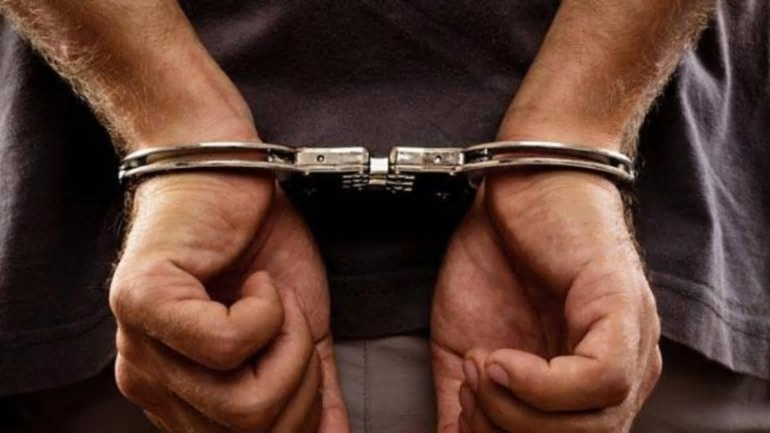
Hanoi police have arrested a taxi driver accused of extorting VND4.2 million (approximately US$160) from a young ethnic Hmong man for a 30-kilometer ride—an amount nearly ten times higher than the typical fare.
Authorities confirmed on Tuesday that Thai Ngoc Anh, 32, a resident of Thanh Xuan District, is under investigation for alleged extortion. Several other individuals allegedly involved in the incident, which occurred last Friday, have also been detained for questioning.
According to police reports, the victim, Giang Ho, 25, from Muong Khuong District in Lao Cai Province, and his 32-year-old aunt, Cu Mua, were attempting to return home after receiving medical treatment in Hanoi. At approximately 2 p.m., the pair used a ride-hailing service to travel from the National Children’s Hospital to My Dinh Bus Station, only to discover that their bus had already departed.
They were then approached by two motorbike taxi drivers who offered to help them catch the bus at its next stop along Pham Hung Street. After riding for roughly one kilometer, the drivers informed the passengers that the bus had already entered the expressway, suggesting they switch to a taxi to reach it.
The victims paid the motorbike drivers VND700,000 (US$26.83), which they were told included the cost of the forthcoming taxi ride. However, after traveling approximately 30 kilometers, taxi driver Thai Ngoc Anh dropped them near the Noi Bai – Lao Cai Expressway and demanded an additional VND4.2 million.
When Mr. Ho objected and requested the taxi driver’s phone number to verify the charge with the motorbike drivers, Anh allegedly threatened to drive them back to My Dinh Station unless they paid in full. Mr. Ho was forced to borrow the money from relatives in order to avoid further confrontation.
After exiting the vehicle, Mr. Ho and his aunt attempted to reach the expressway on foot, where they encountered a passing driver who offered them a free ride to catch their bus. That driver recorded the story and later shared it on social media, drawing significant public attention.
Based on standard taxi fare rates in Hanoi—typically VND10,000 to VND12,000 for the first one to two kilometers and VND11,000 to VND15,000 for each subsequent kilometer—a 30-kilometer trip should not exceed VND400,000 (US$15.30).
The case has sparked strong public outcry over the exploitation of vulnerable passengers and highlights the need for stricter oversight and regulation of informal transportation services.
Hanoi authorities say the investigation is ongoing.