

In May 2026, the Prime Minister issued a list of strategic technologies and products. This move concentrates resources on core fields that heavily impact economic growth and national security. The second group contains technology products acting as new growth drivers. These act as foundational technologies for the future, ensuring self-reliance in defense and security. Quantum communications, quantum computing, and quantum sensors belong to this strategic group.
Resolution 57 of the Politburo addresses quantum technology directly. It identifies quantum technology as a strategic priority for Vietnam. Within this framework, Vietnam places quantum technology on par with AI, semiconductors, 5G/6G, and blockchain. These form the suite of technologies that Vietnam aims to master.
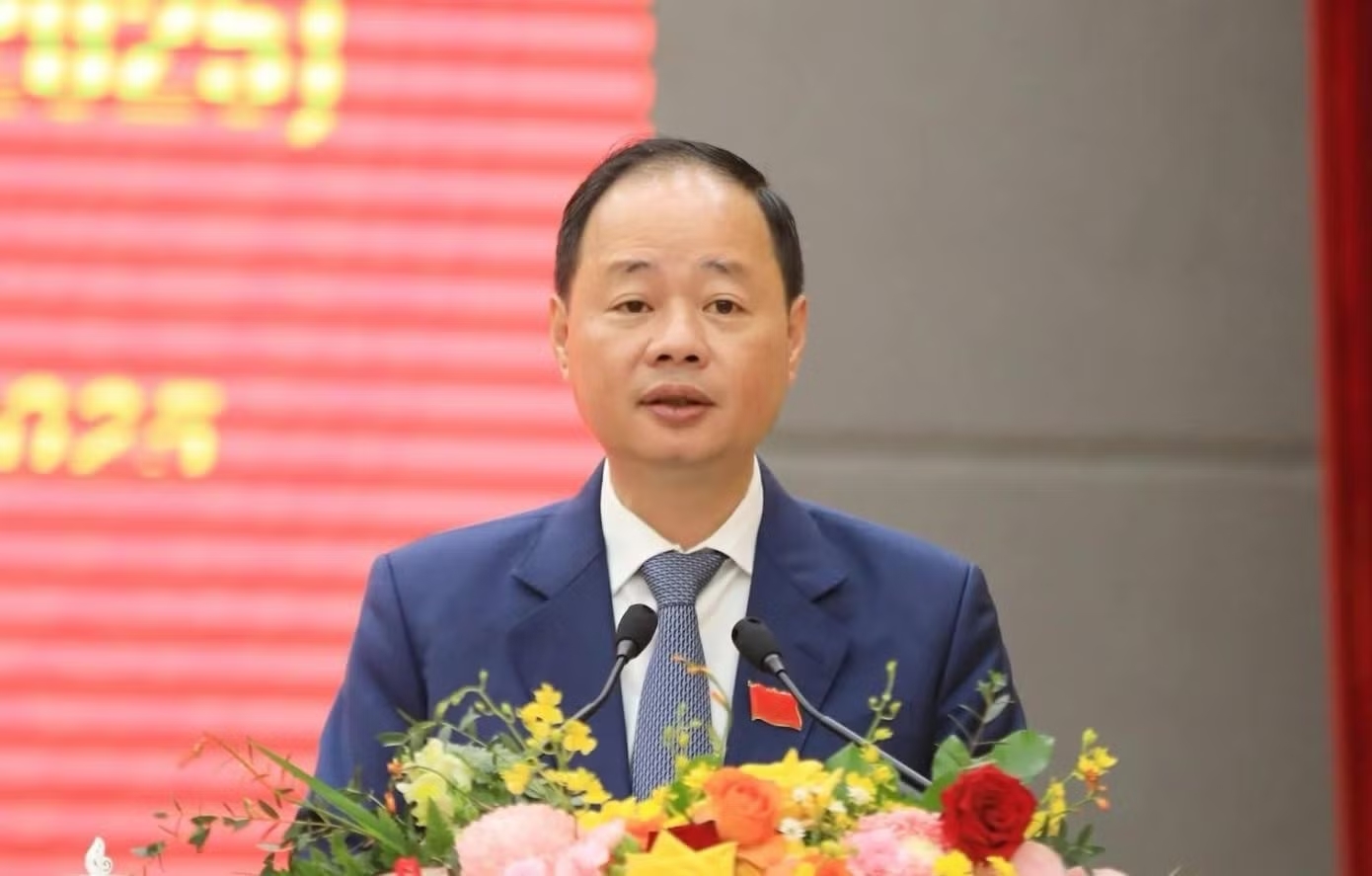
Speaking at a recent scientific seminar titled “Quantum Technology in the New Era: International Trends, Opportunities, and Requirements for Vietnam,” Tran Hong Thai, President of the Vietnam Academy of Science and Technology, made a key point. He argued that theoretical awareness and policy mindsets only hold real meaning when people translate them into actionable methods, mechanisms, execution structures, and concrete capabilities.
In his view, the pressing question goes beyond defining quantum technology. More importantly, Vietnam must understand why it needs to focus on this field right now. If the nation chooses development, it must find the proper path.
Quantum Technology Cannot Wait Until Everything Is Clear
According to the President of the Vietnam Academy of Science and Technology, quantum technology is an arduous field. It spans science, technology, infrastructure, human resources, and implementation methodologies. Many research directions globally remain in experimental and validation phases. They cannot immediately generate commercial products, markets, or mass applications.
Nevertheless, he emphasized that this difficulty prevents Vietnam from sitting on the sidelines.
He noted that people can still learn certain technologies once products emerge. However, with strategic domains like quantum, waiting changes things. If Vietnam waits until pioneering nations codify standards, structure markets, and monopolize supply chains, entry windows will shrink severely.
Tran Hong Thai observed that numerous nations have designated quantum technology as a strategic direction. Not all quantum research trajectories have matured. Not every expectation will materialize. Yet the overarching trend remains unmistakable: global players are integrating quantum principles step-by-step into computing, communications, cybersecurity, sensing, precision measurement, materials, photonics, and devices.
The second reason ties closely to Vietnam through data security. If powerful quantum machines emerge in the future, current widespread encryption systems will face catastrophic vulnerabilities. Malicious actors could harvest data today, stockpile it, and decrypt it later when technical prerequisites arrive.
The third reason involves unprecedented capabilities. Quantum technology can forge unprecedented capabilities in measurement, sensing, simulation, calculation, and materials science. These capabilities serve fundamental science while deploying across defense, security, telecommunications, finance, healthcare, energy, natural resources, environmental management, and high-tech industries.
The fourth reason highlights human capital. Cultivating talent for quantum technology takes more than a few months. Short training courses cannot summon this talent overnight. This field requires interdisciplinary human resources spanning physics, mathematics, computer science, cryptography, photonics, materials science, electronics, control systems, metrology, software, and data science.
Drawing from this reality, Tran Hong Thai asserted that Vietnam must select an appropriate strategic approach.
“We must stay proactive yet avoid impatience. We do not engage in a comprehensive race with superpowers, nor do we stand aside as mere observers. We must lead early in awareness, remain steadfast in our foundation, and strike precisely at the levers that generate substantive capabilities suited to Vietnam’s conditions,” he stressed.
In his estimation, Vietnam’s resources, workforce, and research infrastructure remain scattered. However, effective organization can coalesce these fragments into a formidable collective strength. Achieving this requires core research teams, shared laboratories, expert networks, computational platforms, and shared data systems.
Connecting Resources to Form a Quantum Technology Ecosystem
According to the President of the Vietnam Academy of Science and Technology, the Academy recently initiated collaborations with numerous agencies and units. These partnerships pool resources across the Ho Chi Minh National Academy of Politics, the Central Commission for Policy and Strategy, the Central Propaganda and Mass Mobilization Department, the Government Cipher Committee, the Ministry of Defense, the Ministry of Public Security, the Ministry of Foreign Affairs, the Ministry of Industry and Trade, the Vietnam Institute for Advanced Study in Mathematics, Vietnam National University Hanoi, Vietnam National University Ho Chi Minh City, Hanoi University of Science and Technology, VinUniversity, Phenikaa University, and the International Centre for Interdisciplinary Science and Education, alongside various other research and training institutions.
Tran Hong Thai stated that quantum technology extends beyond quantum physics. It intersects directly with information security, cryptography, national defense, industry, higher education, science diplomacy, innovation, technology enterprises, and emerging application fields. Consequently, a domestic collaborative network serves as a prerequisite. It builds an interdisciplinary, multi-agency approach that binds research directly to practical application needs.
Concurrently, the Vietnam Academy of Science and Technology actively engages in dialogue and consultation with international partners. These partners hail from the Russian Federation, the United States, the United Kingdom, Japan, and South Korea. They also include international organizations, foreign experts, and overseas Vietnamese scientists working across disciplines related to quantum technology.
According to Tran Hong Thai, these cooperative endeavors help Vietnam update global development trends. They sharpen the recognition of technical boundaries, evaluate practical deployment feasibility, and select paths best attuned to domestic conditions.
Discover more from Vietnam Insider
Subscribe to get the latest posts sent to your email.