

The fire at Hanoi Beer (Habeco) reveals a sharp split in Vietnam’s consumer sector as foreign capital floods winning stocks.
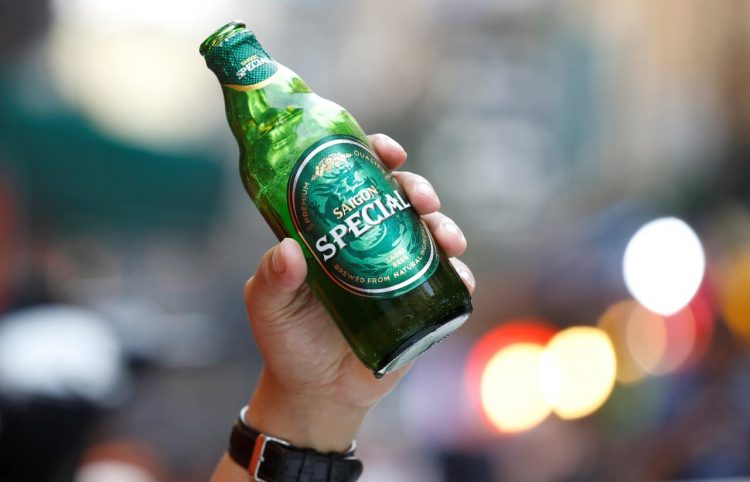
A localized incident in Vietnam has provided international investors with a sharp lesson in the brutally selective nature of capital deployment in emerging markets. On the same day the broader VN-Index soared by over 15 points, shares of Saigon Beer Alcohol Beverage Corp (SAB) surged to their maximum allowable ceiling price of VND 52,400, accumulating a massive buy queue of over 1 million shares. This remarkable rally occurred in direct contrast to its main domestic rival, Hanoi Beer Alcohol Beverage Corp (BHN), whose shares barely moved, dropping just 0.3% following a major fire at its Hanoi brewery the day prior. This episode highlights how global money is actively punishing operational risk while aggressively consolidating bets on perceived market leaders in Vietnam’s lucrative consumer duopoly.
The divergence in stock performance—SAB up sharply, BHN flatlining—immediately following a physical catastrophe illustrates the market’s ruthless calculation of corporate strength versus fragility. While authorities confirmed the fire at the Hanoi Beer plant was contained with no casualties, the incident compounds long-term uncertainty for BHN, whose factory was already slated for mandatory relocation outside the city center. For foreign investors, this operational disruption and costly future move only solidifies the investment thesis that favors SABECO, which benefits from more centralized management and significant foreign ownership, offering a clear path to market share capture.
Zooming out, the bullish frenzy was not isolated to beer stocks. The VN-Index rally to over 1,717 points was driven by heavyweights like VIC (Vingroup), TCB (Techcombank), and VJC (VietJet). Crucially, this positive momentum was underpinned by record foreign buying, with overseas investors net purchasing VND 640 billion (approximately $26 million) in the session. This capital injection was highly targeted, flowing predominantly into blue-chip names like VJC, VIC, TCB, and VNM (Vinamilk). The aggressive concentration of foreign capital confirms a “flight-to-quality” strategy, prioritizing market dominance and high-liquidity stocks over rivals facing operational headwinds or structural challenges.
The market’s decision to reward SAB while ignoring BHN’s trauma sends a clear signal to corporate Vietnam: physical and regulatory risks are priced in instantly, and liquidity will rapidly migrate toward companies deemed best positioned to absorb a competitor’s setback. SAB’s gain is a textbook case of competitive advantage being monetized through capital flows, emphasizing that in volatile emerging markets, operational resilience and a strong corporate narrative are just as critical as quarterly earnings.
The question for analysts is what the fate of BHN—which now faces immediate cleanup costs, production delays, and a forced relocation timeline—means for the sector’s overall valuation. Can the fragmented Vietnamese beer market support two large, publicly traded competitors if one is viewed as structurally unstable? The fire may not have caused a fatality, but for investors, the contrasting stock performance is a decisive verdict on the survivability of the country’s beer duopoly, suggesting that foreign capital is now betting on a single, dominant player.
Discover more from Vietnam Insider
Subscribe to get the latest posts sent to your email.