

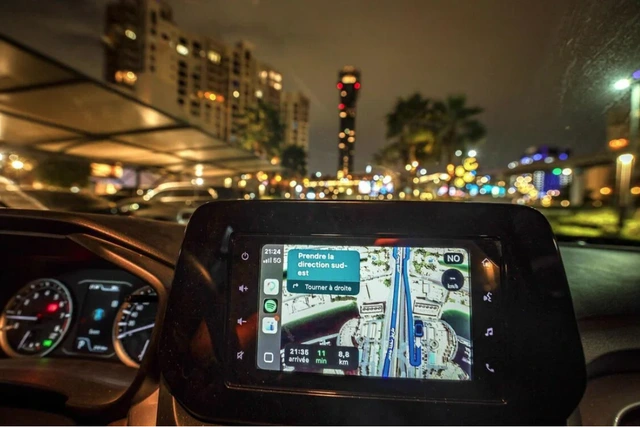
Residents and businesses across the Gulf are experiencing bizarre navigation errors as GPS signals are disrupted by electronic warfare linked to the escalating Middle East conflict.
In the United Arab Emirates, drivers and shipping companies report navigation systems showing impossible locations—cars appearing in the middle of the sea and oil tankers displayed deep inland.
Experts say the disruptions are likely caused by defensive electronic countermeasures designed to interfere with missiles and drones.
When GPS Sends Drivers Into the Sea
Many residents in Dubai first noticed the issue while using navigation apps.
One resident told AFP she was driving normally using digital maps when the GPS suddenly began directing her to strange routes and incorrect locations.
Eventually she had to abandon navigation apps and rely on road signs and memory to reach her destination.
Delivery drivers say the disruptions have become a daily frustration.
One courier working in Dubai said a delivery that should normally take 10–15 minutes now sometimes takes 30 minutes because the GPS suddenly freezes or sends him to the wrong location.
Electronic Warfare in the Background
According to Clayton Swope, a space and defense expert at the Center for Strategic and International Studies, the disruptions are likely connected to regional defenses against Iranian drones and missile systems.
Two techniques are commonly used:
1. GPS jamming
Powerful signals overwhelm satellite navigation signals, making them unreadable.
2. GPS spoofing
Fake signals are transmitted to trick devices into calculating the wrong position.
These tactics are part of modern electronic warfare, designed to confuse or mislead guided weapons.
Weak Signals Make GPS Easy to Disrupt
GPS systems work by receiving very weak timing signals from satellites orbiting Earth.
Because the signals are so faint, it is relatively easy for ground-based transmitters to block or override them with stronger signals.
Lisa Dyer of the GPS Innovation Alliance said the disruptions could pose serious risks.
She warned that interference may affect:
-
Civil aviation
-
Maritime navigation
-
Logistics and transportation infrastructure
Half of Ships in the Gulf Report Problems
Shipping traffic appears particularly affected.
According to maritime data analyzed by Kpler, nearly 1,000 vessels in the Persian Gulf and Gulf of Oman have experienced GPS interference since the conflict intensified.
That represents about half of all ships operating in the region.
In some cases, GPS spoofing has caused massive oil tankers to appear on navigation systems as if they were parked on land in the UAE or Iran.
The Cost of Defense
Despite the disruptions, Gulf governments appear willing to tolerate the inconvenience.
From a military perspective, interfering with GPS signals can reduce the accuracy of enemy drones and missile guidance systems, potentially protecting critical infrastructure.
For civilians, however, the result is a strange new reality:
-
Ships apparently sailing across deserts
-
Cars navigating through oceans
-
Navigation apps suddenly losing their sense of direction
As electronic warfare intensifies in the region, the invisible battle for control of satellite navigation signals is increasingly spilling into everyday life.
Discover more from Vietnam Insider
Subscribe to get the latest posts sent to your email.