

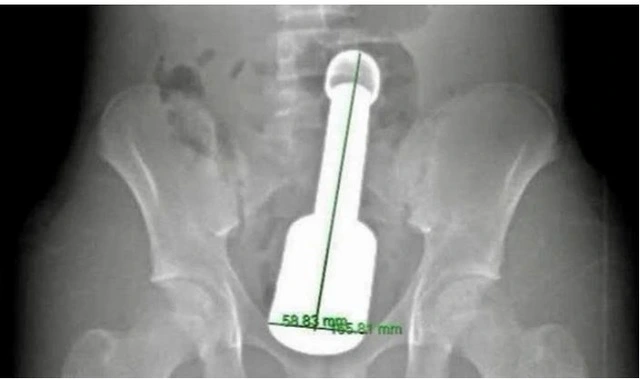
A 15-year-old boy in Hanoi was rushed to hospital after a metal object became lodged in his rectum, prompting doctors and psychologists to warn about the risks of poor sex education and unsupervised online information among teenagers.
Doctors say the case highlights a broader issue: many adolescents are curious about their changing bodies but lack reliable guidance on sexual health and safety.
The teenager was treated at Ha Dong General Hospital, where medical imaging revealed a metal pestle about 18 centimeters long stuck inside the rectum.
A Common but Underreported Medical Issue
According to Dr. Tra Anh Duy, a specialist in men’s health and lecturer at University of Social Sciences and Humanities (Ho Chi Minh City), adolescence is a period of intense hormonal, physical, and psychological change.
During puberty, boys typically experience:
-
Rapid growth and voice changes
-
Development of body hair
-
First ejaculation
-
Increasing sexual curiosity
From a psychological perspective, this stage is when teenagers begin building their “mental map” of sexuality and body awareness.
Exploration—within safe boundaries—is considered a normal part of development, experts say.
However, without proper guidance, experimentation can sometimes turn dangerous.
Why Risky Behavior Happens
Dr. Duy explained that most sexual self-exploration among teenagers occurs in private, often without adult guidance.
When parents and schools avoid discussing sexual health, teenagers frequently turn to friends or the internet for answers.
This can create what psychologists describe as a “risk triangle”:
-
Lack of accurate knowledge
-
No trusted adult to ask
-
Poor ability to assess danger
At the same time, teenagers’ brains are still developing, particularly the regions responsible for impulse control and long-term decision-making.
This can lead to the common adolescent mindset: “Let’s try it once and see what happens.”
A Warning About the Sex Education Gap
Doctors say incidents involving foreign objects in the lower digestive tract linked to sexual curiosity are not rare in emergency medicine, especially among teenagers.
The case has sparked discussion about gaps in sex education in Vietnam, where conversations about sexuality often remain sensitive or avoided.
Experts stress that the purpose of sex education is not to shame or forbid curiosity, but to ensure young people have the knowledge needed to protect their bodies and make safe decisions.
Advice for Parents and Schools
Specialists recommend that parents approach the topic calmly and without judgment.
Rather than scolding children, experts suggest opening conversations with statements such as:
“At your age, being curious about your body is normal. The important thing is knowing how to stay safe.”
Schools, meanwhile, should focus sex education on three key pillars:
-
Understanding the body
-
Learning about consent and personal boundaries
-
Developing practical safety knowledge
Seek Medical Help Immediately
Doctors also warn that if an accident involving the genitals or rectal area occurs, patients should seek medical care immediately rather than attempting home treatment.
Prompt treatment can prevent complications and reduce long-term damage.
Experts say the most effective way to prevent such incidents is creating a safe support system—where families and schools provide accurate information and teenagers feel comfortable seeking help when they need it.
Discover more from Vietnam Insider
Subscribe to get the latest posts sent to your email.