

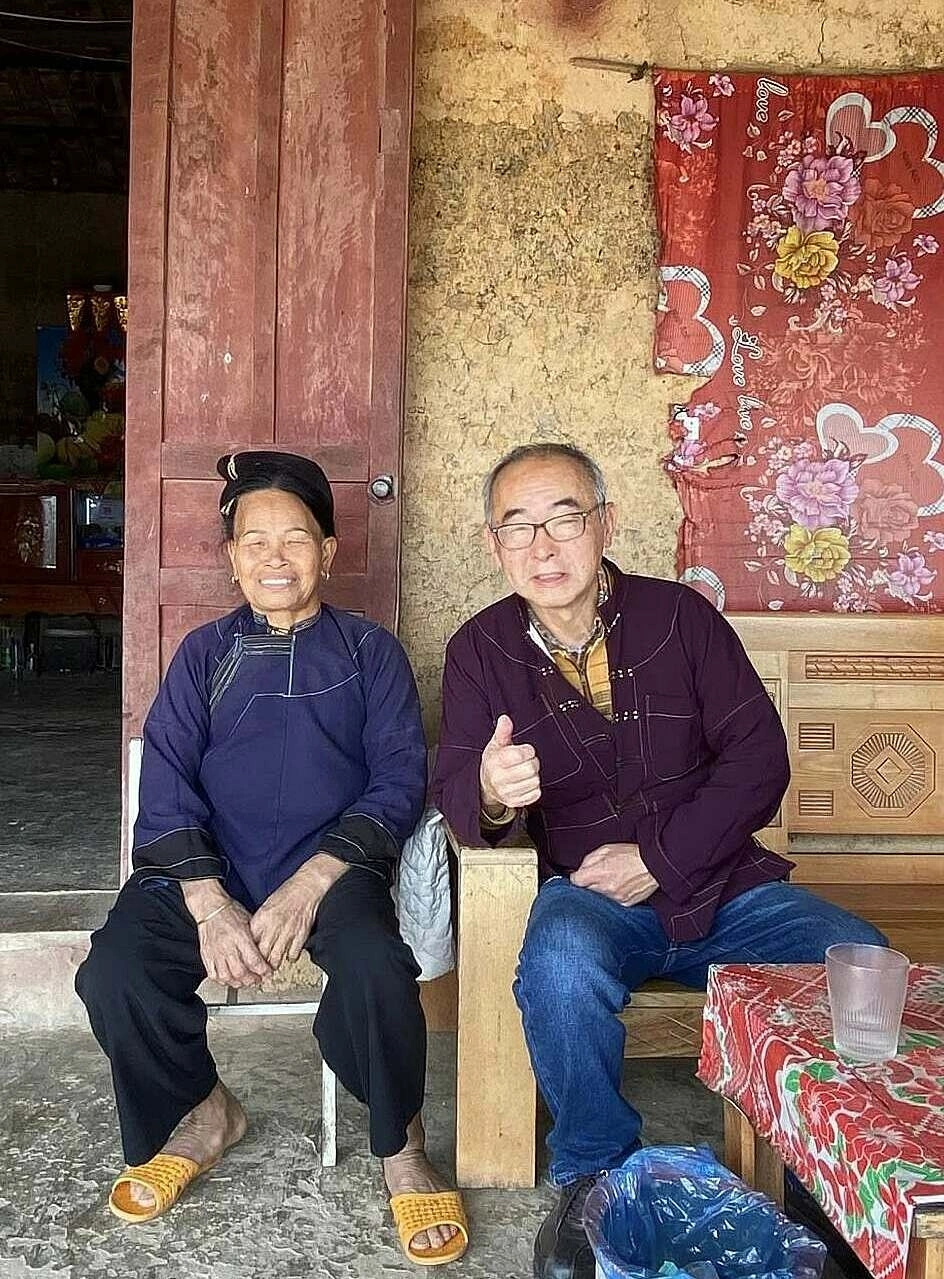
In the remote mountains of northern Vietnam, one unlikely figure has become a quiet force behind a local tourism transformation.
Yasushi Ogura, a 69 year old from Tokyo, has made more than 100 trips to Ha Giang over the past 30 years, dedicating his time and personal savings to helping local communities preserve their traditional homes while building sustainable tourism.
From visitor to lifelong advocate
What struck him most was the region’s traditional earthen houses and tiled roofs, architectural features deeply tied to local identity. Over time, however, he noticed these homes being replaced by concrete buildings as living standards improved.
That shift became his turning point.
Turning preservation into livelihood
Rather than treating heritage as something to protect in isolation, Ogura focused on making it economically viable.
In 2014, he invested his personal savings to open a small café inside a 200 year old traditional house in Lo Lo Chai village. The idea was simple but effective: if heritage could generate income, local families would have a reason to preserve it.
The model worked.
The café became a foundation for broader community tourism, including homestays and shared spaces built in harmony with traditional architecture.
Building trust at the local level
One of Ogura’s biggest challenges was not funding or infrastructure, but communication.
Many local residents did not speak Vietnamese fluently and had little exposure to tourism. Ogura responded by bringing in students to teach basic skills, from language to hospitality, while also learning from the community himself.
His approach centered on respect and relationship building.
According to local residents, trust grew not through formal programs but through shared meals, conversations, and consistent presence over time.
Real impact on local livelihoods
The transformation is visible in households like that of Diu Thi Huong, whose family home became part of the tourism model.
Once reliant on agriculture, the family now earns significantly higher income through tourism services. Huong herself became the first in her family to attend university and has returned to help develop the village further.
Today, dozens of households in Lo Lo Chai participate in community based tourism, with steady monthly income and growing international visitor numbers.
The village was recognized as one of the world’s best tourism villages in 2025.
Balancing growth and authenticity
Ogura is now working on a “living museum” concept, aimed at preserving entire living environments rather than isolated buildings.
The model follows three key principles:
No sale of land to outside investors
Controlled visitor numbers to maintain tranquility
Restoration of traditional homes for living, not commercialization
The goal is to protect not just structures, but the rhythm of daily life.
More than a project, a personal mission
For Ogura, Ha Giang is no longer just a destination.
He describes it as his second home, a place where he feels more connected than in Japan. Even in his late sixties, he continues to spend weeks each month traveling through the region, supporting projects and maintaining relationships.
His motivation, he insists, is not charity.
“It is passion,” he says. “If something I love can also help others, that is enough.”
The bottom line
In an era where tourism often prioritizes scale and speed, Ogura’s work offers a different model, one built on patience, trust, and cultural respect.
His story highlights a key lesson for Vietnam’s tourism future: long term value may not come from building more, but from preserving what already exists and empowering communities to lead their own development.
Discover more from Vietnam Insider
Subscribe to get the latest posts sent to your email.