

How Long Thanh Plastics built a national supply empire serving Heineken, Coca-Cola and Nestlé—without outside capital
Vietnam’s industrial rise is often told through flashy tech unicorns and real estate giants. But behind the country’s manufacturing boom lies a quieter story—family-run suppliers that power the supply chains of global brands. One such figure is Pham Van Muoi, founder of Long Thanh Plastics, a discreet industrialist who built one of Vietnam’s leading industrial plastics manufacturers from a small workshop in the early 1990s.
Born in 1954, Mr. Muoi began his entrepreneurial journey during Vietnam’s early market reforms, when capital was scarce and technology limited. His starting point was modest: a small, aging plastics facility acquired after a Chinese family left Vietnam. Through reinvestment, experimentation, and gradual scaling, he transformed that workshop into Long Thanh Plastics, formally established in 1996—at a time when Vietnam’s plastics industry remained fragmented and heavily dependent on imports.
Instead of chasing consumer-facing products, Mr. Muoi focused on industrial plastics: pallets, crates, containers, and storage boxes used in logistics and manufacturing. This niche demanded durability, standardized specifications, and large-volume supply—an operationally intensive segment that required systematic investment rather than opportunistic trading. As Vietnam integrated deeper into global supply chains, demand for standardized logistics infrastructure surged.
Over time, Long Thanh Plastics became a supplier to multinational beverage and FMCG giants including Heineken, Coca-Cola, PepsiCo, Nestle, Vinamilk, and Masan Group. Serving global brands not only provided stable revenue streams but forced continuous upgrades in production management, quality standards, and cost optimization.
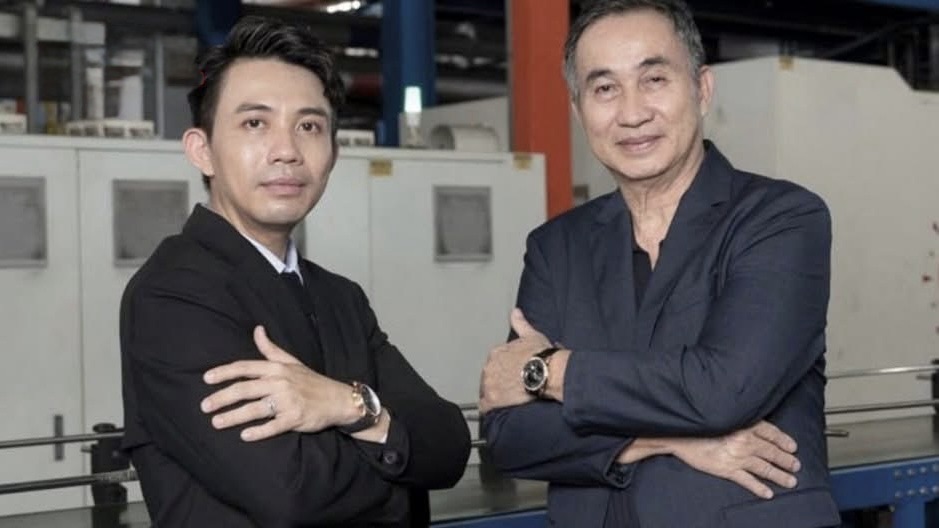
Unlike many fast-scaling Vietnamese enterprises that rely on leverage or external investors, Long Thanh Plastics remains tightly family-controlled. With charter capital exceeding VND 90 billion (approximately $3.6 million), ownership is concentrated within the Muoi family. Mr. Muoi holds 40%, while his son Pham Tran Nhat Minh—often known as “Minh Nhua”—and his wife each hold 30%. Profits have largely been reinvested into expanding factories and branches nationwide, enabling the company to meet rising domestic demand.
The firm’s estimated revenue reached around VND 1,000 billion (roughly $40 million) in 2022, reflecting the scale achievable in Vietnam’s industrial supply ecosystem—even outside headline sectors like electronics or EV manufacturing. As environmental scrutiny intensifies globally, the company has also begun integrating recycling and raw material management into its operations, aligning with broader sustainability trends reshaping the plastics industry worldwide.
For international investors and business leaders, Long Thanh Plastics represents a different side of Vietnam’s growth narrative. It is not a unicorn story, nor a leveraged expansion play—but a case study in steady capital accumulation, supply-chain integration, and generational transition within a family enterprise.
In an era when global capital often favors speed and scale, Mr. Muoi’s model raises a broader question: in emerging markets like Vietnam, could patient, family-controlled industrial firms prove more resilient than their highly leveraged peers in the next economic cycle?
Discover more from Vietnam Insider
Subscribe to get the latest posts sent to your email.