

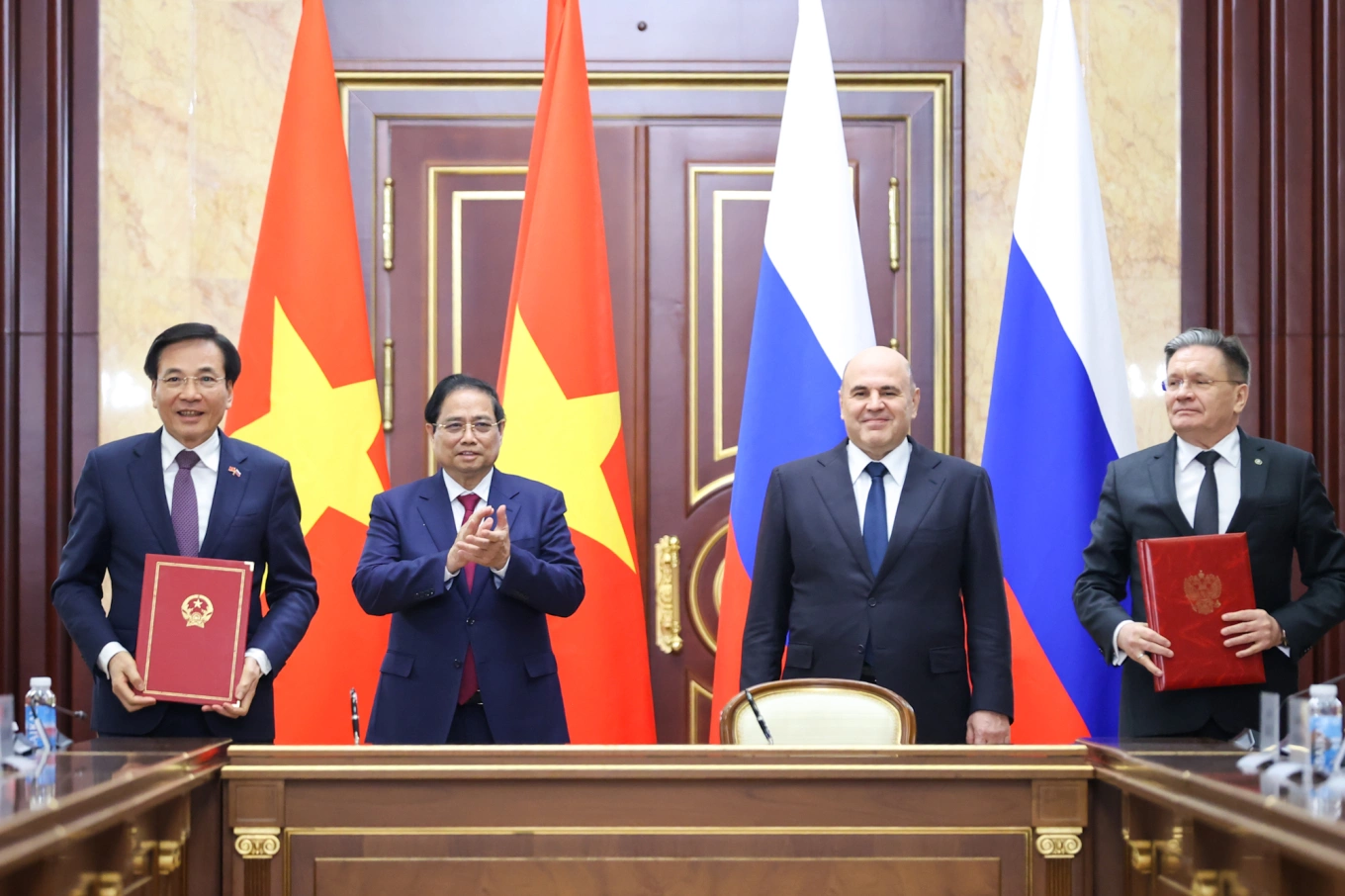
Vietnam and Russia have signed a landmark agreement to cooperate on building a nuclear power plant in Vietnam, signaling a significant shift in the country’s long term energy strategy.
The agreement was formalized during a high level meeting in Moscow between Prime Minister Pham Minh Chinh and Russian Prime Minister Mikhail Mishustin, as part of an official visit aimed at deepening bilateral ties.
A strategic return to nuclear energy
The deal centers on cooperation to develop a nuclear power facility in Vietnam, widely understood to be linked to the long discussed Ninh Thuan 1 project.
This marks a notable step for Vietnam, which had previously paused its nuclear ambitions. The renewed focus reflects growing electricity demand and the need for stable, low carbon energy sources to support economic expansion.
Both sides emphasized that the project will serve peaceful purposes and is expected to become a new symbol of bilateral cooperation.
Energy security and the green transition
Energy has long been a cornerstone of Vietnam Russia relations, particularly in oil and gas. The new agreement expands that partnership into nuclear power, while also opening the door to broader collaboration in renewable and clean energy.
For Vietnam, the move is strategically aligned with several priorities:
Ensuring long term energy security
Reducing reliance on fossil fuels
Supporting industrial growth and urbanization
Advancing climate commitments and sustainable development
As power demand continues to rise, especially in major cities and manufacturing hubs, diversifying energy sources is becoming increasingly urgent.
Broader economic and technological cooperation
Beyond nuclear energy, the two countries reaffirmed plans to expand cooperation across multiple sectors.
These include trade and investment, transport infrastructure, and advanced technologies such as artificial intelligence and information technology. Russia is also expected to support Vietnam in areas such as metro system development in major cities.
Both sides highlighted science and technology as a future pillar of cooperation, alongside ongoing initiatives in education, research, and human resource development.
What this means for Vietnam
The agreement reflects a broader recalibration of Vietnam’s development strategy, where energy security and technological capability are becoming central priorities.
For investors, it signals:
Increased focus on large scale infrastructure projects
Expansion of high tech and energy sectors
Deeper international partnerships in strategic industries
It also underscores Vietnam’s effort to balance economic growth with sustainability, particularly as global energy markets remain volatile.
The bottom line
The Vietnam Russia nuclear agreement is more than a bilateral deal. It represents a strategic step toward reshaping Vietnam’s energy future.
If successfully implemented, it could play a critical role in powering the country’s next phase of growth while reinforcing its position in an increasingly complex global energy landscape.
Related
Discover more from Vietnam Insider
Subscribe to get the latest posts sent to your email.