

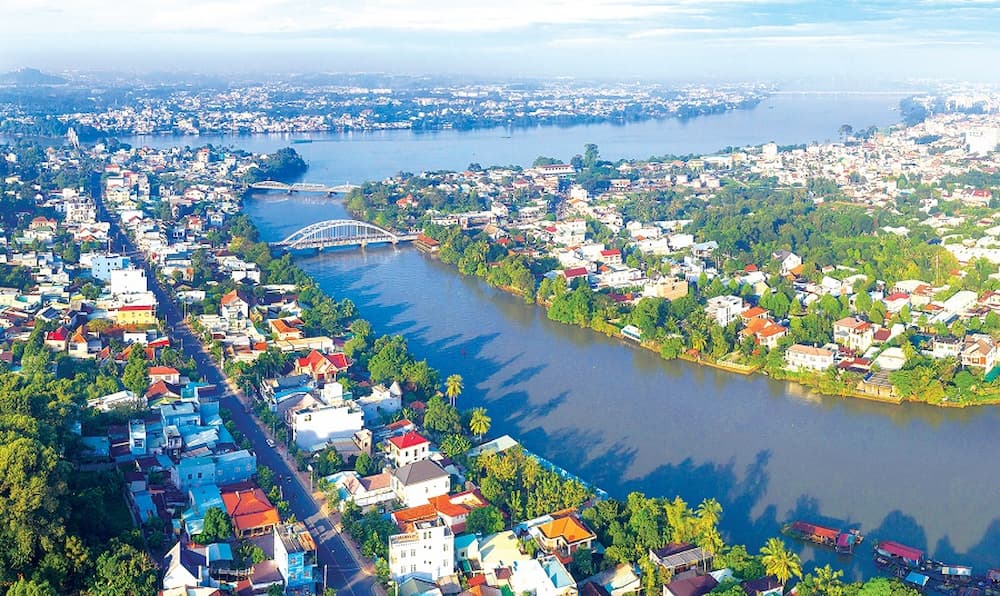
Vietnam is preparing a major administrative and economic upgrade that could reshape its urban hierarchy: Dong Nai Province may soon become the country’s seventh centrally governed city.
The proposal has been formally submitted to the National Assembly and is now under review, marking a significant step in Vietnam’s long term urban and economic strategy.
Why This Upgrade Is a Big Deal
Centrally governed cities in Vietnam such as Hanoi and Ho Chi Minh City operate with greater autonomy, larger budgets, and stronger policy influence.
If approved, Dong Nai would join this elite group, signaling:
- A shift in economic power toward southern Vietnam
- Stronger regional integration around key industrial zones
- Accelerated infrastructure and urban development
The Numbers Behind Dong Nai’s Rise
Dong Nai is not a typical candidate. It is already one of Vietnam’s most economically significant provinces:
- Population: 4.49 million
- Area: over 12,700 square kilometers
- GRDP: among the top in the country
- Contributes roughly 5 percent of national GDP
It also hosts 82 industrial zones and is widely seen as a manufacturing powerhouse.
Strategic Location: Vietnam’s Southern Gateway
Dong Nai sits at the heart of the Southern Key Economic Region, making it a critical logistics and industrial hub.
Key advantages include:
- Long Thanh International Airport set to begin operations soon
- Access to seaports and major highways
- Connectivity across road, rail, air, and waterways
- Border access to Cambodia
This level of connectivity is rare and positions the province as a future regional logistics and investment hub.
What Still Needs Approval
To qualify as a centrally governed city, Dong Nai must meet strict criteria.
- Currently meets most required standards
- Remaining benchmarks are expected to be completed by 2028
- Proposal includes restructuring administrative units and increasing urbanization
Lawmakers have broadly supported the plan but requested further clarification on urban planning and population metrics.
Bigger Picture: Vietnam’s Urban Strategy
The move reflects a broader national agenda:
- Expanding high capacity urban centers beyond Hanoi and Ho Chi Minh City
- Reducing pressure on existing megacities
- Creating new growth poles to attract foreign investment
Bottom Line
If approved, Dong Nai’s transformation into a centrally governed city will not just be an administrative change.
It will mark the emergence of a new economic powerhouse, reshaping investment flows, infrastructure priorities, and Vietnam’s long term growth map.
Discover more from Vietnam Insider
Subscribe to get the latest posts sent to your email.