

New EU alignment signals deeper trade, defense, and tech cooperation
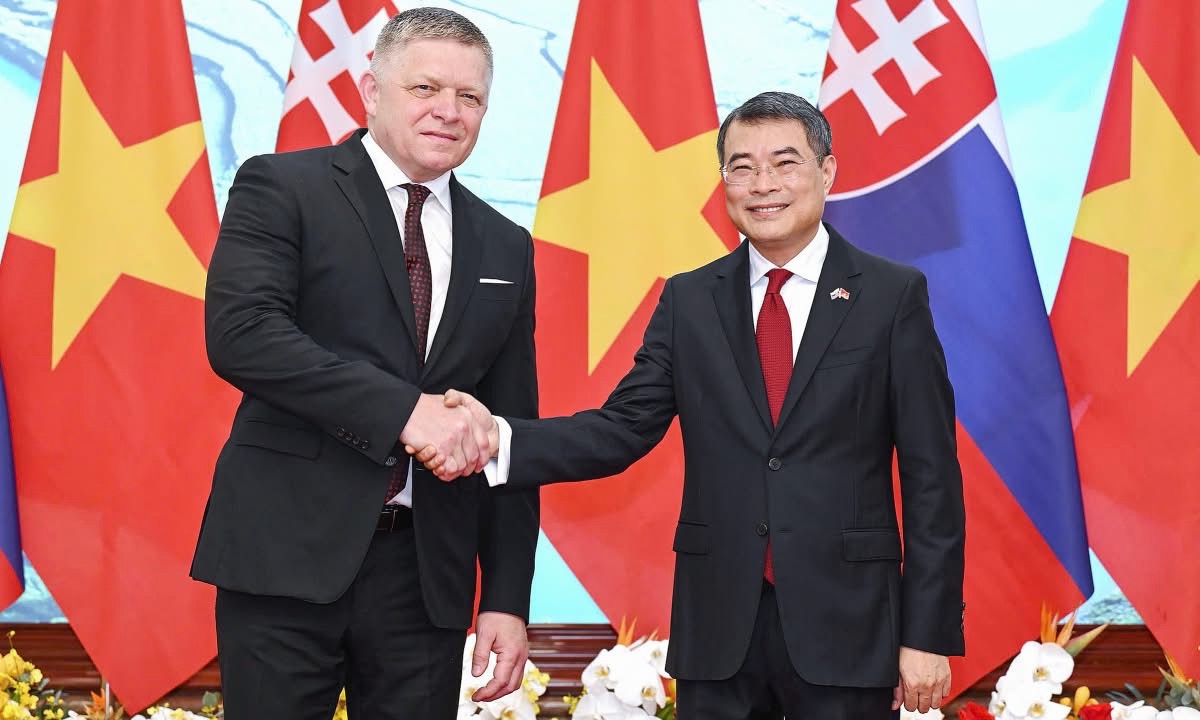
Vietnam’s accelerating alignment with Europe took a decisive step forward on Monday as the country elevated ties with Robert Fico’s Slovakia to a Strategic Partnership—highlighting Hanoi’s growing geopolitical relevance and its ambition to position itself as a key gateway for EU investment into Southeast Asia.
Following high-level talks in Hanoi, Prime Minister Le Minh Hung and his Slovak counterpart endorsed a joint declaration formalizing the upgrade, alongside the signing of six cooperation agreements spanning defense industry, diplomacy, culture, nuclear energy, and innovation. The move comes at a pivotal moment, shortly after Vietnam consolidated its top leadership and deepened ties with the European Union through a Comprehensive Strategic Partnership.
For global investors and multinational corporations, the development signals more than diplomatic symbolism. Slovakia—an EU member with strong industrial and manufacturing capabilities—has identified Vietnam as its largest trading partner in Southeast Asia. Bilateral trade reached approximately $1.78 billion in 2025, but both sides acknowledged that economic cooperation remains below potential. The new framework is designed to unlock that gap, with a clear push toward expanding trade flows, facilitating investment, and accelerating technology transfer.
The partnership also reflects Vietnam’s broader strategy to diversify economic alliances beyond traditional power centers. By strengthening ties with Central Europe, Hanoi is positioning itself to capture supply chain shifts, attract high-quality foreign direct investment, and deepen integration into EU value chains—particularly in sectors such as advanced manufacturing, digital transformation, and energy transition.
Defense and security cooperation, often a sensitive pillar, will also be expanded in line with rising political trust. At the same time, softer dimensions—including education, labor mobility, tourism, and cultural exchange—are expected to gain momentum. Notably, Slovakia’s recognition of the Vietnamese community as an official ethnic minority provides a stable legal foundation for long-term diaspora engagement, reinforcing people-to-people connectivity that often underpins durable economic ties.
Business leaders are already moving. A Slovak delegation of major enterprises is accompanying Prime Minister Fico, participating in a bilateral business forum aimed at converting political commitments into concrete deals. Both governments have pledged to support corporate partnerships and investment flows, with discussions also touching on the potential for direct flight routes—an enabler that could significantly boost tourism and commercial exchange.
The upgrade underscores a broader question for global markets: as Vietnam systematically builds strategic bridges across Europe and Asia, is it evolving from a manufacturing alternative into a central node of global economic diplomacy—and how quickly will capital follow that shift?
Discover more from Vietnam Insider
Subscribe to get the latest posts sent to your email.