

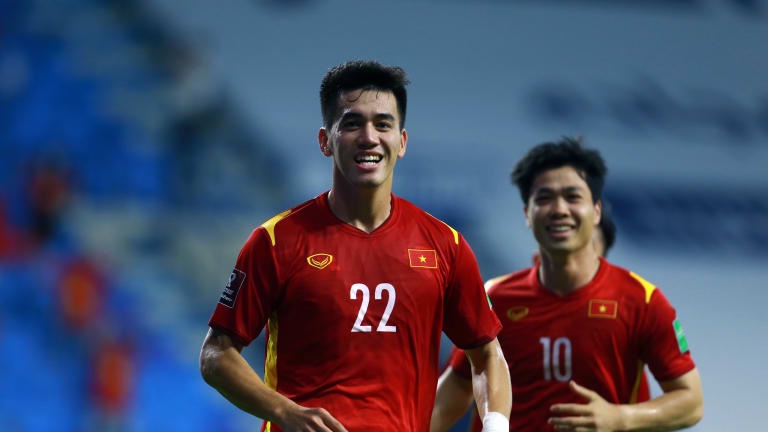
After semi-final heartbreak, two Asian football powers meet with reputation, momentum and future direction on the line.
At 10 p.m. on Friday, Vietnam and South Korea will face off in a bronze-medal match that carries far more weight than a typical third-place playoff. For both sides, the clash at the AFC U23 Asian Championship is about restoring confidence, proving direction, and answering deeper questions about the trajectory of their football systems in an increasingly competitive Asia.
Vietnam arrive wounded but reflective. Their 0–3 defeat to China in the semi-finals was not only their heaviest U23 loss to that opponent since 1999, but also a rare night when Kim Sang-sik’s side looked out of sync. Defensive lapses, loss of structure, and the absence of key defenders Nguyen Hieu Minh through injury and Pham Ly Duc via red card exposed a young team still learning how to manage adversity at elite level. The emotional scenes after the final whistle underscored how close Vietnam believed they were to something bigger.
Yet for international observers, Vietnam’s story is not defined by one defeat. The team’s four-match winning streak earlier in the tournament reinforced the country’s broader rise as a disciplined, tactically aware football nation in Southeast Asia. The semi-final loss has instead become a stress test: how quickly can this generation adapt, recalibrate, and respond when momentum turns against them?
South Korea, meanwhile, are confronting a different kind of unease. Their 0–1 loss to Japan reignited long-standing sporting and cultural rivalries, but it also triggered domestic debate about strategic priorities. Japan fielded a younger, U21-focused squad aligned with long-term Olympic planning, while South Korea leaned on the traditional incentive of military service exemption tied to tournament success. Critics in Korean media argued this reflected a short-term mindset that may be costing the country ground in Asia’s evolving football landscape.
Statistically, the concerns are tangible. South Korea dominated possession among the semi-finalists but ranked only sixth in total shots, converting just 12.5% of their chances. Control without incision has become a recurring theme, raising questions about attacking creativity and balance—issues that Vietnam, with their compact structure and high-intensity transitions, will look to exploit.
Friday’s match therefore becomes a referendum on resilience and coaching leadership. For Kim Sang-sik, facing his home country carries symbolic weight after missing the final he publicly targeted. For South Korea’s Lee Min-sung, it is a chance to quiet criticism and reassert authority over a team still searching for cohesion. Historically, South Korea hold the edge, having beaten Vietnam 2–1 in the 2018 final and edged them again in recent friendlies. But Vietnam’s steady progress suggests the gap is no longer psychological—it is marginal and situational.
This is Vietnam’s first appearance in a U23 Asian Championship third-place match. For South Korea, it is familiar territory. Yet the stakes feel unusually balanced. Beyond the medal, the outcome will shape narratives about development models, regional momentum, and which football culture is adapting fastest in Asia’s next cycle. For global fans and investors watching Asian sport’s rapid rise, this match is less about bronze—and more about who is learning the right lessons at the right time.
Discover more from Vietnam Insider
Subscribe to get the latest posts sent to your email.