

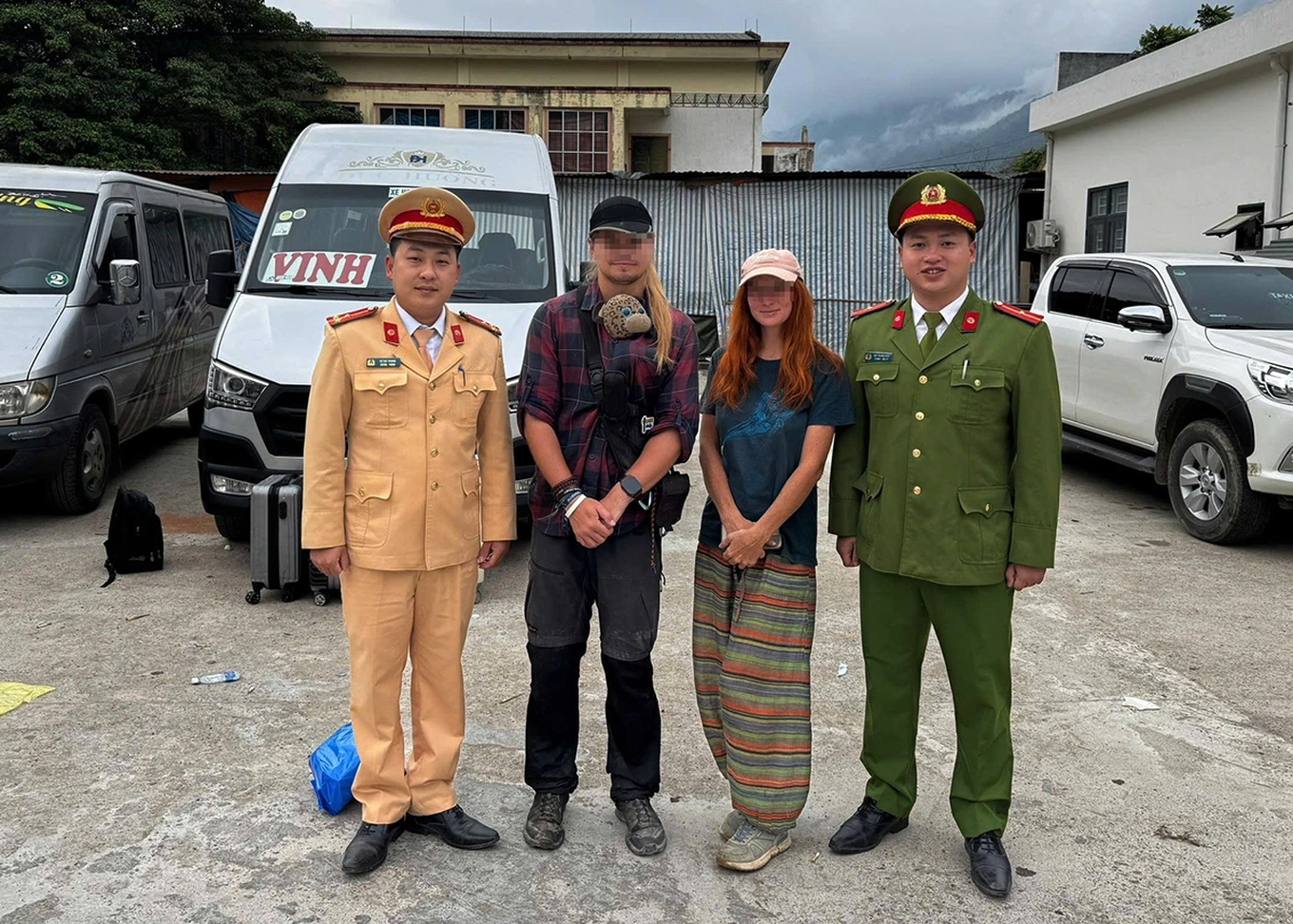
Two Russian tourists traveling overland from Laos into Vietnam were assisted by local police after becoming lost and stranded overnight near the border in central Vietnam.
The incident occurred in Muong Xen commune, Nghe An province — a mountainous area near the Laos frontier that serves as a transit point for backpackers and regional travelers entering Vietnam by road.
For international visitors and tour operators, the case underscores both the logistical challenges of cross-border travel in remote areas and the role of local authorities in providing on-the-ground support.
Lost, Exhausted — and Out of Funds
According to local officials, residents alerted police late on February 22 after encountering two foreign nationals who appeared disoriented, fatigued, and unable to communicate effectively due to language barriers.
Authorities identified the travelers as Russian citizens who had entered Vietnam from Laos via the Nậm Cắn International Border Gate.
After crossing into Vietnam, they reportedly became lost in Muong Xen due to unfamiliarity with the area and limited Vietnamese language skills. Police later confirmed the pair had run out of money and were unable to continue their planned journey to Hanoi.
Police Arrange Food, Shelter, and Transport
Officers from Muong Xen commune police coordinated with the Nghe An provincial traffic police unit to provide immediate assistance.
The tourists were given food and a safe place to rest overnight. The following morning, local authorities contacted a transport operator, covered the travel costs, and arranged for the pair to continue to Hanoi as requested.
Officials confirmed the travelers departed safely on the morning of February 23.
Cross-Border Tourism Context
Overland travel between Laos and Vietnam has gained popularity among independent travelers seeking alternative routes beyond major international airports. However, mountainous terrain, limited English-language signage, and sparse public transport options can complicate journeys.
Nghe An province borders Laos and includes several international and auxiliary crossing points. While generally safe, the region remains less developed than Vietnam’s primary tourism hubs.
For expatriates and foreign tourists planning land-border entry:
-
Confirm onward transportation in advance.
-
Carry sufficient local currency.
-
Ensure mobile connectivity or offline maps in rural areas.
-
Keep passport and visa documentation readily accessible.
The incident concludes without injury or legal complications, serving as a reminder of both the unpredictability of overland travel and Vietnam’s localized public security response system.
Related
Discover more from Vietnam Insider
Subscribe to get the latest posts sent to your email.