

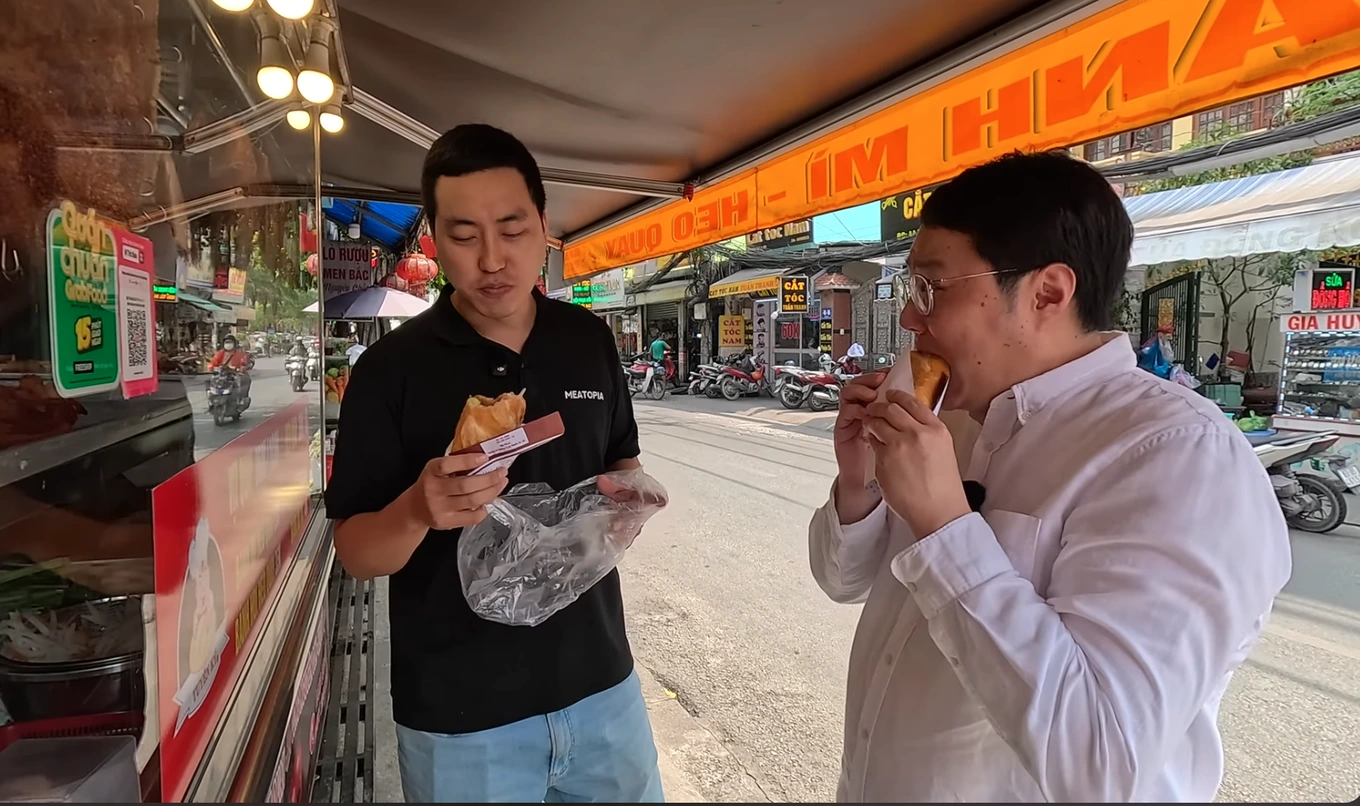
In Vietnam, a crispy pork banh mi can cost as little as VND 25,000, roughly one US dollar.
In South Korea, the same sandwich sells for 8,000 won, about USD 6, five to six times higher, and customers still line up.
The price gap tells a larger story about how Vietnam’s most iconic street food is evolving into a global product with pricing power, brand recognition, and growing demand across Asia.
A $1 Sandwich That Surprises Korean Visitors
During a recent street food tour in Ho Chi Minh City, two Korean visitors stopped at a banh mi stall in Thao Dien. They ordered banh mi heo quay, Vietnam’s crispy roast pork sandwich, and asked for no chili.
After the first bite, the reaction was immediate. Crisp baguette, juicy pork belly, pickled vegetables, herbs, and savory sauce layered in perfect balance.
What surprised them most was not the flavor. It was the price.
At VND 25,000 per sandwich, they described it as exceptionally cheap compared with what they pay back home.
In South Korea, a similar sized Vietnamese banh mi commonly sells for 8,000 won, about VND 140,000. Even a plain baguette costs around 1,000 won.
Why Is Banh Mi So Much More Expensive in Korea
Several structural factors explain the markup.
First, ingredient sourcing. Many Vietnamese run shops in Korea import spices, sauces, and specialty ingredients to preserve authenticity.
Second, labor and rent. Operating costs in Korean cities such as Busan or Seoul are significantly higher than in Vietnam.
Third, positioning. In Vietnam, banh mi is everyday street food. In Korea, it is positioned as an international specialty item.
Despite the higher price, demand remains strong. Vietnamese expatriates buy it for nostalgia. Korean consumers are drawn to its lighter profile compared with heavier Western sandwiches.
The Global Rise of Banh Mi
Vietnamese banh mi is no longer just a domestic staple. It is an exportable brand.
In 2019, Banh Mi Phuong expanded into South Korea with prices reportedly around VND 150,000 per sandwich. The launch attracted significant attention, signaling the product’s premium potential abroad.
In Hong Kong, a shop called Banh Mi Nem, founded by two entrepreneurs from Ho Chi Minh City, built a following by selling about 100 handcrafted sandwiches daily. The shop gained viral attention and was later included in the Michelin Selected list by Michelin Guide Hong Kong in 2025.
Celebrity chef and actor Nicholas Tse publicly praised the sandwich, calling it one of the best Vietnamese sandwiches he had tried.
Recognition has also come from global food rankings. Culinary platform TasteAtlas ranked banh mi heo quay number one in its list of Top 100 Vietnamese dishes in January.
From Cheap Eats to Culinary Asset
For investors and business observers, the pricing difference highlights a shift.
At home, banh mi competes on affordability and convenience.
Abroad, it competes on authenticity, novelty, and perceived health value. Korean customers often describe it as flavorful but not greasy, making it approachable for first time diners.
Vietnamese students in Korea report that while the price feels high compared with Vietnam, it aligns with local food pricing norms. Many accept paying more for a taste of home.
This mirrors a broader pattern seen with sushi in the United States or bubble tea in Europe. Once local food enters global markets, pricing adjusts to local cost structures and brand positioning.
The Bigger Picture for Vietnam
Vietnam’s food exports are not limited to packaged goods. Culinary identity itself is becoming a soft power asset.
Banh mi represents portability, scalability, and brand clarity. It requires relatively simple infrastructure yet delivers strong flavor identity.
For tourism authorities and F and B investors, the question is not whether banh mi can succeed internationally. That has already been proven.
The real question is how Vietnam can better capture value from its culinary brands abroad, whether through franchising, supply chain integration, or premium positioning.
A VND 25,000 sandwich in Ho Chi Minh City selling for six times the price in Korea is more than a pricing story.
It is a case study in how Vietnam’s street food economy is quietly going global.
Related
Discover more from Vietnam Insider
Subscribe to get the latest posts sent to your email.