

Vietnamese passport rises 7 places in global rankings thanks to positive points such as proactive foreign policy and upgraded passport security.
According to the announcement from the Henley Passport Index (HPI) in the third quarter on July 22, Vietnam ranked 84th globally, up 7 places compared to the announcement in the first quarter (91st) and 3 places compared to 2024. The highest passport ranking Vietnam has ever held in the 20-year history of the HPI is 78 (in 2006, 2007). Vietnam ranked 79 (in 2008, 2009), 81 (in 2013, 2014) and 84 (2010, 2025).
Passport rankings reflect the level of integration and openness of a country. Vietnam’s image improved on prestigious rankings will help Vietnamese tourism increase its credibility, attract investment, expand international cooperation, and contribute to promoting the flow of international tourists to Vietnam (inbound tourism).
According to Head of the Tourism Advisory Board (TAB) Secretariat Hoang Nhan Chinh, the passport’s increase in rank is primarily due to Vietnam’s proactive foreign policy, multilateralization and deep integration in recent years.

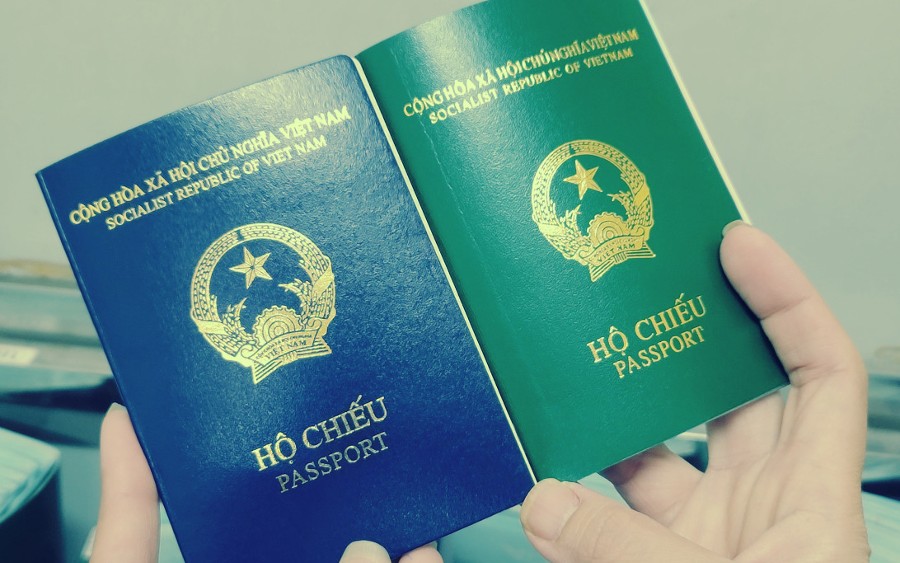
New Vietnamese passport (left, dark blue cover) and old passport (green cover). Photo: Nguyen Minh .
Strengthening international relations through high-level visits by leaders of the Party, Government and National Assembly of Vietnam has helped the diplomatic sector negotiate visa exemption agreements, sign cooperation agreements with many destinations, and significantly improve the national image through international activities.
In addition, Vietnamese passports have also been upgraded in terms of technical quality and security, including the issuance of chip-embedded passports from 2023. The immigration management system is increasingly professional and modern (such as automatic immigration), in line with international standards, helping to increase trust with partner countries.
According to HPI, Vietnamese citizens can now enter 51 destinations without a visa or only need to apply for an e-visa, a visa at the border, or an ETA (electronic travel authorization) out of a total of 227 countries and territories. This benefit is similar to the 91st position at the beginning of the year.
According to General Director of AZA Travel Company Nguyen Tien Dat, Vietnamese tourists traveling internationally and leaving a good image in the host country could also be the reason why Vietnam does not increase visa-free destinations but also does not decrease them.
“Vietnamese tourists abroad behave civilly, spend a lot and rarely violate the laws of the host country,” said Mr. Dat.
Although the Vietnamese passport rose seven places, the number of visa-free or visa-free destinations remained at 51, suggesting that the rise in ranking may have come from the decline of some other countries.
“The unchanged number of visa-free destinations is a reminder that we still have much to do to substantially improve the power of the Vietnamese passport,” said Mr. Chinh.
The most powerful passport in the world today is Singapore, with citizens of this country being granted visa-free access to 193 destinations (down two points from 195 points in the first quarter announcement). According to experts from Mint , a subsidiary of HT Media, one of India’s largest media and entertainment groups, Singapore’s passport is powerful thanks to the following main factors: good diplomatic relations with many countries; a safe, civilized country with high GDP; and people who do not stay behind to work illegally.
In order for Vietnam to both increase its ranking and the number of visa-free destinations, we can learn from the formulas that Singapore has achieved. In addition to promoting bilateral cooperation, Vietnam can expand the list of unilateral visa exemptions for countries with good diplomatic relations. This will not only attract international tourists to Vietnam, but also facilitate the reciprocal visa exemption policy for other countries. At the same time, the government can negotiate for other countries to issue e-visas to Vietnamese citizens – as a simple form of entry to their countries.
The image of a safe, tourist-friendly country also contributes to making countries more confident when relaxing entry regulations or visa approval for Vietnamese citizens.
Vietnam also needs to focus on managing the image of its citizens abroad, limiting illegal residence, law violations or illegal migration. “This is a factor that greatly affects the goodwill of cooperation from developed countries,” said Mr. Chinh. Travel companies that bring Vietnamese tourists abroad (outbound) need to have reminders, instructions and regulations for tourist groups to know and implement this well.
Finally, it is necessary to continue upgrading the technical infrastructure for immigration, digitizing data and integrating biometrics, ensuring that Vietnamese citizens have transparent and reliable records when entering foreign countries.
Mr. Dat said that the biggest impression of Vietnam in the eyes of many international visitors is safety. According to the report from the World Economic Forum (WEF) in 2024, the two highest-rated indicators of Vietnam are price (ranked 6th out of 119 destinations) and safety (ranked 23rd).
Everyone wants to go to a safe place and every country wants to welcome tourists from friendly and safe destinations. Therefore, instead of the option of too many visa exemptions, Vietnam can make its passport stronger thanks to its “internal strength”. “Every country wants to welcome rich and civilized tourists”, Mr. Dat said.
Source: vnexpress.net
Discover more from Vietnam Insider
Subscribe to get the latest posts sent to your email.