

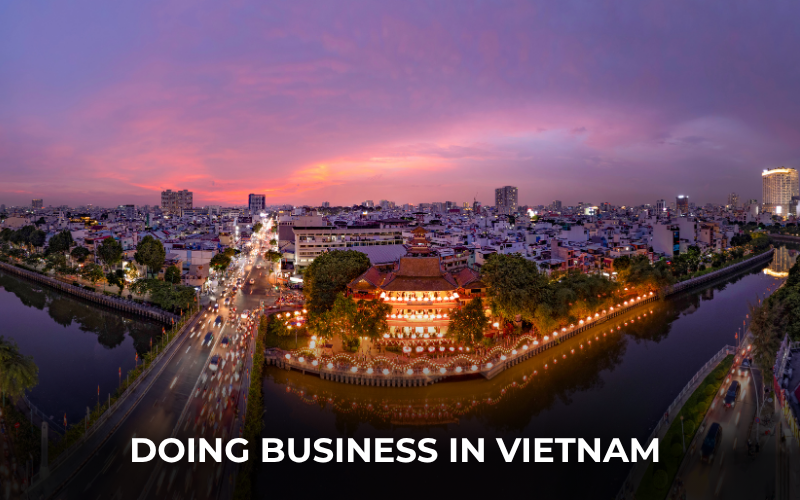
Vietnam has become one of the most discussed business destinations in Southeast Asia, attracting increasing attention from foreign brands, manufacturers, SMEs, startups, and investors looking to expand internationally. Over the past decade, the country has positioned itself as both a manufacturing hub and a growing consumer market, supported by strong economic development, expanding infrastructure, and rising foreign investment.
Yet despite the growing interest, many international companies still underestimate how different the Vietnamese market can be from other Asian business environments. Doing business in Vietnam is not simply about finding a distributor, opening a sourcing office, or replicating strategies that worked elsewhere. For foreign brands and B2B companies, success in Vietnam often depends on understanding local business culture, building relationships, and developing a realistic market entry strategy.
The country offers genuine opportunities, but it also requires patience, local adaptation, and long-term thinking.
Vietnam Is Growing Fast, but It Is Not “The Next China”
One of the most common misconceptions among foreign businesses is viewing Vietnam as a direct replacement for China. While Vietnam has benefited significantly from global supply chain diversification and manufacturing relocation, the local market operates very differently.
Vietnam’s strength comes from a combination of competitive manufacturing capabilities, political stability, international trade agreements, and a young workforce. At the same time, the business environment remains relationship-driven, fragmented in some industries, and highly dependent on local execution.
This is especially important for companies entering the Vietnam export market or looking at Vietnam manufacturing opportunities. The country has become increasingly attractive for electronics, furniture, textiles, industrial products, and OEM manufacturing, particularly as global businesses continue diversifying production bases across Asia.
However, companies expecting Vietnam to immediately deliver the same scale or operational structure as China often face challenges. The businesses that succeed are usually those willing to adapt their expectations and invest time into understanding the local ecosystem.
In this latest discussion on doing business in Vietnam, the panel also explores why market entry in Vietnam requires a more localized and relationship-driven approach rather than simply replicating strategies from other Asian markets.
Market Entry in Vietnam Requires More Than Finding a Distributor
For many foreign companies, the first question is not whether Vietnam offers opportunities, but how to enter the market effectively.
Vietnam market entry decisions require careful planning because the right strategy depends heavily on the industry, target customers, investment level, and long-term objectives. Some companies begin with local distributors or sourcing partners, while others explore representative offices, joint ventures, or fully foreign-owned entities.
Choosing the Right Go-to-Market Strategy
A strong go-to-market strategy is often the difference between early traction and costly delays.
Many businesses entering Vietnam underestimate the operational side of market entry. In reality, distribution channels can vary significantly across industries, customer behavior is highly localized, and pricing expectations may differ from neighboring ASEAN markets.
For B2B companies especially, local execution matters as much as the product itself. Building a presence in Vietnam often requires continuous relationship-building, regular market visits, and a deeper understanding of how decisions are made within Vietnamese companies.
This is one reason why many international firms choose to work with local partners or advisors when exploring how to do business in Vietnam.
Vietnam Joint Ventures and Foreign Investment
Vietnam foreign investment continues growing across sectors such as manufacturing, logistics, healthcare, agriculture, infrastructure, and technology. Depending on the industry, foreign businesses may choose different investment structures to enter the market.
For some companies, a Vietnam joint venture agreement provides access to local networks, operational support, and market knowledge. Others prefer establishing their own legal entity for greater control and long-term expansion.
The right structure depends less on trends and more on practical operational goals. Companies asking how to start a business in Vietnam should evaluate not only legal setup requirements, but also recruitment, supply chain management, local partnerships, and long-term scalability.

Disbursed FDI reached an estimated $5.41 billion in Q1 2026, up 9.1% year-on-year, the highest first-quarter level recorded during 2022–2026.
>> Related article: Supply Chain 2026 Redesigning Procurement Manufacturing and Risk Management
Vietnam Business Culture Still Matters More Than Many Expect
One of the biggest mistakes foreign companies make when entering Vietnam is treating the market as purely transactional.
While Vietnam’s economy is modernizing rapidly, business relationships are still heavily influenced by trust, reputation, and personal interaction. Face-to-face meetings remain important, especially in B2B industries where partnerships often develop gradually over time.
Foreign businesses frequently discover that networking, local introductions, and regular in-person engagement play a major role in finding business partners and building credibility in the market.
Trust and Relationship Building in Vietnam
Vietnam business culture tends to favor long-term relationships over short-term transactions. Decisions may take longer than expected, particularly when companies are evaluating new suppliers, investors, or strategic partners.
This relationship-driven environment can sometimes surprise foreign businesses used to faster transactional processes. However, companies that invest time into building trust often create stronger and more sustainable partnerships.
In many industries, local reputation becomes a significant competitive advantage.
Trade Shows and Local Presence
Trade shows continue to play an important role for companies entering Vietnam. Beyond lead generation, these events help foreign brands understand the local competitive landscape, meet distributors, and build direct relationships with buyers.
For Indian companies and international investors, this is particularly relevant. Vietnam business opportunities for India have expanded significantly in recent years, especially across pharmaceuticals, industrial manufacturing, engineering services, agriculture, and technology.
As trade between the two countries continues growing, more Indian businesses are exploring Vietnam not only as a sourcing destination, but also as a long-term strategic market within ASEAN.

Trade show visits remain an important part of market entry in Vietnam
>> Related article: Vietnam Business Opportunities and Market Entry Trends in 2026
Different Regions in Vietnam Offer Different Advantages
Foreign companies often view Vietnam as a single market, but regional differences can significantly influence business strategy.
Ho Chi Minh City and Southern Vietnam
Ho Chi Minh City remains the country’s main commercial center and is often the starting point for international companies entering Vietnam. The southern business environment is generally considered dynamic, international, and commercially driven, with strong activity in retail, services, technology, and trade.
For many foreign brands, Ho Chi Minh City business opportunities are closely tied to consumer growth, entrepreneurship, and regional connectivity.
Northern Vietnam and Industrial Expansion
Northern Vietnam has become increasingly important for manufacturing and industrial investment, particularly in electronics and export-oriented production. The region continues attracting international manufacturers looking to integrate into regional supply chains.
At the same time, northern Vietnam is also developing a stronger innovation ecosystem, supported by industrial infrastructure and growing technology investment.
Binh Duong as a Manufacturing Hub
Binh Duong Province has emerged as one of the country’s strongest manufacturing hubs thanks to its industrial parks, logistics infrastructure, and export-focused ecosystem.
For foreign manufacturers and sourcing companies, the province represents one of the clearest examples of Vietnam’s industrial transformation over the past decade.
Where Foreign Companies Are Seeing Growth Opportunities
Vietnam’s growth story is no longer limited to low-cost manufacturing. The country is now attracting investment across a much broader range of sectors.
The Vietnam digital economy continues expanding rapidly, driven by e-commerce, fintech, digital services, and a young tech-savvy population. At the same time, the Vietnam startup ecosystem has become increasingly active, attracting both regional and international investors.
Healthcare and pharmaceuticals are also receiving growing attention. Rising income levels, demographic shifts, and increased healthcare awareness are creating new opportunities within the Vietnamese pharmacy sector.
Meanwhile, Vietnamese agriculture remains one of the country’s strongest export industries. From coffee and seafood to processed food and agricultural technology, international companies continue exploring partnerships and investment opportunities connected to Vietnam’s agricultural exports.
Infrastructure and logistics are equally important areas of growth. As industrial expansion accelerates, Vietnam logistics and infrastructure projects are becoming increasingly critical to supporting long-term economic development and export capacity.
Final Thoughts
Vietnam continues positioning itself as one of the most attractive business destinations in Southeast Asia for foreign brands and B2B companies. The country offers strong long-term potential across manufacturing, digital services, healthcare, agriculture, logistics, and infrastructure.
At the same time, doing business in Vietnam as a foreigner requires more than simply identifying opportunities on paper. Companies entering the market successfully are usually those that combine strategic planning with local understanding, relationship-building, and operational flexibility.
For international businesses looking at Vietnam market entry opportunities, the market rewards companies willing to think long term, adapt locally, and invest in trust as much as growth.
Discover more from Vietnam Insider
Subscribe to get the latest posts sent to your email.