

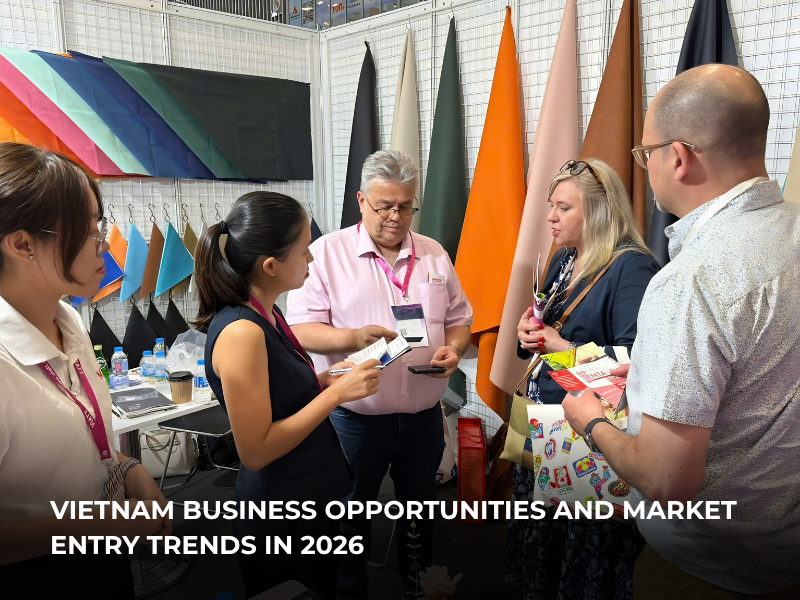
Vietnam continues to position itself as one of the most attractive destinations for international business expansion in Southeast Asia. With strong economic growth, rising consumer demand, expanding manufacturing capabilities, and increasing foreign investment, the country is expected to remain a strategic market for global companies in 2026.
However, while the opportunities are significant, entering the Vietnam market is rarely straightforward. Companies looking to succeed must understand local business culture, distribution structures, regional differences, and evolving consumer behavior. Vietnam rewards businesses that take a long-term approach and invest in strong local partnerships rather than expecting quick wins.
Why Vietnam Continues to Attract Foreign Businesses
Over the last decade, Vietnam has transformed from a low-cost manufacturing destination into one of Southeast Asia’s most dynamic business environments. The country benefits from a young workforce, improving infrastructure, competitive production costs, and deeper integration into global trade networks.
Vietnam’s economic momentum has remained strong heading into 2026. According to IMF projections, the country’s GDP is expected to reach over USD 527 billion in 2026, with forecasted growth around 7.1%, following strong performance in 2025. This continued growth reinforces Vietnam’s position as one of the region’s most attractive destinations for manufacturing, sourcing, and commercial expansion.
For many international companies, Vietnam is no longer viewed only as an alternative sourcing location. It is increasingly becoming both a production hub and a long-term consumer market. As global supply chains continue to diversify, more businesses are looking at Vietnam as part of a broader Asia market entry strategy.
The country’s strategic location also allows companies to connect efficiently with regional ASEAN markets while benefiting from multiple free trade agreements with Europe, the United States, and other international partners.
In FVSource’s latest discussion, the team shared insights from their experience as a Vietnam-based market entry consulting company, exploring why entering the Vietnam market requires far more than simply finding distributors or suppliers. From navigating fragmented distribution channels to building long-term local partnerships, the conversation highlights the practical realities foreign businesses face when expanding into Vietnam.
Manufacturing and Supply Chain Opportunities in Vietnam
Manufacturing remains one of the strongest business opportunities in Vietnam in 2026. Industries such as furniture, electronics, textiles, industrial products, packaging, and consumer goods continue to attract foreign investment.
Over the years, Vietnam’s manufacturing ecosystem has become significantly more mature. Many suppliers now have extensive experience working with international buyers, export standards, and global compliance requirements. This evolution has made Vietnam increasingly attractive for companies seeking long-term sourcing and production partnerships.
At the same time, global businesses are becoming more cautious about supply chain concentration risks. Rather than relying entirely on one country, many companies are building diversified sourcing strategies that include Vietnam as a key production base.
Still, entering Vietnam’s manufacturing market requires careful supplier evaluation, factory assessment, and relationship management. While the opportunities are substantial, companies that rush supplier selection without proper due diligence often face operational and quality challenges later on.
The Growth of Vietnam’s Consumer and Retail Market
Vietnam’s domestic market is also evolving rapidly. Rising income levels, urbanization, and digital adoption are driving demand across multiple industries, particularly in retail, lifestyle products, food and beverage, consumer electronics, and healthcare.
Modern retail formats continue to expand throughout major cities, while e-commerce platforms and social commerce channels are changing how consumers discover and purchase products. Vietnamese consumers are increasingly connected, mobile-driven, and open to international brands.
However, consumer behavior in Vietnam remains highly localized. Market dynamics in Ho Chi Minh City can differ significantly from those in Hanoi or other regional provinces. Purchasing behavior, pricing sensitivity, and customer expectations often vary depending on geography and demographics.
For foreign brands entering Vietnam in 2026, localization is becoming more important than ever. Companies that adapt their communication, pricing, product positioning, and sales channels to the local market tend to build stronger long-term brand presence.

FVSource consultant learning products made in Vietnam and supporting with entering the Vietnamese market
>> Related article: Supply Chain 2026 Redesigning Procurement Manufacturing and Risk Management
Vietnam Market Entry Trends in 2026
One of the biggest shifts happening in 2026 is the way foreign companies approach Vietnam market entry. Rather than pursuing aggressive nationwide expansion immediately, many businesses are adopting more gradual and structured growth strategies.
In practice, this often means entering the market through local distributors, testing products in selected cities, and developing partnerships before scaling operations further. Companies are becoming more focused on learning the market first instead of forcing rapid expansion.
This shift reflects the reality of doing business in Vietnam. Building market credibility takes time, and distribution networks are often more relationship-driven than many foreign businesses initially expect.
Another growing trend is the use of hybrid sales models. Instead of relying entirely on distributors or building a fully internal sales structure from the beginning, companies are combining both approaches. Local distributors handle market execution and customer access, while foreign brands maintain strategic oversight through smaller local teams or regional representatives.
This model allows businesses to reduce operational risks while staying closer to customers, pricing strategies, and brand positioning.
Distribution Challenges and Sales Strategy in Vietnam
Distribution remains one of the most important, and misunderstood, aspects of doing business in Vietnam.
Many foreign companies underestimate the complexity of the country’s distribution structure. In reality, Vietnam’s market can be highly fragmented, especially outside major urban centers. In some industries, products may pass through multiple layers of distributors, wholesalers, and retailers before reaching end customers.
As a result, selecting the right local partners becomes critical. Strong distributors do more than simply sell products. They provide market knowledge, existing customer relationships, operational support, and credibility within the local business ecosystem.
At the same time, managing distribution in Vietnam requires clear alignment on pricing, territory management, and sales expectations. Without proper coordination, companies may experience channel conflicts between distributors or inconsistent brand positioning across regions.
Businesses entering Vietnam in 2026 are increasingly recognizing the importance of long-term relationship management rather than focusing only on short-term sales performance.

MoveToAsia – One of the Market Entry Agencies in Vietnam for SMEs
>> Related article: The Shift of Global Supply Chains: Vietnam, India, and China
E-Commerce and Digital Sales Continue to Expand
Vietnam’s digital economy continues to grow rapidly, creating new opportunities for both B2B and B2C companies.
The rise of online marketplaces, social commerce, livestream selling, and mobile-first consumer behavior is reshaping how brands approach sales and marketing. Digital channels are becoming an essential part of market entry strategies, especially for consumer-focused businesses.
However, digital success in Vietnam still depends heavily on local execution. International brands that simply replicate Western digital strategies often struggle to connect with local audiences. Vietnamese consumers tend to respond strongly to localized content, community engagement, influencer marketing, and relationship-based communication.
For many businesses, the most effective strategy combines both online and offline channels. Digital platforms may generate awareness and customer engagement, but physical distribution networks and local partnerships still play a major role in long-term growth.
Regional Differences Matter More Than Many Companies Expect
One of the most common mistakes foreign businesses make is treating Vietnam as a single unified market.
In reality, there are significant regional differences that can influence sales strategy, partnership development, and customer behavior.
Ho Chi Minh City is generally seen as more commercially dynamic and internationally oriented, with a strong entrepreneurial culture and fast-moving consumer environment. Hanoi, on the other hand, often operates with a more traditional and relationship-focused business culture.
These differences can impact everything from negotiation style and decision-making speed to product positioning and distribution strategy.
Companies that understand these regional nuances are often better positioned to build stronger local relationships and develop more effective market entry plans.
Why Patience Remains Essential for Market Entry
One of the recurring themes among successful foreign businesses in Vietnam is patience.
Vietnam is a high-potential market, but results rarely happen overnight. Building trust with distributors, suppliers, customers, and business partners often takes longer than expected. Market credibility is usually earned gradually through consistency, local presence, and long-term commitment.
Many companies enter Vietnam expecting immediate growth and become frustrated by slower-than-expected progress. In reality, sustainable success often comes from businesses that are willing to invest in relationship building and gradual market development.
This long-term perspective is especially important in B2B industries, where partnerships and trust can significantly influence purchasing decisions.

Vietnam is a gateway for market entry into Southeast Asia.
What Successful Companies Are Doing Differently in 2026
The businesses performing well in Vietnam today are typically those that combine strategic planning with local adaptability.
Rather than forcing a standardized global model into the market, successful companies take time to understand Vietnam’s unique business environment. They invest in local partnerships, remain flexible in execution, and adapt their strategies based on market feedback.
Many are also combining manufacturing, sourcing, distribution, and commercial expansion into broader regional Southeast Asia strategies. Instead of viewing Vietnam only as an isolated market, they see it as part of a long-term regional growth platform.
This mindset is becoming increasingly important as ASEAN economies become more interconnected and supply chains more regionally integrated.
Final Thoughts
Vietnam continues to offer major business opportunities for international companies in 2026. From manufacturing and sourcing to retail, distribution, and digital commerce, the market presents strong long-term growth potential across multiple industries.
At the same time, successful market entry requires more than identifying demand. Companies must understand local distribution dynamics, relationship-driven business culture, regional differences, and evolving consumer behavior.
The businesses that succeed in Vietnam are usually those that approach the market with patience, flexibility, and a long-term commitment to building local credibility.
For foreign companies serious about expanding in Southeast Asia, Vietnam remains one of the region’s most promising and strategic growth markets, but entering the market the right way continues to make all the difference.
Discover more from Vietnam Insider
Subscribe to get the latest posts sent to your email.