

The incident highlights rising risks to global energy flows as Vietnam emerges as a critical Asian refining hub.
Global energy markets are once again being forced to confront the fragility of the Strait of Hormuz after a supertanker carrying Iraqi crude oil to Vietnam resumed its journey following a rare five-day hold-up involving the U.S. Navy. The episode underscores how geopolitical tensions around Iran are increasingly disrupting Asian energy supply chains — with Vietnam now directly caught in the middle of one of the world’s most sensitive maritime flashpoints.
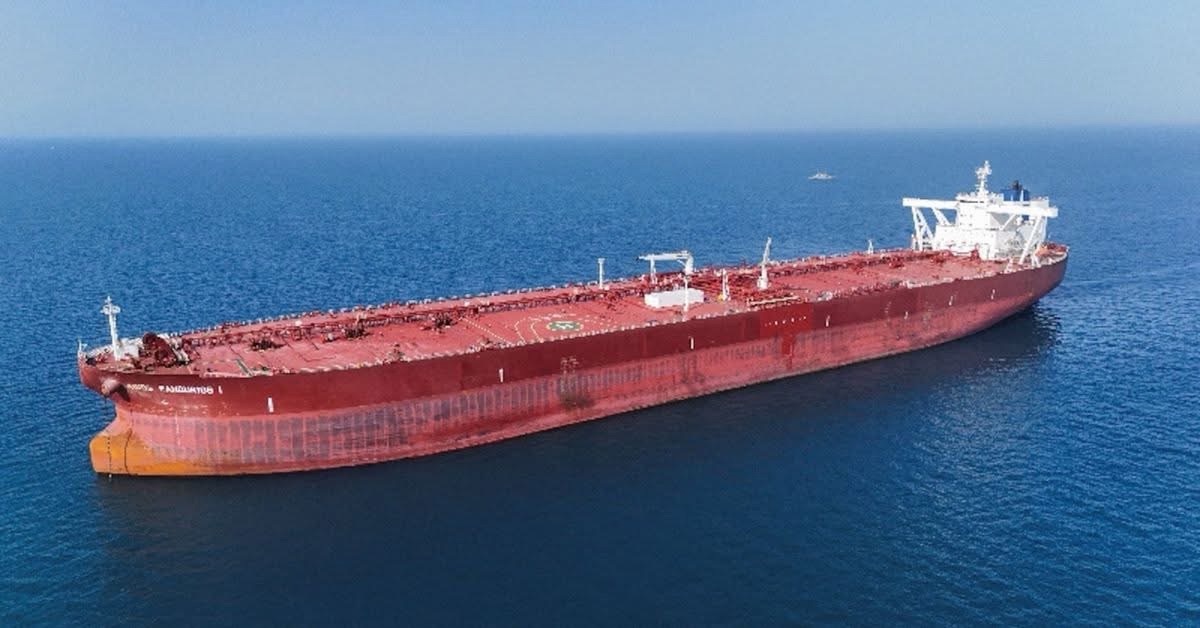
The Malta-flagged Very Large Crude Carrier Agios Fanourios I is now sailing toward Vietnam’s Nghi Son refinery after receiving approval from the U.S. Navy, according to the vessel’s Athens-based manager. The tanker, capable of carrying up to two million barrels of oil, had abruptly reversed course in the Gulf of Oman on May 11 after leaving the Strait of Hormuz, triggering widespread speculation across shipping and commodity markets.
The U.S. military’s Central Command later confirmed the vessel had been redirected as part of enforcement measures linked to Washington’s blockade against Iran. Although the tanker was carrying Iraqi crude rather than Iranian oil, the incident highlights how heightened maritime scrutiny is affecting even non-Iranian cargoes transiting one of the world’s most strategic energy chokepoints.
Shipping data from LSEG shows the vessel resumed its voyage toward Vietnam on May 16 and is expected to arrive at the Nghi Son refinery by May 30. Located in northern Vietnam, the refinery is one of Southeast Asia’s most important energy facilities and plays a critical role in supplying fuel to Vietnam’s fast-growing manufacturing economy — an economy increasingly integrated into global supply chains as foreign direct investment continues shifting toward the country.
The disruption comes at a particularly tense moment for global shipping. Before the escalation surrounding Iran, roughly 20% of the world’s energy supplies passed daily through the Strait of Hormuz, making it one of the most economically vital waterways on the planet. But confidence among shipowners and insurers has deteriorated sharply in recent weeks. Clarksons, one of the world’s largest shipbrokers, warned Monday that “shipping confidence around Hormuz is still very weak.”
Despite limited traffic, some movement through the strait has resumed. Satellite analytics firm SynMax reported that 12 ships crossed the passage within the past 24 hours, including liquefied petroleum gas tankers bound for India. Still, energy traders remain highly sensitive to any signs of escalation, fearing renewed volatility in oil prices, freight rates, and insurance costs.
For Vietnam, the incident is a reminder of both its growing economic importance and its vulnerability. As the country positions itself as a manufacturing alternative to China and a rising industrial power in Southeast Asia, stable energy imports are becoming a strategic necessity rather than merely a commercial concern.
The bigger question now is whether global energy markets are entering a new era where geopolitical risk premiums become permanent — not exceptional. If so, fast-growing economies like Vietnam may find themselves increasingly exposed to conflicts unfolding thousands of kilometers away, even as they become more central to the future of global trade.
Discover more from Vietnam Insider
Subscribe to get the latest posts sent to your email.