

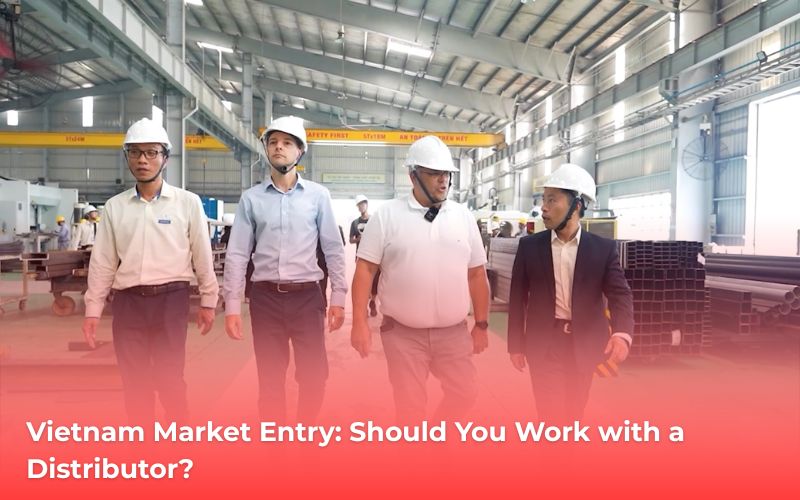
Choosing between a distributor and direct sales is one of the most critical decisions when entering Vietnam. This guide breaks down the Vietnam distributor strategy, when direct sales make sense, and how to build the right Vietnam market entry strategy based on your budget, Vietnam sales strategy, and long-term goals.
For foreign companies considering Vietnam market entry, one of the first and most consequential decisions they face is not about product, pricing, or even timing; it is about how to reach the market. Should you build your own sales structure from the ground up, or should you work with a local distributor who already knows the terrain? This single choice shapes everything from your speed to market to your long-term brand positioning, and getting it wrong early can be costly to reverse.
There is no universal answer. The right approach to selling in the Vietnam market depends on your budget, how well you understand local business culture, and what you are ultimately trying to build. This guide walks you through both models, the Vietnam distributor strategy, the case for going direct, and a hybrid approach that many companies are adopting in 2026, so you can make an informed decision based on your specific situation rather than assumptions borrowed from other markets. If you are serious about building a sustainable Vietnam sales strategy, understanding this trade-off is where everything starts.
Why Distribution Matters in Vietnam
Vietnam’s growth story in 2026 is hard to ignore. The economy expanded 7.83% in the first quarter of the year, the fastest pace in Southeast Asia. Investors from 68 countries and territories put capital into Vietnam in Q1 alone. For international companies watching these numbers, the pull is real, and the competition for positions is accelerating.
But arriving in Vietnam with confidence and actually building a functioning Vietnam sales strategy are two very different things. The distribution landscape here is unlike most markets foreign companies have operated in before. Traditional trade, independent retailers, and neighborhood shops still account for 60 to 65% of FMCG sales volume across the country. Modern retail is expanding, but unevenly. E-commerce is growing fast, yet dominated by a small number of platforms with their own dynamics. The result is a market where selling in the Vietnamese market almost always requires going through someone who already understands it, and that is usually where the distributor question becomes unavoidable.
One of the most common mistakes foreign companies make is treating the distributor decision as a logistical afterthought, something to sort out once the product is ready to ship. In practice, it is a strategic choice that shapes how quickly you gain market traction, how much it costs to build presence, and whether you retain control over your brand as you grow.
The Distributor Model in Vietnam
For many international companies, a distributor is often viewed simply as a channel for selling products. In reality, a successful Vietnam distributor strategy involves much more than product distribution. The right distributor brings local market knowledge, established customer relationships, and operational capabilities that can significantly accelerate market entry. This is particularly important in Vietnam, where business networks and trust frequently influence purchasing decisions. An experienced distributor may already have access to wholesalers, retailers, and key decision-makers that would otherwise take years for a foreign company to develop independently.

The distribution structure in Vietnam is often layered and involves multiple intermediaries.
>> Related article: Understanding Trump’s New Tariffs and Their Impact on Vietnam and other Asian Supply Chains
In practice, the distribution structure in Vietnam is often more layered than many international businesses expect. Depending on the industry and target market, products may move through several stages before reaching end customers: distributor, wholesaler, retailer, and end customer.
In major cities such as Ho Chi Minh City and Hanoi, distribution channels are generally more streamlined. However, in provincial markets, additional intermediaries may be involved, making local expertise even more valuable. The importance of strong distribution networks is reflected in Vietnam’s growing consumer market. According to Vietnam’s National Statistics Office, total retail sales of goods and consumer services reached approximately VND 1,902.8 trillion in the first quarter of 2026, representing a 10.9% increase year-over-year. This continued growth creates significant opportunities for companies focused on selling in the Vietnam market, but it also increases the need for effective channel management.
However, businesses should understand that distributors are not responsible for everything. While they can provide market access, local relationships, and sales execution, they may not fully control brand positioning, marketing strategy, or customer experience. For this reason, choosing the right market entry partner in Vietnam should be viewed as a strategic decision rather than simply a sales arrangement. As part of a broader Vietnam market entry strategy, distributors can help companies enter the market faster and with lower risk. The key is understanding both what a distributor can deliver and where direct involvement from the company remains essential for long-term success.
Benefits of Local Distributors in Vietnam
For many international businesses, a common and practical way to enter a new market is through a local distributor. Rather than investing significant resources into setting up operations from scratch, companies can leverage an established network, local expertise, and market knowledge to accelerate growth. As a result, a strong Vietnam distributor strategy is often considered a practical first step within a broader Vietnam market entry strategy.
Faster Access to the Market
Building a customer base from the ground up takes time. A local distributor already has established relationships with retailers, wholesalers, and business buyers, allowing companies to start selling in the Vietnamese market much faster than if they entered independently. This can significantly reduce the time and cost required to gain initial traction.
Valuable Local Market Knowledge
Understanding consumer behavior in Vietnam requires more than market research reports. Local distributors often possess first-hand knowledge of regional preferences, pricing expectations, purchasing habits, and competitive dynamics. These insights help businesses adapt their products and marketing approach to local conditions, improving the effectiveness of their Vietnam sales strategy.
Reduced Operational Risk
Establishing a legal entity, hiring employees, managing payroll, and building logistics capabilities can be both costly and time-consuming. By partnering with a distributor, businesses can test market demand and validate their business model before making larger investments. This approach allows companies to enter the market with lower operational risk while maintaining flexibility for future expansion.
Stronger Business Relationships and Market Credibility
Relationships play a crucial role in Vietnam’s business environment, particularly in B2B industries. An experienced market entry partner in Vietnam can help foreign companies navigate local business culture, build trust with stakeholders, and access opportunities that may otherwise be difficult to secure. In many cases, these established relationships become a key competitive advantage and contribute significantly to long-term success.
For businesses evaluating different expansion models, partnering with a distributor offers a balanced combination of speed, market insight, and risk reduction. When supported by a clear Vietnam market entry strategy, the right local partner can help companies achieve sustainable growth while avoiding many of the common challenges associated with entering the Vietnamese market.
When Direct Sales Makes More Sense Than Using a Distributor
While a strong Vietnam distributor strategy can accelerate market entry, it is not always the best option for every business. Depending on the product, target audience, and long-term objectives, some companies may achieve better results through a direct sales approach. Understanding when to build an internal sales team versus working with a distributor is an important part of any Vietnam market entry strategy. Direct sales is often a better fit in the following situations:
- Complex B2B products or services: Businesses selling technical solutions, industrial equipment, or enterprise software often require extensive product demonstrations, consultations, and after-sales support. Direct interaction with customers allows companies to communicate value more effectively.
- Strong brand recognition: Companies that already have market awareness in Vietnam may prefer direct sales to maintain greater control over pricing, customer experience, and brand positioning.
- Need for customer insights: Selling directly enables businesses to collect firsthand customer feedback, understand purchasing behavior, and refine their Vietnam sales strategy based on real market data.
- Niche or specialized products: Some products may not generate enough sales volume to attract large distributors. In these cases, a direct sales model can provide greater focus and flexibility.

>> Related article: Doing Business in Vietnam as a Foreigner: Key Lessons for Entrepreneurs in Vietnam
However, businesses should also recognize that direct sales typically require a larger upfront investment. Recruiting local talent, building a sales team, establishing operational processes, and developing customer relationships can take significant time and resources. As a result, while direct sales offer greater control, it is often a slower path to selling in the Vietnam market during the early stages. Ultimately, the right approach depends on business goals, available resources, and the level of market control required. Many successful companies even combine both models, using distributors in some regions while maintaining direct sales capabilities for key accounts.
Final Thoughts
Vietnam offers significant opportunities for international businesses, but successful market entry requires more than simply identifying market potential. Whether a company chooses to work with a distributor, build a direct sales team, or adopt a hybrid approach, there is no one-size-fits-all solution. The right strategy depends on factors such as industry, product complexity, available resources, and long-term business objectives.
What matters most is making decisions based on the realities of the Vietnamese market rather than assumptions carried over from other countries. By understanding local customer behavior, business culture, and operational challenges, companies can develop a more effective Vietnam market entry strategy and reduce the risk of costly mistakes. For businesses considering expansion into Vietnam, speaking with professionals who have first-hand market experience can often be one of the most valuable investments before taking the next step.
Discover more from Vietnam Insider
Subscribe to get the latest posts sent to your email.