

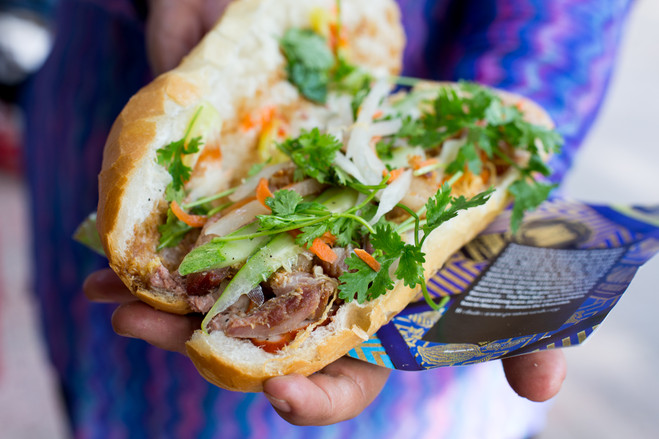
Yet after four consecutive editions of the Michelin Guide in Vietnam, not a single bánh mì shop has been recognized in any Michelin category.
The omission has sparked growing debate among chefs, food industry experts, and diners, many of whom are asking the same question: How can one of Vietnam’s most iconic foods remain absent from the country’s Michelin selections?
The discussion resurfaced this week after Michelin Guide Vietnam unveiled its 2026 selections, featuring 193 restaurants and eateries across various categories, including Michelin Stars, Bib Gourmand, Michelin Selected, and Michelin Green Star. While dishes such as phở, bún chả, bánh cuốn, mì Quảng, and bún bò Huế continued to earn recognition, bánh mì once again failed to appear.
For many observers, the absence feels surprising. Bánh mì is arguably Vietnam’s most internationally recognizable food, enjoyed by travelers from around the world and frequently cited as one of the country’s top culinary experiences.
However, food experts say popularity alone is not enough to secure Michelin recognition.
According to Vietnamese chef Nguyễn Văn Khu, Michelin inspectors evaluate restaurants based on several criteria, including ingredient quality, culinary technique, harmony of flavors, the personality expressed through the food, and consistency over time.
“A famous dish does not automatically qualify for Michelin recognition,” he explained. “The evaluation process is much more comprehensive than simply determining whether a food is popular or widely loved.”
One challenge may lie in the nature of Vietnam’s bánh mì industry itself.
Unlike many Michelin recognized phở or bún restaurants that offer dedicated dining spaces and standardized operations, most bánh mì businesses remain small scale, often operating from street carts, compact storefronts, or takeaway counters.
While Michelin officially states that decor and luxury do not determine ratings, experts note that consistency, food safety practices, operational standards, and the overall dining experience can influence inspectors’ assessments.
Many of Vietnam’s most famous bánh mì vendors serve hundreds of customers daily but operate through informal models that can make standardization more difficult. Maintaining identical quality, preparation methods, and customer experiences over time is often more challenging for small independent vendors than for larger restaurant operations.
Industry observers also point to differences in dining behavior among international visitors.
While bánh mì is frequently purchased as a quick meal on the go, dishes such as phở and bún chả naturally encourage diners to sit down and spend more time at a restaurant. Some experts believe this may increase the likelihood that Michelin inspectors encounter and evaluate those establishments.
Others argue the issue may simply be one of coverage.

Actor Nicholas Tse enjoys a sandwich from a shop called “Nếm” – a Michelin Selected establishment – in Hong Kong, China (Photo: Screenshot).
Nguyễn Hoàng Tùng, chairman of hospitality investment firm F&B Investment, expressed surprise that no Vietnamese bánh mì shop has appeared in Michelin Guide Vietnam despite the country’s deep and highly competitive bánh mì culture.
He believes Vietnam already has numerous bánh mì businesses with loyal customer bases, distinctive recipes, and decades of operating history that could potentially meet Michelin standards.
“There are many bánh mì shops with strong reputations, consistent quality, and unique identities,” he said. “The category certainly has the potential to be recognized.”
Supporters of this view often point to international examples. One notable case is Nếm, a Vietnamese sandwich concept in Hong Kong, which has been included in Michelin Selected, demonstrating that bánh mì can receive recognition from Michelin inspectors under the right circumstances.
The debate has also prompted broader questions about how culinary excellence should be evaluated. Some Vietnamese industry leaders argue that while Michelin remains one of the world’s most influential restaurant guides, local cuisine should not rely exclusively on foreign rating systems for validation.
For them, the absence of bánh mì from Michelin’s lists does not diminish its cultural significance, popularity, or culinary value.
Nevertheless, many believe recognition is only a matter of time.
As Vietnam’s dining scene continues to evolve and more food businesses adopt professionalized operations while preserving traditional recipes, industry experts expect bánh mì to eventually secure a place within the Michelin ecosystem.
Whether that happens next year or further into the future remains uncertain. What is clear is that one of Vietnam’s most beloved foods continues to thrive without Michelin recognition, proving that global popularity and cultural impact do not always depend on awards.
For now, the question remains open: Has Michelin overlooked Vietnam’s most famous street food, or are bánh mì shops still adapting to the standards required for international recognition?
Related
Discover more from Vietnam Insider
Subscribe to get the latest posts sent to your email.