

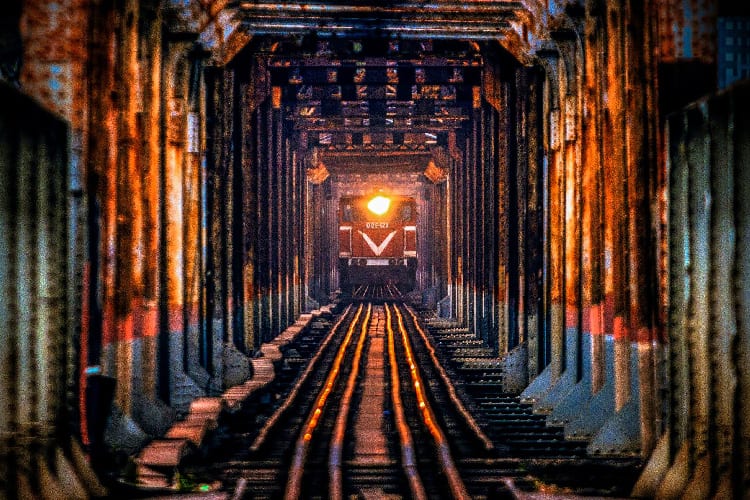
New rail link cuts cargo transit times nearly in half, strengthening supply chains between China and Vietnam’s manufacturing hub.
As global manufacturers rethink supply chains and Southeast Asia continues to attract investment from companies diversifying beyond China, a new cross-border rail connection between China and Vietnam has quietly marked a significant milestone. For the first time, a freight train has traveled directly from Qinghai Province in western China to Dong Nai, one of Vietnam’s most important industrial centers, creating a faster and more efficient logistics corridor between the two economies.
According to Vietnam Railways Corporation (VNR), the inaugural intermodal container train departed from Songzhai Station in Qinghai on May 27 carrying nearly 1,000 tons of PVC resin. The shipment arrived in Hanoi on June 2 and is continuing to Trang Bom Station in Dong Nai, a key manufacturing province neighboring Ho Chi Minh City.
The new route covers nearly 4,000 kilometers and reduces transit times from 12–15 days to around seven days, including customs clearance procedures. For manufacturers operating under increasingly demanding delivery schedules, cutting logistics times by almost half could provide a meaningful competitive advantage.
The train crosses the China-Vietnam border via the Pingxiang–Dong Dang railway gateway before customs processing near Hanoi. Cargo is then transferred to Vietnam Railways wagons and transported south to Dong Nai. The Chinese portion of the journey spans more than 2,100 kilometers and takes approximately four days, while the Vietnamese leg covers over 1,700 kilometers in about three days.
Vietnam Railways said the service emerged from broader bilateral cooperation discussions following Vietnamese leader To Lam’s state visit to China in April. The project also aligns with growing efforts by both governments to improve transport connectivity and facilitate trade flows between the world’s second-largest economy and one of Asia’s fastest-growing manufacturing destinations.
For international investors, the significance extends beyond a single train. Dong Nai hosts hundreds of foreign-invested factories supplying global markets in electronics, machinery, textiles, and industrial products. Faster rail freight from inland China offers manufacturers an alternative to congested maritime routes and potentially lowers logistics risks as regional supply chains become more integrated.
The route currently operates in one direction—from China to Vietnam—but VNR is working to establish two-way cargo services. The goal is to enable Vietnamese exporters to ship goods directly into China while avoiding costly empty return trips. If successful, the corridor could become a key component of a broader China–Vietnam rail logistics network connecting industrial centers across both countries.
At a time when multinational companies are balancing China-based production with expanding operations in Vietnam, the launch raises an important question: could rail—not ports—become the next major catalyst for Southeast Asia’s manufacturing and trade growth?
Discover more from Vietnam Insider
Subscribe to get the latest posts sent to your email.