

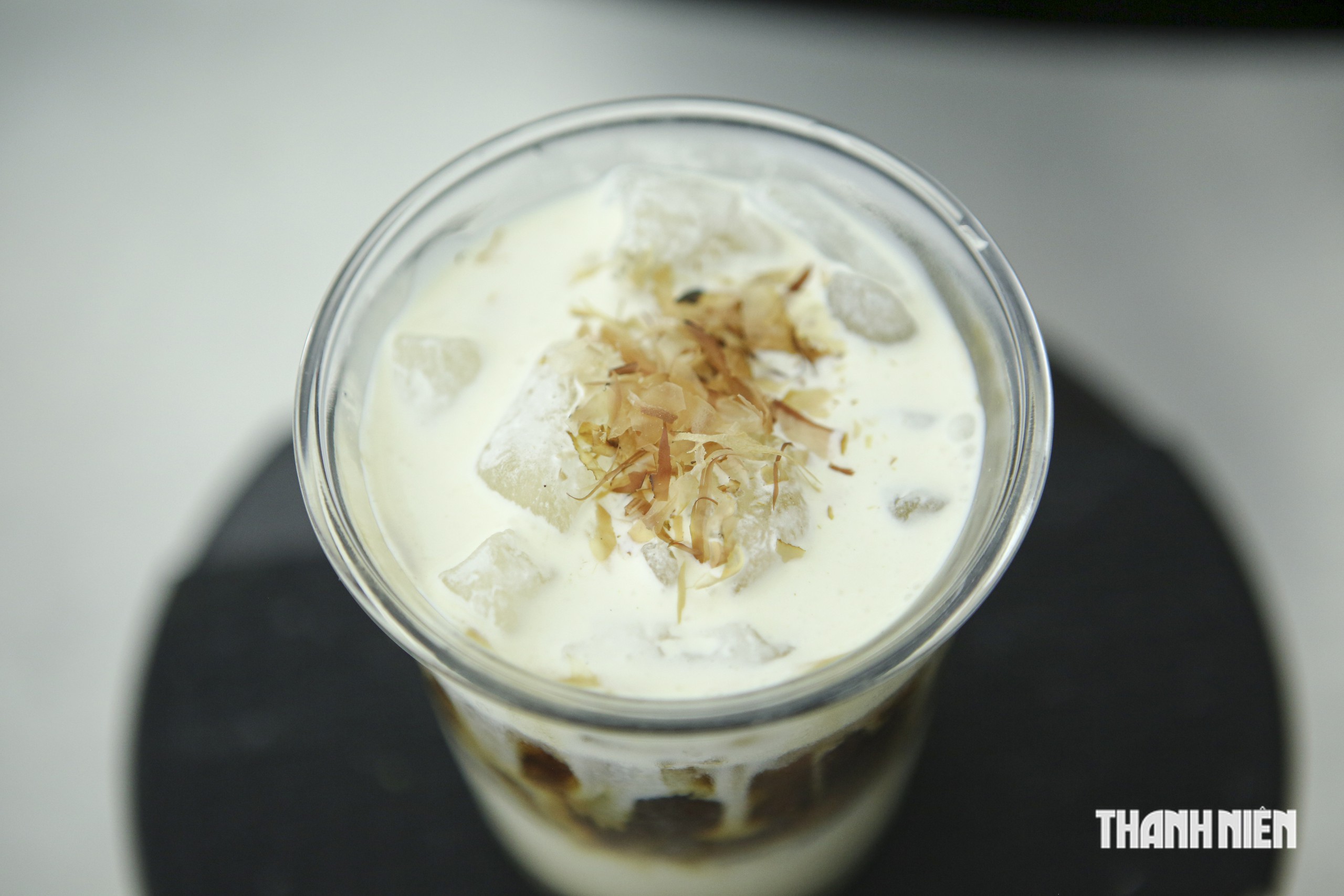
Since early September, TOC Gallery—a cafe nestled on Nguyen Thi Minh Khai Street in Thuan Hoa Ward, Hue City—has seen foot traffic surge by 20% after introducing fermented krill paste coffee to its drink list. Now the shop’s signature draw, the kitchen serves roughly 50 cups daily at 55,000 VND ($2.20) each.
Tran Ngoc Anh Tuan, the 32-year-old co-owner, conceived the drink out of a personal desire to weave quintessential Hue culinary heritage into contemporary cafe culture.
Reimagining the Soul of an Imperial Kitchen
Hue has long captivated travelers with its famous salt coffee, a quiet staple savored beside mossy citadel walls and slow-moving rivers. When brainstorming their next creation, Tuan and his team wanted something genuinely distinct while preserving the ancient capital’s culinary heartbeat.
Their thoughts turned to fermented dipping pastes, the foundation of every traditional Hue kitchen, and chose fermented krill paste (mam ruoc) for their boldest test.
Traditional Hue krill paste starts with tiny, fresh sea krill mixed with sea salt, then slowly fermented in earthenware jars under the central sun. It forms the savory backbone of imperial heritage dishes like spicy beef noodle soup (bun bo Hue) and baby basket clams with rice (com hen).


Because of its natural salinity, Tuan found that the fermented krill paste paired surprisingly well with roasted coffee notes. Using sour ingredients would curdle the rich cream on top, but salt naturally softened the bean’s sharp edge.
While fermented krill paste remains a beloved scent in local family kitchens, no one had ever thought to pour it into a coffee cup. Many locals dismissed the concept as absurd. Undeterred, the team spent six months refining the recipe.
The Architecture of a Four-Layered Brew
The kitchen cooks measured doses of the fermented krill paste with caramel syrup and fresh whipping cream. This simmering technique tames the sharp aroma, releasing a soft, buttery fragrance instead.

Photo: TOC Gallery
Because of its natural salinity, Tuan found that the fermented krill paste paired surprisingly well with roasted coffee notes. Using sour ingredients would curdle the rich cream on top, but salt naturally softened the bean’s sharp edge.
While fermented krill paste remains a beloved scent in local family kitchens, no one had ever thought to pour it into a coffee cup. Many locals dismissed the concept as absurd. Undeterred, the team spent six months refining the recipe.
The Architecture of a Four-Layered Brew
The kitchen cooks measured doses of the fermented krill paste with caramel syrup and fresh whipping cream. This simmering technique tames the sharp aroma, releasing a soft, buttery fragrance instead.
Each glass features four deliberate layers. The base blends chilled fresh milk with sweet condensed milk. The middle delivers rich espresso brewed from A Luoi Arabica beans—grown in Hue’s misty highlands—blended with bold Vietnamese Robusta. The crown features krill-paste-infused cold cream, finished with delicate shavings of dried bonito tuna flakes.
To experience the layers properly, Tuan advises patrons to skip the straw. Drinkers should gently stir the bottom milk and espresso while leaving the savory cream cap intact. Sipping directly from the glass lets the velvety cream hit the palate first, followed by dark roasted coffee and a rich, savory finish.
Overcoming Hesitation at the First Sip
The drink’s unusual name stirs intense curiosity alongside immediate hesitation among first-time visitors.


Photo: TOC Gallery
Quoc Bao, a 28-year-old traveler from Ho Chi Minh City, tried the specialty on September 17. He was pleasantly surprised that the krill aroma was far gentler than expected, allowing the coffee flavor to shine while delivering a clean, savory finish. Bao noted it is a rewarding sip for anyone visiting the former imperial capital.
Bich Ngoc, a 35-year-old tourist from Nghe An, sought out the shop after spotting viral clips online. While initially skeptical about combining fermented krill paste with morning espresso, she found the balance fascinating and delicious.
(Source: vnexpress.vn)
Discover more from Vietnam Insider
Subscribe to get the latest posts sent to your email.