

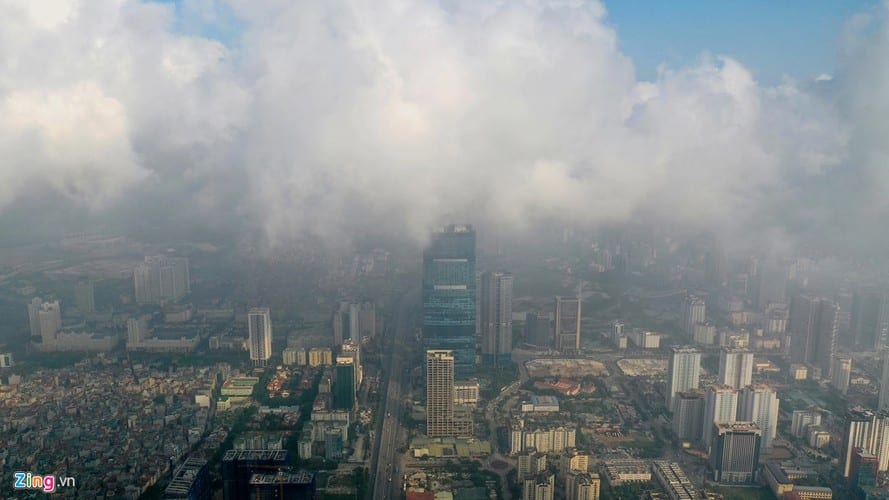
Unchecked construction and climate-driven inversions expose severe regulatory failure at year-end.
Hanoi’s persistent ranking as one of the top 10 most air-polluted cities globally is quickly becoming a serious point of concern for international firms and investors banking on Vietnam’s high-growth economy. While the capital city continues to see massive foreign direct investment (FDI) and infrastructure expansion, the environmental costs of this rapid urbanization are now translating into tangible risks: declining public health, reduced talent retention capacity, and a potential brake on the country’s ‘emerging market darling’ narrative. On Tuesday, the air quality index (AQI) frequently hit “deep red” levels across inner districts, confirming that unchecked economic activity is eroding the quality of life necessary to sustain a modern, high-value labor force.
Experts point to a predictable convergence of factors that turns Hanoi’s air toxic year after year. The primary source is emissions generated by essential economic activity: a rapidly expanding fleet of motor vehicles, intense construction and urban remodeling projects, and industrial output from surrounding craft villages. According to Dr. Duong Hoang Tung, Chairman of the Vietnam Clean Air Network, domestic efforts to control vehicle emissions and manage construction dust have not been “drastic enough.” This failure to manage the environmental externalities of GDP growth—where every new car and construction site adds particulate matter—is the root cause of the current crisis.
The severity of the pollution is then amplified by the region’s distinct winter weather patterns. During the cooler months, the northern climate typically features less rain and heavier, less windy air, which prevents pollutants from diffusing upward and away. Instead, emissions accumulate in the lower atmosphere, concentrating high levels of fine particulate matter (PM2.5) and creating a thick, visible white haze. This meteorological phenomenon transforms the underlying problem into a highly dangerous seasonal public health crisis, compelling authorities to issue warnings for residents, particularly students and sensitive groups, to significantly limit outdoor activities.
For institutional investors, the core issue is less about the weather and more about regulatory capacity. The annual nature of the air crisis is interpreted as a systemic failure of governance to implement and enforce concrete, decisive management plans across high-emission sectors. As officials acknowledge the need to stop talking in “general terms” and start pinpointing specific emission hotspots—from industrial clusters to traffic arteries—the delay in decisive action signals regulatory inertia. This lack of rigorous environmental oversight creates uncertainty and adds a new, unexpected layer of political risk to long-term investment models in the Vietnamese market.
The central question for C-suite executives and global talent now is whether Hanoi can effectively transition from a high-growth environment to a high-quality environment. Unless government bodies implement forceful, sector-specific controls on emissions, the city’s ability to attract and retain the highly skilled expatriates and local talent necessary for the next wave of FDI—particularly in high-tech and finance—will be severely compromised. Vietnam’s future competitiveness hinges not just on its economic policies, but on the ability of its citizens to breathe clean air.
Discover more from Vietnam Insider
Subscribe to get the latest posts sent to your email.