

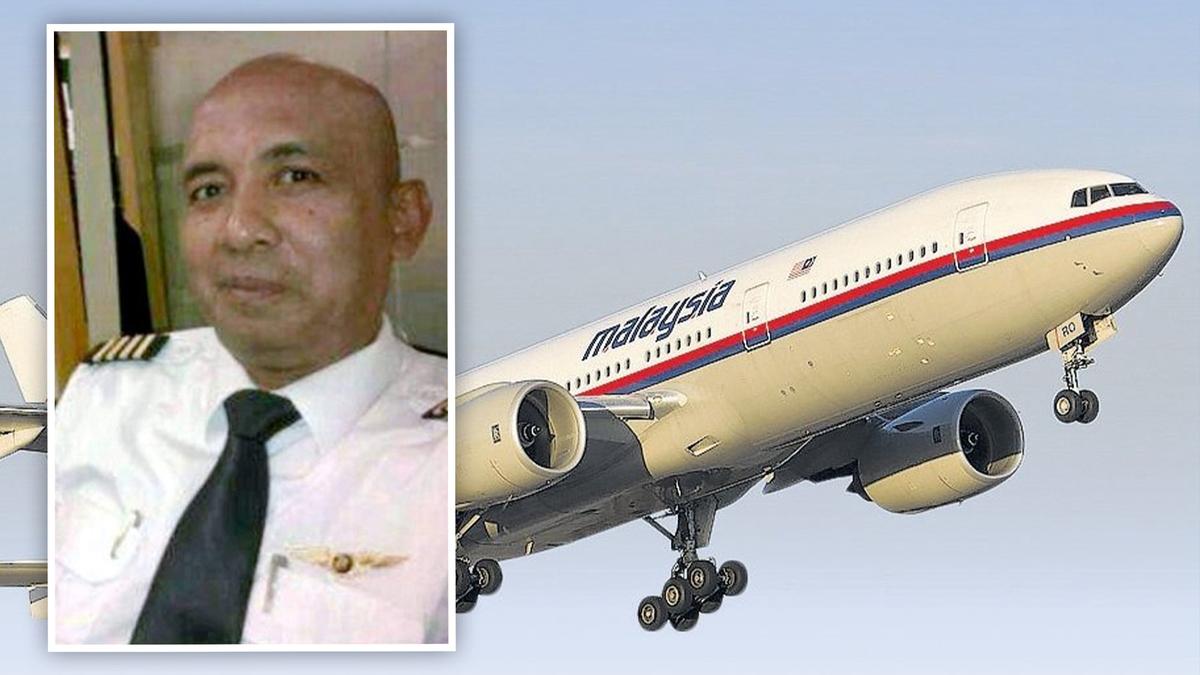
Twelve years after Malaysia Airlines Flight MH370 vanished, the captain’s final words still haunt the aviation world. The fate of the wide-body aircraft remains unsolved.
On March 8, 2014, Flight MH370 left Kuala Lumpur for Beijing with 239 people on board. Around 38 minutes after takeoff, the crew checked in with air traffic control over the South China Sea.
Minutes later, the transponder went dark on civilian secondary radar screens. However, Malaysian military radar tracked the Boeing 777 for another hour. The jet veered west off its filed route. It finally dropped off radar 200 nautical miles northwest of Penang Island.
An Abrupt Turn into the Unknown
Authorities found no clear cause for the plane’s disappearance. Investigators considered various theories, including hijacking and deliberate crew intervention. Search teams presume all 239 passengers and crew died.
Captain Zaharie Ahmad Shah, 52, commanded the aircraft. The veteran aviator joined Malaysia Airlines in 1981 and logged 18,365 flight hours. First Officer Fariq Abdul Hamid, 26, flew alongside him, bringing 2,763 hours of flight experience.
Captain Shah signed off with air traffic controllers as the jet exited Malaysian airspace. His final radio call was routine: “Good night, Malaysia three seven zero.”
Those words marked the last voice transmission from the cockpit. The aircraft never checked in with air traffic control in Ho Chi Minh City.
Unsolved Questions in the Modern Radar Era
The baffling incident shocked people worldwide. Observers wondered how a massive jet could vanish during an era of modern satellite surveillance.
Small fragments of verified marine debris washed up on western Indian Ocean beaches. Even so, search teams never found the main fuselage.
Investigators believe the aircraft likely crashed in the remote southern Indian Ocean. Consequently, the Malaysian government approved several deep-sea search operations.
Satellite data shows the aircraft flew for several hours after going dark. The engines sent automated pings for another seven hours before fuel ran out.
New Research Weighs Leading Crash Scenarios
Simon Maskell, a professor at the University of Liverpool, spoke to The Diplomat about the tragedy. His team analyzed Weak Signal Propagation Reporter data to reconstruct the final flight path. The method tracks low-frequency radio transmissions recorded by amateur radio operators.
Maskell’s group examined years of database records to identify three plausible scenarios.
First, a sudden emergency may have incapacitated the crew before they could divert. Second, a perpetrator staged a murder-suicide and survived until impact. Third, the perpetrator died before the plane crashed.
The murder-suicide theory gained support after investigators examined a flight simulator at Shah’s home. The simulator held routes deep into the southern Indian Ocean. Nevertheless, investigators found no definitive proof that either pilot deliberately crashed the plane.
Discover more from Vietnam Insider
Subscribe to get the latest posts sent to your email.