Vietnam’s largest rooftop solar power system put into operation

Advertisements

The first phase of the largest rooftop solar power system in Vietnam has been put into operation at Song Than Inland Clearance Depot (ICD) in southern Binh Duong province.

The system, with capacity of 500.96kWp, has been constructed by SolarESCO, a member of renewable energy solution provider SolarBK, in four months.

The system is expected to save about 4.5 percent of the port’s monthly expense for power, more than 14 billion VND a year, and reduce annual CO2 emission by over 500 tonnes, said Nguyen Thanh Son, Director of the New Port-Song Than ICD Company.

In the second phase of the project, the solar power system will be installed on an area of 60,000 sqm to bring total capacity to 1.150 MWp, making it Vietnam’s largest roof solar energy system.

Once the second phase is complete, emissions will decline by more than 976 tonnes annually, making New Port-Song Than ICD Vietnam’s pioneer in clean power and green logistics.

Source: VNA

Controversy bubbles over proposed sugary drink tax

Advertisements

The Ministry of Finance’s proposed sugary soft drink tax has stirred up protest from business associations and companies that might be adversely affected.

In August 2017, the Ministry of Finance (MoF) proposed the levy of a special consumption tax (SCT) on sugary drinks under a draft law amending the five tax laws: one with a tax rate of 10 per cent, and the other with a tax rate of 20 per cent that would take effect in 2019.

This is not the first time that the MoF has suggested a sugar tax. A proposal was submitted in February 2014 for a sugar tax but was withdrawn in August 2014.

Contentious reasoning

According to the MoF, the imposition of the tax aims to regulate the consumption of sugar-based beverages according to international practices, due to the harmful effects of soft drinks on public health.

The ministry pointed to a World Health Organization report that shows the proportion of overweight and obese adults in Vietnam now stands at 25 per cent of the population. Obesity rates among children under five years old are also increasing rapidly, and this puts them at future risk of cardiovascular disease, hypertension, strokes, atherosclerosis, and other ailments.

The MoF claimed that such a tax would boost the prices of unhealthy drinks and reduce the number of people who consume large quantities of them.

Corporate representatives and associations, however, argued that the MoF’s reasons for applying excise taxes to combat obesity, diabetes, and cardiovascular diseases are not sufficiently persuasive, citing the example of soft drinks with low sugar levels, enriched with vitamin and minerals, also being subject to the new tax.

According to Nguyen Hong Huy of the Nutritional Foods Group under the European Chamber of Commerce (EuroCham) in Vietnam, numerous international studies conclude that obesity can have many causes like more calories consumed than burnt, unbalanced and high-fat diets, and regular fast food consumption – showing that sugar-sweetened beverage consumption is not the only factor related to obesity.

Nguyen Tien Vy, deputy chairman of the Vietnam Beer Alcohol and Beverage Association (VBA), raised the question, “Are sugary drinks the main cause of diabetes and obesity? Will the levy of this tax help lower diabetes and obesity rates?”

At a tax policy roundtable held by the US-ASEAN Business Council in Hanoi on December 13, Wayne Banford, senior advisor for the International Tax and Investment Centre (ITIC), shared international best practices on tax policy as Vietnam prepares to overhaul its tax system.

“When it comes to the imposition of SCTs on sugar-based drinks in 158 countries in the world, there is no country using tax policies like SCTs to address public health concerns,” he said.

Several developed countries with high obesity levels do not impose SCTs to limit the consumption of sugar-based beverages, including China, South Korea, Japan, Australia, and New Zealand. This is mainly because the link between health risks and the impact of the tax has not been proven. In fact, several countries have abolished a similar tax on sugary drinks, including Argentina, Denmark, Indonesia, South Africa, and Pakistan.

Is that the main cause?

Vu Tu Thanh from the US-ASEAN Business Council wonders how the MoF came to the conclusion that soft drinks are a leading cause of obesity. He is concerned about whether the levy on soft drinks will actually contribute to decreasing obesity and diabetes rates.

“If policymakers are concerned about public health issues like obesity and diabetes, they should apply excise taxes on all types of food and beverages, many of which might be the causes of these health problems,” he said.

Adam Sitkoff, executive director of the American Chamber of Commerce (AmCham) in Hanoi, said that AmCham supports tax regimes that are fair and do not discriminate against certain industries or groups of taxpayers. This is also an important matter when the country finds ways to attract high-quality investment and promote private sector development.

According to VBA’s recommendations to the MoF, the ministry should provide scientific evidence to prove that sugary drink consumption is a main cause of diabetes and obesity. If the tax on sugary drinks is passed, will it help lower diabetes and obesity levels?

The association also recommends the ministry clarify the definition of ‘soft drinks’ in the draft law in order to avoid misunderstandings. The proposed tax employs a general definition which does not differentiate between drinks containing added sugar and those with a mixture of added sugar and artificial sweeteners. There is also no link between the risk of obesity and sugar-free drinks, as described by the ministry.

Tax tinkerers

The ministry should consider adjusting its taxation plan for added-sugar drinks based on their sugar levels, the plan’s critics say, instead of a flat SCT of 10 or 20 per cent for all sugary drinks as proposed.

Following this logic, beverages with higher levels of sugar should be applied higher tax rates than those with lower levels. Also, the alternative plan’s boosters say, beverages with sugar content under a certain level should be exempt from taxation. This tax regime is not only fair, but it would also encourage beverage manufacturers to reduce sugar levels in their products, which will ultimately improve public health.

Most countries in the world which have applied the sugary soft drink tax have linked its rate to drinks’ sugar content, like Thailand, France, Mexico, Hungary, Norway, and the UK.

The country also will need a clear timeline for the implementation of the SCT on sugary drinks if manufacturers are to adjust their production smoothly. In the UK, the government set 13 months between the introduction of the sugary soft drink tax in April 2017 and its official implementation in May 2018.

In Thailand, the SCT levied on sugary drinks came into force in September 2017 but there will be no major changes till September 2019. In addition, the government has developed a seven-year roadmap for implementation so that manufacturers can have time to prepare for the change.

Under the plan, it is only two months until the draft law amending the five tax laws passed by the National Assembly till it comes into force. This timeline, critics argue, is far too short for beverage companies to adapt their businesses.

Source: Thanh Van

Startups from rice

Advertisements

With the desire to keep hold of the traditional rice products of Vietnam, General Director of Bao Minh agricultural products Bui Thi Thanh Hieu decided to continue the family business and starting up from rice.

Starting up when still in university with two small rice stores, Bui Thi Thanh Hieu has built and developed the enterprise into a company specialized in providing diversified rice products in Vietnam. In the past 20 years, Hanh Hieu said, following his grandfather and parent footsteps, she got to know rice since she was a small kid and fell in love with rice. When Hanh Hieu got into the University of Languages and International Studies in 1995, she set objective of establishing a chain of rice stores, taking good products to customers. With the determination, Hanh Hieu realized her dream in forming the Bao Minh agricultural products.
Bui Thi Thanh Hieu and the rice farm.

For many years, she has been to many places and find valuable rice seeds, so that customers will have chances to enjoy many kinds of rice from all over Vietnam. Not only buying and processing, in recent times, her enterprise has invested heavily in production and planning specialized area to grow rice. With modern technologies, many new rice products have been preserved and developed to support farmers, especially of ethnic minorities to sell rice with high value.

During the production process her enterprises has utilized the efficiency in 5 factor – linkage: government, scientist, farmers, distributors and Bao Minh agricultural products. With an aim to export to international markets and promoting Vietnamese brands, her enterprise has established a food safety procedure with ISO standard quality control. Therefore, the enterprise’s products have been available in some country such as Australia, Russia, the US, Germany or South Africa. With strong efforts and thanks to an efficient operation and food safety, after 20 years of start-up, Hanh Hieu has developed her enterprises to have 2,500 points of sales all over Vietnam.

Bui Thi Thanh Hieu with Deputy Prime Minister Vu Duc Dam and scientists.

In her career of 20 years, in many times Hanh Hieu had to face difficulties and challenges. For her, the biggest difficulty is fierce competition when many foreign companies investing in Vietnam in rice business, while domestic enterprises also focus on the local market. Or when her products become success, other enterprises got it duplicated and sell for lower prices. Besides, there are difficulties over the human resources, financial capabilities and unstable weather in rice growing. On the other hand, Bao Minh has diversified its products and taking opportunities to cement the company’s status in the market.

With this being said, Hanh Hieu considered this as the foundation for her business strategy. And for her story and start-up passion, it is important to have determination and never give up attitude to get to success.

Source: Ngoc Thuy – Tran Thao

Vietnam’s economy grows at fastest rate in a decade

Advertisements

Full-year GDP growth was slightly above the government target of 6.7 percent and outstripped the 6.21 percent posted for 2016.

Vietnam’s economy grew 6.81 percent this year — its strongest rate for a decade — thanks in part to surging exports, data showed Wednesday.

Full-year GDP growth was slightly above the government target of 6.7 percent and outstripped the 6.21 percent posted for 2016, the General Statistics Office (GSO) said.

Growth was driven by the agriculture, seafood and forestry sectors, according to GSO head Nguyen Bich Lam.

“The efficient recovery of agricultural production and the development of the aqua sector are the main reasons for growth,” he told reporters.

Total exports were worth more than $213 billion this year, a 21 percent jump from 2016, the GSO said.

The impressive growth reflects “a strong rebound of the agriculture sector, rising global and domestic demand which helped to boost manufacturing and trade, and robust foreign investment inflows,” Luong Hoang from Viet Capital Securities told AFP.

“I believe the strong growth momentum will continue next year and the government’s target of 6.5 percent to 6.7 percent is very feasible.”

This year’s growth — the highest since 2007 according to official statistics — emerged after a slow start to 2017.

But the economy expanded as the year wore on — a recovery which the World Bank has attributed to the agriculture sector and the cornerstone manufacturing industry.

World Bank lead economist for Vietnam, Sebastian Eckardt, has said it would be hard to maintain the stellar performance.

“Growth this year is so high, so it’s harder to carry forward next year,” he told reporters earlier this month.

The World Bank estimates that medium-term growth could cool to 6.5 percent.

Though Vietnam has recorded solid growth in recent years, boosted by the export of cheap goods like Samsung phones and Nike shoes, it has struggled to contain mounting public debts.

In a bid to raise much-needed cash, the government has started to sell off shares in its prized state-owned enterprises, though the privatisation process has been much slower than promised.

The World Bank said a potential rise in global protectionism could put Vietnam’s economy at risk as it seeks foreign direct investment.

Source: Tuoitrenews

Link: https://tuoitrenews.vn/news/business/20171227/vietnam-s-economy-grows-at-fastest-rate-in-a-decade/43352.html

Prediction on 6 New Social Media Trends that Will Shape 2018

Advertisements

If you haven’t already noticed then it’s about time you see that social media has come to competitive terms. Brands are driving most of their marketing and advertising to social media. Everything that happens on social media is on your mobile device or desktop. There is no denying that social media has become the source of all information.

2017 has been a year of great social media trends such as videos, the shift of mobile friendly content and video sharing including Instagram Stories leaving big platform Snapchat behind.

So, let’s look at some of our social media trend predictions that we have for 2018.

1] Video Isn’t Going Anywhere

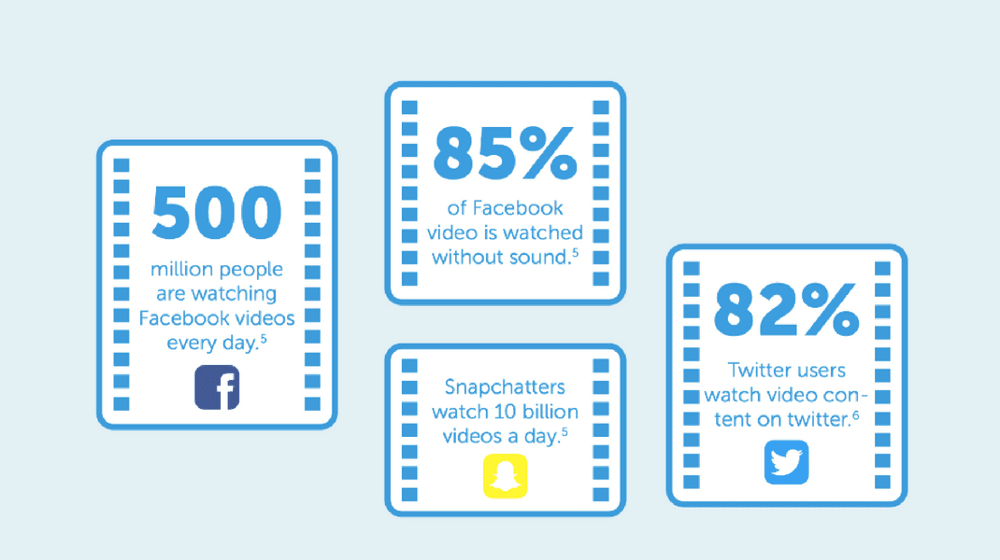
If you haven’t already started then now is the time. Engaging video content was a huge hit in 2017. According to Social Media Today, a total of 500 million hours of videos are watched on YouTube everyday. Following right behind, Facebook comes next, where in videos garner more engagement than photos. Not to mention the impressive stats on other platforms such as Twitter and Snap Chat seen below from Media Shift.

Video Isn’t Going anywhere

2] Instagram Stories Will Top Snap Chat

Instagram has climbed its way up to smartphones everywhere. And with the introduction to Instagram stories, it has left Snap Chat scrambling, which was once king of live video. With 250 million daily active users, Instagram tops the live stories and will continue to grow.

2018 will be the year of innovations in Instagram Stories. They recently introduced a new ‘Follow Hashtags’ feature where users can follow any hashtag they’d like and see the desired content on the top of their feed.

Instagram Stories


3] Influencer Marketing Will Only Grow

91% of U.S. consumers have admitted to relying on blogs for their purchases. When a popular social media influencer promotes a product they love, it is bound to result in brand awareness, and thus sales.

Influencer Marketing Will Only Grow

A number of companies have admitted to shifting their marketing initiatives to influencer marketing from traditional marketing. 2018 will see a rise in individual influencers promoting various products. See more influencer marketing statistics below.


4] Organic Reach is Passé

Not that we haven’t seen much of organic content in 2017, but 2018 will see a large increase in paid ads. It’s the era where you have to pay to play! In 2018, ads will speak for themselves. Facebook plans to introduce new features and outline a better ad experience for its users. In 2017 they added a beta version for store visits feature and we hope to see a better version of the same.

Organic Reach

5] Pixel Will Excel

With the birth of features like Facebook Pixel, where you can re-target users who have shown an interest in your product, ad targeting gets easy and fruitful. If you haven’t already started using this incredible social media tool, then 2018 is the year to start it. Targeting and re-targeting is quick, easy and beneficial with Facebook Pixel. It is the perfect tool to target the kind of customers your business is looking for, who are likely to engage in your business and make a purchase.

Pixel Will Excel

6] Twitter is Not Dead Quite Yet

Yes, you may have read that the platform is not as popular and trendy as it was a decade ago but it still has an average of 330 million active users monthly. And that makes it one of the top social media platforms. Brands are still investing in advertising on Twitter as they receive the value in terms of customers and engagement. So, evaluate your platforms and ask yourself if your target audience is an avid Twitter user, then the platform may just be your go-to.

Twitter is Not Dead Quite Yet

By:  Shruti Kapadia

Source: kulturekonnect

Prof Ngo Bao Chau: university management is ineffective

Advertisements

Prof Ngo Bao Chau, a renowned Vietnamese mathematician and Fields medal winner, believes that poor management is one of the greatest challenges faced by Vietnam’s higher education system.

On December 14-15, the Ministry of Education of Korea, the Korea Economic Times and the Ministry of Education and Training of Vietnam (MOET) jointly organized the Global Human Resources Forum 2017 in Hanoi.

Professor Chau is the head of MOET’s consultative group, with technical assistance from the World Bank, with members Associate Prof Tran Ngoc Anh, Dr. Nguyen Thi Le Huong and Dr. Pham Hung Hiep.

In the QS ranking of 400 leading universities in Asia, there are five Vietnamese names. Malaysia has 27 schools, Indonesia 17, Thailand 16 and the Philippines six.

The number of scientific articles published by Vietnamese in Scopus journals in 2016 was lower than other regional countries. Malaysia had 28,546 articles, Singapore 19,992, Thailand 14,176, and Indonesia 11,470, while Vietnam had 5,563 articles.

According to Chau, the first challenge for Vietnam’s higher education is ineffective university administration. According to the World Bank, the investment rate per student head in Vietnam is far below Malaysia, Thailand, Singapore and Indonesia.

In 2013, the rate was $645 per student, while it was $12,013 in Singapore.

Chau believes there are three pillars that need addressing: administration, finance and systematic capability. As for administration, it is necessary to balance self-determination (autonomy) and state management.

According to Hoang Quang Phong, deputy chair of VCCI (the Vietnam Chamber of Commerce & Industry), the problems in education quality can be seen in low competitiveness and productivity.

He cited a report as saying that Vietnam’s productivity is just 4 percent of Singapore, 17.4 percent of Malaysia, 35.2 percent of Thailand, 48.5 percent of the Philippines and 48.7 percent of Indonesia.

Chau proposed improving the efficiency of the use of the state budget for higher education by shifting “from regular expenses allocation to duty assignment through fair competition”.

Regarding the system’s capability, Vietnam needs a new framework to encourage investment in universities and junior colleges.

A MOET report showed that by the end of the 2016-2017 academic year, Vietnam had 235 universities and academies (170 state owned, 60 privately run, 5 wholly foreign owned), 37 research institutes assigned to train PhDs, 33 pedagogy junior colleges (3-year training) and two intermediate pedagogy schools (2-year training).

Source: VietNamNet

The 6 best shopping streets in Hanoi

Advertisements

Hang Non Street

Hang Non Street, Hang Gai Ward, Hoan Kiem District, Hanoi, Vietnam. It’s 215m long, from Hang Quat to Duong Thanh street, crossing Hang Dieu street. In the past, they sold homemade Vietnamese conical hats on this street.

Today, mostly they sold many items of clothing import from Guangzhou City, China, and South Korea. All items of clothing at stores in Hang Non Street have a prize from VND200.000 – 300.000.

Hue Street

Hue Street, Hang Bai Ward, Hoan Kiem District and Ngo Thi Nham – Pho Hue ward, Hai Ba Trung District, Hanoi, Vietnam.

It’s 1,2km long, from intersection Ham Long – Hang Bai, runs straight to intersection Dai Co Viet – O Cau Den, crossing intersections Nguyen Du – Le Van Huu, Tran Nhan Tong – Tran Xuan Soan, Tue Tinh – Hoa Ma, To Hien Thanh – Nguyen Cong Tru.

Two important markets for retail are located in this street: Gioi market – a flea market famous for cheap technologies, mostly “made-in-China” types. The other one is Hom market – a good place to look around and shop for fabric and other kinds of stuff in general. Besides two important markets, Hue Street is the one where have many fashion shops. In here, you can buy many items of clothing from Guangzhou City, China, and Thailand.

Dinh Liet Street

Dinh Liet Street was one of the street in Hang Bac Ward, Hoan Kiem District, Hanoi. The street has a length of 180 m in the north-south direction. The street runs from Hang Bac Street through the street of Gia Ngu to the street of Cau Go.

Dinh Liet Street is only a small street in the Old Quarter. It does not play the role of a vital transportation road. Instead, it is the venue of gift shops and street food. Dinh Liet Street is best known as the items are made from wool.

The scarf is an item can’t miss in Hanoi winter. Scarves beautify charming girls on the shoulder or scarves become the cloaks flowing long dress, they keep warm as well. To buy yourself a scarf, people often find on Dinh Liet Street where the street is well-known for items made from wool. Besides that, you can find for yourself many items made in Vietnam.

Quan Thanh Street

Quan Thanh Street 1,36km long, from Hang Than Street to Thanh Nien Road, crossing Hoe Nhai, Hang Bun, Yen Ninh, Cua Bac, Dang Dung, Nguyen Bieu and Dang Tat Street.

Quan Thanh temple, formerly known as Tran Vu Temple, is located on this street. As one of the Four Keeping Temples of the capital, Quan Thanh Temple worships Tran Vu God, who protects the North. The temple was built in the early years when Ly Thai To moves the capital from Hoa Lu to Thang Long, located in a very beautiful terrain on Co Ngu Road (Thanh Nien road nowadays), facing to West lake.

Besides that, Quan Thanh Street also is best known for selling the great selection of jackets in good sizes. Prices for good quality North Face etc ranged from VND600.000 to around 950.000. Full marks for variety in sizes, colors, and styles.

Nui Truc Street

Nui Truc street, Giang Vo ward, Ba Dinh district, Hanoi, Vietnam. It’s 700m long, connects Giang Vo and Kim Ma street. Nui Truc lane is situated on this street. It’s 470m long, from Giang Van Minh to intersection Nui Truc – Nam Cao. This new name was given in July 1999.

Nui Truc Street is best known for sold Hip Hop style items. If you want to have a T-shirt with XXL size or one modern snapback and cool sneakers… you can’t miss all items in Nui Truc Street.

Hanoi night market

Hanoi night market, also known as Dong Xuan night market, is weakly held on weekend evenings in the Old Quarter of Ha Noi. It’s a very interesting place that all visitors should not miss if they have a chance to travel to Hanoi.

Hanoi night market spreads from Hang Dao Treet to Dong Xuan Market; this creates the walking street where all kinds of vehicles are not permitted.

There are various kinds of products in Hanoi night market. People can find clothes, sweets, salted dry fruit, decorations, toys, stationeries, sundry goods on the streets: Hang Ngang, Hang Duong, Luong Van Can, Hang Ma, Ngo Gach and Hang Ca, while goods and facilities are mostly sold from Dong Xuan Market to Hang Giay Street.

For many Hanoians, coming to the night market becomes a habit even when they don’t want to shop, just stroll to feel the atmosphere, chat with family or friends and enjoy some snack.

Source: Ha Noi Times

Top 10 Vietnam stock market events of 2017

Advertisements

The Securities Journalists Club on Wednesday announced the top 10 biggest events on Viet Nam’s stock market in 2017.

1. Inauguration of the derivatives market

On August 10, Deputy Prime Minister Vuong Dinh Hue pressed the button to launch the derivatives market, marking a milestone in the development of Viet Nam’s securities market.

The derivatives market, starting with the VN30-Index future contracts first, was hailed as an important component to completing the structural development of the financial market as well as key part of the development strategy for the securities market in the future.

The market, managed by the Ha Noi Stock Exchange, saw over 946,300 contracts traded and 15,800 trading accounts set up over the past two months.

2. VN-Index hits decade-high

After being hit hard by the global financial crisis in 2008 when foreign capital fled, Viet Nam’s benchmark VN-Index reached a decade-high of 970 points on December 4, a gain of 46 per cent over the end of 2016.

Viet Nam’s stock market capitalisation hit VND3.36 quadrillion (US$147.4 billion) in 2017, up 73 per cent from 2016-end, and equivalent to 74.6 per cent of the nation’s gross domestic product (GDP). This number has surpassed the Government’s target (market cap to GDP ratio) set for 2020.

3. Listings of banks and billion-dollar companies


Five banks have debuted shares on the securities market this year, lifting the total number to 13 out of over 30 joint-stock commercial banks nationwide. Some banks have been granted transaction codes and are going through final procedures to trade shares in early 2018, like Bac A Bank, Techcombank and TPBank.

In addition, a number of listed businesses have seen its market value swell by an additional US$1 billion, like Vinamilk (VNM), VinGroup (VIC), PV Gas (GAS), Sai Gon Beer-Alcohol-Beverage Corporation (SAB), steelmaker Hoa Phat Group (HPG) and FLC Faros Construction JSC (ROS).

4. Foreign traders buy total net value of $1.2 billion

2017 has witnessed the strongest-ever trading by foreign investors with total net buy value of reaching nearly VND26 trillion ($1.2 billion), exceeding the peak of over VND24 trillion recorded in 2007.

Ending November, the total value of foreign portfolios hit $31.4 billion, up 81.3 per cent over the end of 2016.

5. FLC chair sells 8.93% capital under the counter

On November 10, the State Securities Commission (SSC) slapped a fine of VND65 million ($2,850) for Trinh Van Quyet, chairman of real estate giant FLC Group (FLC), for failing to report sale of 57 million shares, equivalent to 8.93 per cent of the company’s capital, from October 20-24.

6. Criminal prosecution for share price manipulation

On December 4, Nguyen Van Giang, former director of DongA Securities Co Ltd’s Ha Noi branch, was indicted for manipulating share prices of Consultancy Design & Urban Development JSC (CDO) on the HCM Stock Exchange.

SSC also issued a fine of VND600 billion on individual investor Do Thi Cam Thuy for distorting prices of Split Stone JSC’s shares on the Ha Noi Stock Exchange.

7. 15 audited financial statements not accepted

For the first time, audited financial statements for 2016 of 15 listed companies including KLF Joint Venture Global Investment JSC (KLF), Song Da Investment and Construction JSC (SDD), CMC Investment Joint SJC (CMC) and Hung Long Mineral and Building Material JSC (KHL) were not accepted by the SSC.

The auditing company, Thang Long Auditing and Valuation Co Ltd, was suspended from working in the securities industry.

8. Sacombank plans to move the listing exchange

After taking the hot seat in Sacombank (STB) in June, chairman Duong Cong Minh surprised shareholders by announcing a plan to moving its listing from the HCM Stock Exchange to the Ha Noi’s bourse and changing its stock code from STB to SCM on feng shui (geomancy) considerations. However, the bank’s shareholders did not approve of this plan.

9. Year of record share sales

2017 marked a number of successful State capital divestments, including a 53.6 per cent stake of brewer Sabeco (SAB) worth VND110 trillion and a 3.33 per cent stake of dairy giant Vinamilk (VNM) worth VND8.99 trillion.

10. Spectacular bond market growth

The bond market has become more active with total listing value topping VND1 trillion, up 8 per cent over 2016 and equal to 23 per cent of nation’s GDP. The average trading value was VND8.9 trillion per session, up 38 per cent year-on-year.

This year also witnessed success in Government bond (G-bond) auctions with about VND189 trillion ($8.3 billion) worth of G-bonds bought.

Source: VNS

2017 marks busiest year ever for Vietnam airports

Advertisements

The country served more than 94 million air passengers this year, including 13 million foreigners.

Vietnam served more than 94 million air passengers this year, a 16 percent on-year increase, pressing further needs to improve the country’s aviation services and its strained facilities.

A source from the Civil Aviation Authority of Vietnam (CAAV) said the country’s aviation market has seen outstanding growth. The number of passengers has surged 17 times from two decades ago to the all-time high this year, which includes 13 million foreign passengers.

Noi Bai Airport in Hanoi welcomed the 94 millionth passenger on Wednesday, who was a Vietnamese man flying from Saigon.

“The services at Vietnamese airports have improved in many ways, but I hope carriers can reduce flight delays and cancellations as they mess with people’s schedules,” said Nguyen Van Huynh, the special flyer.

Airports across Vietnam accommodated more than 800,000 safe flights by 67 foreign carriers and four Vietnamese ones in 2017, up 10 percent from last year.

Yet delays and cancellations still bothered many customers.

CAAV reported 1,150 cancelled flights by the four domestic carriers in the first 10 months this year due to technical problems, weather conditions and other reasons. The unit earlier counted 14,000 delayed flights in the first six months of 2017, or 12.2 percent of all flights operated by Vietnamese carriers.

The country’s biggest airports Tan Son Nhat in Saigon and Noi Bai in Hanoi are usually crowded.

Rapid expansion at Tan Son Nhat hopefully will give it more space as of early next year. The airport now can afford to host 57 aircraft at a time but sometimes receives more than 70.

Source: Doan Loan

First local bank rolls out biometric authentication logins

Advertisements

The Vietnam International Bank (VIB) announced on Wednesday that customers will be able to access their accounts using two forms of biometric authentication logins: facial recognition and fingerprint identification.

VIB claims to be the first Vietnamese bank to offer customers secure access to their accounts using Face ID. Earlier, in November, its strategic partner — the Commonwealth Bank of Australia — was also the first bank in the world to apply this function.

With the new method, all smartphone users who want to log into the VIB Banking App or MyVIB can now use their camera or touch the built-in fingerprint sensor on their phones. They only need to activate this feature once and then the application automatically recognises them for the next login.

The application of biometric authentication has emerged as a trend that can not only bring more convenience but also increases security for customers, especially those who conduct banking transactions online, VIB’s Deputy CEO Trần Nhất Minh said.

Previously, VIB also allowed customers to buy airline tickets on MyVIB while enabling customers to transfer money on social networks in just five minutes via the MyVIB Social Keyboard — a new application that won the bank Việt Nam’s Outstanding Innovative Banking Product/Service Award in 2017 from the International Data Group (IDG).

This award for MyVIB Social Keyboard recognised VIB’s efforts in promoting the innovation in technology in order to reflect the vision “to be the most innovative and customer centric bank of Việt Nam”.

Source:VNS

Internet users in Vietnam urged to change passwords after huge database leak

Advertisements

The leaked database includes accounts linked to the government and important Vietnamese businesses.

Vietnam’s computer emergency response center is urging local internet users to change email and social media passwords after a huge database of unencrypted user credentials was discovered online.

Security experts found the 41-gigabyte archive containing over 1.4 billion email addresses, passwords, and other credentials in plain text on the Dark Web early this month.

At least 437,664 accounts in the database have been identified as belonging to users in Vietnam, including 930 government accounts and many important Vietnamese businesses, the national center VNCERT at the information ministry said in a warning on Monday.

The accounts were leaked from various social networks and online service sites, including the popular LinkedIn, MySpace and Netflix, it said.

The file found is not the result of a new data breach, but a collection of those from several past breaches, collated into a single database which was updated at the end of November.

The archive includes some of the commonly used weak passwords such as “123456,” “123456789,” “password,” and “111111.”

None of the passwords are encrypted, the California-based identity threat intelligence company 4iQ, which discovered the database, said in an online post.

It said the “scary” part is that it has tested a subset of these passwords and most of them have been verified to be true.

It is still unclear who is behind the collection. But VNCERT said the breach will lead to data theft and destruction, and recommended users to use strong passwords and change them regularly.

Source: Chau An

VIB to implement Cisco Application Centric Infrastructure (ACI)

Advertisements

Young Vietnamese are digitally savvy. They like to do their banking on-the-go, using their mobile phones. Young Vietnamese like to do their banking on-the-go, using their mobile phones.

In 2012, Vietnam International Bank – VIB – embarked on an aggressive effort to digitalize, offering more services through online and mobile banking. However the bank faced a challenge. Customer transactions were growing and the bank had plans to regularly roll out new digital and mobile banking services. The existing IT infrastructure was not able to support this. IT infrastructure was unable to cope.

“We needed to transform our data centers and our time-to-market for new services needed to be much faster.” Said Mr. Tran Nhat Minh, Deputy Chief Executive Officer of Vietnam International Bank.

To address these challenges, VIB implemented the Cisco Application Centric Infrastructure (ACI), the industry’s most secure, open and comprehensive software defined networking solution. Cisco Application Centric Infrastructure (ACI). The results were immediate.”

“We have increased our network throughput by 10 times and our time-to-market for new services is also faster. Customer requests are processed 5 times faster than before. Now we have 400 applications running on ACI, giving us a single source of truth, from one dashboard.” Minh said.

Overnight, the bank transformed its IT infrastructure. The bank is rolling out new services almost every month on its mobile banking app – MyVIB.

“I have so much information in my hand now, from customer guidelines to an interactive map to promotions & discounts.” Le Anh Vu, VIB Customer said.

“When I need to book a flight, I just launch myVIB and then compare the prices of different airlines.” Ms. Nguyen Thuy Duong, VIB Customer.

“We are a much more agile organization today, able to respond to customer needs quickly. We are excited about the future.” Deputy Chief Executive Officer of Vietnam International Bank said.

Source: Huong Nguyen, Cisco Systems Vietnam

13 million foreigners spend holidays in Vietnam in 2017

Advertisements

About 13 million foreigners chose Vietnam as their holiday destination in 2017, which is considered a record of the tourism sector and marked a year-on-year rise of nearly 3 million in the number of foreign visitors for the first time.

Meanwhile, the sector served 73.2 million domestic tourists. It earned 510.9 trillion VND (22.5 billion USD) from visitors this year, according to statistics unveiled at a meeting of the State steering committee for tourism in Hanoi on December 26.

Local tourism accommodation has been developed, surpassing 25,000 establishments with more than 500,000 rooms. There are now 116 five-star hotels with over 33,000 rooms, 259 four-star hotels, and 488 three-star hotels nationwide.

The Ministry of Culture, Sports and Tourism (MCST) reported that the tourism sector successfully fulfilled the target of 30-percent rise in the number of foreign visitors.

While promotion activities have been enhanced and reformed, the sector has also attracted much social investment in tourism, especially the high-end segment. Many localities have made efforts to attract investment in tourism and develop tourism products.

Vietnam has also won a number of tourism awards and titles in 2017, which helped promote the country’s image during integration into the world, the ministry noted.

The MCST also admitted certain shortcomings in the industry, including limited services at some tourism areas, low competitiveness, a shortage of strong tourism brand names, and flaws in ensuring security and safety for tourists at some places of interest.

Speaking at the meeting, Deputy Prime Minister Vu Duc Dam, head of the State steering committee for tourism, applauded the 30-percent increase in the foreign tourist number, noting that more attention should be paid to quality.

He asked the tourism sector to improve products, accommodation facilities, manpower, as well as museum and theme parks, while devising appropriate strategies and plans. It must successfully carry out the plan on restructuring the tourism sector so as to develop tourism into a spearhead economic industry.

Source: VNA

Over 153,000 firms opened in 2017

Advertisements

The number of newly-established firms and firms resuming operations set a record in 2017 with more than 153,000 companies with total registered capital of 3.16 quadrillion VND (139 billion USD).

The latest statistics of the Ministry of Planning and Investment showed that the figure broke the record of 110,000 firms last year.

Accordingly, the total number of new firms was nearly 127,000 with total registered capital of 1.3 quadrillion VND, posting increases of 15.2 percent and 45.4 percent, respectively, compared with last year.

Average registered capital was 10.2 billion VND per company in 2017, increasing 26.2 percent from the previous year.

The number of enterprises resuming their operations was some 26,000 with total additional capital of 1.86 quadrillion VND.

In December alone, the number of newly-established businesses was 10,814 with total registered capital of 164 trillion VND, representing an increase of one percent in number and 49 percent in registered capital from the previous month.

Therefore, average registered capital was 15.2 billion VND per company in December, up 50.8 percent from the previous month.

The country also had 1,245 firms resume operations this month.

“The number of new firms and registered capital has been on an upward trend in the 2011-17 period. The number of new companies in 2017 rose by 1.6 times from 2011, while registered capital increased 2.6 times,” the department said.

It also said the new firms were mostly in wholesale, retail and automobile repair with over 45,400 (36 percent), processing and manufacturing with 16,100 (13 percent) and construction with 16,000 (13 percent).

In term of registered capital, the property sector made up the highest portion with 388.3 trillion VND, accounting for 30 percent of the total. The real estate sector in 2017 attracted a large amount of capital in comparison with other sectors.

It was followed by the wholesale, retail, construction and manufacturing sectors.

The number of workers at new firms in 2017 was more than 1.16 million, reducing 8.4 percent from last year. The manufacturing sector attracted the most workers at 430,622, accounting for 37 percent of the total.

The department added that over 21,600 businesses registered to halt their operations in 2017, increasing nine percent from last year.

Notably, the number of sectors that had more businesses registering to halt their operations included wholesale, retail, construction and processing.

In addition, the number of enterprises waiting for dissolution in 2017 reduced 4.6 percent from last year.

Source: VNA

Jobless Vietnamese millennials would rather stay home than do manual work

Advertisements

‘What is the point of doing repetitive work? I am a university graduate, not a robot.

Some 55.1 percent of 1.11 million unemployed in Vietnam are aged 15 to 24, according to the General Statistics Office’s socio-economic report for Quarter III, 2017.

Youth unemployment stood at 7.8 percent in Q3/2017, much higher than Vietnam’s overall unemployment rate of 2.02 percent.

In Q3/2016, 7.86 percent of young people were jobless.

The bleak numbers underscore the uphill battle young people have been facing in finding jobs that match their aspirations and academic credentials.

They have grown frustrated, either awaiting job offers at home or opting for temporary employment with moderate pay.

“While Vietnam does not experience alarming high youth unemployment as in many other countries, ensuring quality jobs for the young generation remains a great test for the nation,” said the ILO Vietnam Director Change-Hee Lee.

Experts say millennials struggle to find jobs largely because companies tend to favor experienced candidates.

Nguyen Bich Thuy, 28, knows exactly how it feels. The graduate of the Hanoi University of Commerce, has been unable to find an accounting job so she sells fruit and homemade cakes online instead. She earns just enough to cover daily expenses.

“I’m not confident I could find a stable job in the future,” Thuy said after having sent off dozens of application letters over the past few years, but receiving just a few interview invitations. “Without a stable job, without much money, I dare not map out any long-term plans.”

Another reason for high youth unemployment is that millennials, especially college graduates, would rather remain unemployed than take up blue-collar jobs.

There is no shortage of factory jobs. Many enterprises, especially factories in industrial parks of Hanoi, Ho Chi Minh City, Binh Duong and Hai Duong are struggling to recruit workers.

Mass recruitment events organized by producers of garment, footwear and woodwork in industrial parks outside Hanoi are common, said Vu Quang Thanh, vice head of Hanoi Center of Recruitment Service. But they consistently fail to fill vacancies that can amount to 1,000 positions per firm.

Experts say millennials see factory jobs as lower-class work they don’t want. Even many less-educated youths insist on seeking office jobs.

Deputy labor minister Doan Mau Diep said unemployed people are mostly searching for high-paid, high-skilled jobs in areas such as financial services, business management and human resources.

Tran Duy Long, 25, is desperate for a steady job. He has been mostly unemployed over the past three years since graduating from a technology university in Hanoi near manufacturing hubs where factories make everything from T-shirts and shoes to auto parts and mobile phones. But, Long will not consider applying for a full-time factory job because he thinks that it is beneath a university student like him.

“I have never thought of getting a factory job. What is the point of doing repetitive work? I am a university graduate, not a robot,” he said.

The problem can also be attributed to over-protective parents who continue to look after their children well into adulthood, according to Vu Tuan Anh, managing director of Vietnam Institute of Management.

Young, educated youths without steady jobs like Long hence pose a potentially long-term challenge to social stability.

This internet savvy generation has a tendency to spend on eating out and drinks like bubble tea, rather than save, despite earning little.

HCMC-based market research firm Decision Lab said 56 percent of 16,000 surveyed urban youths earned no money or made less than VND3 million ($132) per month, and only 35 percent of them made between VND3 million and VND7.5 million a month.

But they spent on average VND890,000 ($40) a month eating out.

Source: Ngan Anh

Exit mobile version