Annually, Vietnam reports over 15,000 fresh stomach cancer cases including 11,000 deaths, announced at a scientific seminar lately held in Hoan My Sai Gon Hospital.
Stomach cancer ranks the second popular cancers amongst male after lung cancer and ranks fifth cancers amongst female.
Head of Digestion Department of Japan’s Kyoto Miniren Dr.Kinoshita Koshi said that at present diagnosis and treatment of stomach cancer at early stage developed much in the world.
In developed countries like Japan, more and more stomach cancer patients undergo endoscopic surgery to remove tumor when the disease is detected at early stage.
However, in Vietnam, early detection of cancer is not easy because of the lack of periodic examination to ensure the early screening of cancer in the majority of people. Only people with high risk of gastric cancer undergo endoscopy as per medical workers’ advice.
As per international medical experts, Endoscopic mucosal resection (EMR) or removing abnormal areas in the lining of the stomach is for people who have a very early stage cancer that’s small and within the inner layers of the stomach.
However, most gastric cases in Vietnam are detected late; accordingly, the type of surgery is hard to be applied.
A range of activities have been carried out by Vietnam tourism sector and other related authorities to realise the single ASEAN visa policy.
Forming the ASEAN single visa system is considered to be a key solution to facilitate tourism development across the region.
In 2013, at the first Ayeyawady-Chao Phraya-Mekong Economic Cooperation Strategy (ACMECS) tourism ministerial meeting held in Ho Chi Minh City, gathering representatives from Laos, Cambodia, Myanmar, Thailand and Vietnam, the tourism industry leaders within the ACMECS welcomed this initiative and discussed a solution for the core cooperation issue – a common visa for the five countries to promote free travel.
At the ASEAN Tourism Forum 2016 within the framework of the 19th ASEAN Tourism Ministers’ Meeting held in the Philippines in January 2016, Vietnam’s tourism leaders announced that the country has been intensifying the implementation of various programmes and plans to closely associate Vietnam tourism with ASEAN tourism, in line with the ASEAN Tourism Strategy 2016-2025, towards the common goal of building a common attractive destination of ASEAN and to develop an effective and dynamic ASEAN Community.
Currently, Vietnam is taking a range of measures to support the domestic tourism industry in taking opportunities and enhancing competitiveness from the establishment of the ASEAN Economic Community.
In the immediate future, Vietnam has been together with other countries to focus on implementing the mutual recognition agreement on tourism workers within ASEAN, based on the ASEAN Common Competency Standards for Tourism Professionals, as well as developing ASEAN tourism standards and certification procedures for green hotels, residential accommodation, public toilets, spa services and clean tourist cities and community-based tourism. Cooperation will also focus on building ASEAN tourism programmes on nature tourism, cultural and heritage tourism, community-based tourism, cruise tourism, waterway tourism and medical tourism.
There is a common Schengen visa model between the 26 European Union member states. Accordingly, international travelers only need to apply for a visa at the consular office in the “main destination” of their trips, where they will perform the main purpose of the trip with their longest stay or where they first arrive.
In principle, ASEAN countries highly value the common ASEAN tourist visa initiative for non-ASEAN citizens. However, the roadmap for implementing this initiative depends on the specific conditions of each country.
One direction to accelerate this initiative is to encourage the formation of visa associations in voluntary and similar groups. Cambodia and Thailand have jointly offered visas for citizens of 35 countries and territories since 2013. Indonesia, Myanmar, Cambodia and the Philippines have also agreed on a flexible common visa programme.
In fact, the process of forming the ASEAN single visa system requires the identifying and harmonising of differences in views, policies and development levels, as well as visa fees, administrative procedures, security and benefit sharing of visas, in addition to the common tourism information system among member countries and the need for consistent and coordinated awareness among agencies within each country.
As a general economic sector with great potential, tourism is creating more than 12% of the GDP and tens of millions of direct and indirect jobs for the entire ASEAN. The application of a common visa system enables visa holders to travel freely among the countries in the block, along with e-visas and visa exemption expanding, is considered key measure to stimulate the development of tourism in particular and the economy in general of each country and ASEAN community, the third largest market in the world with a population of more than 600 million people.
Heading towards a single ASEAN tourism visa system is a good solution to facilitate the visa application process, thereby, driving visitors to stay longer and spend more on their journeys in order to facilitate tourist flow more regularly. At the same time, it would contribute to consolidating intra-regional cohesion and spreading mutual development for the benefit of each country and the interests of the ASEAN community.
In 2017, Vietnam saw soaring foreign investment capital inflows totalling at $35.6 billion, up 44.2 per cent compared to 2016. Phan Huu Thang, former director of the Ministry of Planning and Investment’s Foreign Investment Agency, told VIR about the spotlight review of 2017 as well as the motivation and recommended the strategies in attracting foreign investment capital in 2018.
2017 has been a successful year for Vietnam in attracting foreign direct investment (FDI) capital. What were the highlights of the year in your opinion?
This year quickly overcame expectations both in terms of quality and quantity in foreign investment attraction. Notably, in the ten months of this year Vietnam reported record high foreign investment inflows with $28 billion primarily from APEC economies. The figure was expected to increase to $30 billion by the end of the year, however, by the end of November it was already at $33.09 billion, signifying a year-on-year increase of 82.8 per cent. Even more, the final figure was $35.6 billion.
Regarding policies, the government asked the Ministry of Planning and Investment to co-ordinate with relevant agencies and the provincial authorities of Quang Ninh, Khanh Hoa, and Kien Giang to quickly draw up the Law on Special Administrative-Economic Zones. Despite the heated debate about the contents of the draft law, it will contribute to attracting FDI in the upcoming year once it is approved by the National Assembly next year.
These sweet fruits show that government has been very successful in creating a favourable investment environment for foreign investors, as committed.
The APEC Vietnam 2017 had a wholly positive impact on the country’s FDI attraction this year. What motivations stand behind such an increase in 2018?
The APEC’s role in record high foreign investment and FDI inflows cannot be denied. It is sure that the APEC will position Vietnam as a desirable destination for an increasing number of investors. Thanks to hosting the APEC 2017, Vietnam has become better known among foreign investors, reaching those who had yet to consider investing in Vietnam. Besides, being named among the world’s leading economies, such as the US, Japan, South Korea, Russia, Singapore or China has improved Vietnam’s position tremendously.
Besides, back in 2006-2008 after Vietnam hosted the APEC for the first time, we saw a massive wave of foreign investment, setting an FDI record in 2008 with $71.7 billion. On this basis, Vietnam can be optimistic about foreign investment capital inflows in 2018 as well as the subsequent years.
It needs to be added that 2017 marked the 30th year that Vietnam opened its doors to FDI. During these three decades, Vietnam has gradually affirmed its position in the international arena, producing constant growth that has become one of the major factors attracting foreign investment capital.
This year, the processing and manufacturing as well as the property sectors have still received the largest foreign investment capital volumes. Will market dynamics or government initiatives re-route investment flows to other sectors in 2018?
The 4.0 revolution with the appearance of Bitcoin, blockchain, as well as e-wallets, among others, is impacting investment trends on a global scale and Vietnam will not be unaffected. However, we only expect to see distinct changes from 2020 onwards, therefore manufacturing and processing, power distribution and manufacturing, and property will remain the top foreign investment channels in the year ahead. On the other hand, we are looking at increased capital inflows in the M&A market space.
How is Vietnam planning to attract FDI in 2018?
First, Vietnam will continue to focus on attracting high-tech and environmentally friendly projects. Notably, Vietnam will stimulate investment in renewable energy projects, high-tech agriculture, as well as smart cities, among others.
Second, Vietnam will build solutions to create balance in FDI attraction, instead of focusing on Hanoi, Haiphong, Bac Ninh, Binh Duong, Ho Chi Minh City, and Thanh Hoa.
Third, the country will try to attract FDI while keeping our national identity and safeguarding the environment.
The US$4.8 billion worth of stakes a Thailand-based company has managed to purchase from Vietnam’s top brewer Sabeco is the latest example of just how ‘vulnerable’ Vietnamese businesses are to acquisition by stronger foreign enterprises.
The huge gap on market capitalization between Vietnamese and foreign companies was among the top topics discussed at the Vietnam International Economic Integration Forum 2017 in Hanoi on Wednesday.
The event was held a matter of days after Thai Beverage, through a local unit, won via an auction the rights to buy a nearly-54 percent stake worth $4.84 billion in Sabeco, marking Vietnam’s biggest ever privatization.
The stake sale was directly won on Monday by Vietnam Beverage Co. Ltd., an indirectly affiliated company of Singapore-listed Thai Beverage.
Vietnam Beverage is owned by Vietnam F&B Alliance Investment Company, which is 49-percent owned by BeerCo Limited – an indirect but wholly-owned unit of Thai Beverage, Reuters reported, citing official documents about the companies.
Experts expressed concern at Wednesday’s forum that similar acquisitions may take place in the near future, given the ‘modest’ scale of Vietnamese companies compared to their regional peers.
Dang Pham Minh Loan, deputy managing director of VinaCapital, a private equity and venture capital firm, cited data from Vietnam’s top 30 biggest companies and statistics from other Southeast Asian countries as saying that the average market capitalization of Vietnamese companies is only more than $3 billion.
This is far from comparison with the $15 billion figure of Singapore, and $11 billion and $10 billion of Indonesia and Thailand, respectively.
With a leading Vietnamese company having a market capitalization only equal to one fifth of that of a Singaporean firm, it will take the latter only three years to accumulate enough profit to acquire the former, Loan said.
The VinaCapital executive also recounted an investment her company made three years ago to prove that Vietnamese companies are also ‘vulnerable’ when it comes to free trade and integration.
In 2014, VinaCapital invested in a leading consumer goods company, only to see its stock price losing 50 percent of its value in 2017, as the merchandise it is trading is set to enjoy import duty exemption from 2018, pursuant to a free trade agreement.
“To Vietnamese businesses, challenges outplay chances when it comes to integration,” Loan commented.
“Many [Vietnamese] firms join the integration process with fear, instead of embracing chances.”
Ride-hailing service Uber B.V. has promised to pay its overdue tax arrears in Vietnam within this week, but stressed that it would continue to file formal complaints against the tax collection and even take the matter to court if necessary.
The promise was made in a letter Uber sent to the tax department of Ho Chi Minh City on Wednesday, the taxman confirmed to Tuoi Tre (Youth) newspaper the same day.
In the letter, Uber pledged to arrange its budget for the payment of VND66.68 billion (US$2.95 million) in back taxes to be made within this week.
“It is still not clear whether Uber B.V. will pay the amount in full or in part,” a tax official said.
“On our part, we underline that our collection of Uber’s tax arrears is in accordance with current regulations.”
Last week, the southern city’s taxman gave Uber an ultimatum to pay the amount within ten days after the company had failed to comply with earlier requests.
The Netherlands-based Uber B.V., which oversees the ride-hailing app’s operations in Vietnam, was first required to pay the sum in September after the municipal taxman completed an inspection of the company’s operations in the southern hub.
However, Uber completely ignored the request and refused to pay any part of the back taxes.
The firm later filed a petition against the tax claim to Vietnam’s Ministry of Finance, reasoning it had fulfilled its tax duties in the Netherlands in accordance with a treaty against double taxation signed between the European country and Vietnam.
The petition was dismissed, with the finance ministry asking the company to pay the full amount as demanded by the Ho Chi Minh City taxman.
In related news, the European court of justice (ECJ) on Wednesday ruled that Uber is a transport services company, requiring it to accept stricter regulation and licensing within the European Union (EU) as a taxi operator, The Guardian reported.
The decision in Luxembourg, after a challenge brought by taxi drivers in Barcelona, will apply across the whole of the EU, including the UK, and cannot be appealed against.
Uber had long denied that it was a transport company, arguing instead it was a computer services business with operations that should be subject to e-commerce governance.
This argument has baffled Vietnamese authorities as they struggle to seek the best way to administrate the company, while conventional taxi firms argue that Uber and similar services like Grab enjoy too lax regulation compared to a regular transport services company.
Actual foreign investment is on track to hit $17 billion, up 7.6 percent from last year’s record.
Vietnam’s actual foreign direct investment reached an estimated $17 billion this year, which is the highest annual amount ever recorded by the country, according to official figures.
Officials from the Ministry of Planning and Investment said at a conference last week that Vietnam has enjoyed its best year for foreign investment.
While the actual inflow has set a new all-time record by beating last year’s $15.8 billion, FDI pledges in 2017 also hit a 10-year high of $35 billion.
“Vietnam has made drastic efforts to improve its investment environment,” Do Nhat Hoang, director of the foreign investment department at the ministry, said to explain the success at a conference on December 15.
By the end of November, 24,580 FDI projects worth $317 billion had been registered in Vietnam, according to official figures. Nearly 60 percent of the funds were poured into the processing and manufacturing industries, 16.6 percent into real estate, and 6.6 percent into the utility supply sector.
South Korea is now the country’s biggest investor of more than 100 countries and territories, with registered capital worth $57.5 billion, followed by Japan and Singapore.
American businessman and investor Peter Schiff believes investors buying Bitcoin at current prices could lose everything.
It’s been an interesting, and for some frightening, past few days for Bitcoin. Last week, the price of the cryptocurrency reacted favorably to the launch of Bitcoin futures on the CBOE. Exactly one week later, CME launched trading of Bitcoin futures contracts on their platform, which was met with a drop in Bitcoin’s price.
Then on Wednesday, America’s biggest Bitcoin exchange, Coinbase, announced the surprise launch of Bitcoin Cash (BCH) support on its platform and exchange, GDAX. BCH price soared, while Bitcoin shuddered somewhat.
Speaking to RT this week, renowned analyst Peter Schiff, credited for predicting the 2008 housing market collapse, issued a foreboding warning to investors buying Bitcoin at current prices.
Even with a shaky week, Bitcoin is hovering around the $16,000 marke, after a two-month bull run that saw the price rise by more than 200 percent.
Schiff says those trying to ride the bubble are too late:
“People who got it years ago, even people who got it at the beginning of the year have the opportunity to cash out and make a lot of money. But people who are buying it at these prices or higher prices are going to lose practically everything.”
The old adage, “buy on the rumor and sell on the news,” seems to be the perfect way to sum up Schiff’s sentiments on the current attitude of green investors trying to make a quick buck out of Bitcoin:
“These currencies are going to trade to zero or pretty close to it when the bubble pops. Right now, the only reason why people are buying Bitcoin is because the price is going up. When it turns around, they are not going to sell it for the same reason.”
He also voiced by now common criticism of Bitcoin Core’s transaction functionality, noting the low speed and high cost of transactions on the network:
“There is no value in Bitcoin, you can’t use it as money. It’s too slow, too expensive and too vulnerable.”
HANOI – The price of Bitcoin has surged 20 times over the past year to US$17,000 and is forecast to decrease in the next five years, even to zero.
Both Nguyen Viet Bach and Dominik Weil from Bitcoin Vietnam Co Ltd agreed the price of the crypto-currency might soar to US$50,000-100,000 in the coming time.
However, the split over Bitcoin and the competition among digital currencies may reduce the Bitcoin price in the next five years, Bach said.
Lawyer Truong Thanh Duc, chairman of BASICO law firm, said Bitcoin might fall to zero as Vietnamese law does not recognize it as a legal means of payment.
Tran Huu Duc, member of the Vietnam Fintech Club management board, said the Bitcoin market has attracted prestigious financial institutions and that backers want to encourage the wider use of Bitcoin while critics warn of price risk.
The number of people investing in Bitcoin is on the rise. Up to 60,000 people have registered for accounts at Bitcoin Vietnam Co Ltd alone, double last year. In addition, Facebook groups on crypto-currencies and digital assets with huge membership have been established.
Bitcoin has increased four times in just three months, thus attracting more investors, Nguyen Duy Hung, chairman and general director of Saigon Securities Inc. (SSI), told a seminar on Bitcoin and Blockchain on December 20.
Total value of Bitcoin transactions in Vietnam amounts to US$100 million a day, Bach noted.
Technology firms have imported machinery, mainly from China. Nearly 1,500 Bitcoin and Litecoin automatic data processing machines have been shipped to HCMC as of October, according to the HCMC Department of Customs.
Dominik Weil said most investors use Bitcoin to speculate on their assets value without much knowledge of it.
Bitcoin cannot be deemed as a currency at they are not managed by the State Bank of Vietnam and recognized by other countries, said Hung.
He also proposed the Government take measures to prevent Bitcoin from being used to transfer money anonymously.
Considered as one of the happiest countries in the world, Vietnam also offer visitors tons of joy that you can easily find anywhere on streets. Taking a walk around any city of Vietnam, you’ll discover numerous Vietnam fun facts that will make your day. From motorbike-that-can-carry-anything to crazily-no-rule-traffic or simply a loud laugh of a rustic peasant. Here are 8 unique things in Vietnam that might cause you culture shocks.
1. Pyjama fashion
There’s nothing comfier than a pair of pyjamas. And in Vietnam, it’s far from a faux pas to wear a pair during the day as you go about your work. In fact, particularly among women in rural areas, it’s basically the norm. Pyjama sets come in a range of styles, from matching floral T-shirts and shorts to full-length loose trousers with colourful button-ups. At first it might seem bizarre, but before you know it you’ll be envying how practical and relaxing they look, and maybe even getting a pair yourself.
2. Weasel-poo coffee
Vietnam is the second-largest coffee exporter in the world, but most of the traded stuff is the cheap, instant kind. Within the country, however, high-quality, rich percolated coffee is ubiquitous. The pièce de résistance is the disgusting-sounding cà phê Chồn, coffee made from weasel poo. The weasels eat berries containing coffee beans, and they have a natural inclination only to pick the best, ripest ones. The berries are digested, but the beans come out the other side whole, transformed with a new, richer flavour. Once dried and cleaned (phew), the beans are then roasted to produce some of the world’s finest coffee. It’s exquisitely rich, chocolaty and gunpowder strong. It’s also ludicrously pricey – 100g costs around US$90, but at the farms you can get a cup for just US$2.75.
3. Snakes publicly drained of their blood
Though eating snake is something of a tourist gimmick in Vietnam, it’s still a popular local delicacy, so don’t be surprised if you come across a couple of local guys in a quiet rural town slaughtering a viper in the middle of the street and draining its blood. The method of extraction appears quite brutal: the snake’s head is tied in a noose and then killed with a slash to the neck. The dangling tail is cut open and the snake’s blood drips into a bottle containing rice wine, to create “snake wine”. The still-beating heart is then cut out and consumed with glee. Not a pretty sight.
4. Communal smoking
In northern Vietnam, it’s common to see a large bamboo pipe, or điếu cày (literally “farmer’s pipe”) being passed around after a meal, which is smoked with the aim of aiding digestion. Roadside restaurants, particularly in Hanoi, often have one which customers can help themselves to. Inside the water pipe is a very potent form of tobacco which sends even the heaviest regular cigarette smoker’s head spinning, heart beating fast and hands shaking. The high amount of nicotine pumped into the bloodstream combined with an intense intake of smoke causes can cause novice smokers to vomit. You may prefer to just drink the free green tea…
5. Wearing and eating silkworms
It might seem odd that the world’s most beautiful natural fibre comes from worms. However, witnessing the age-old silk extraction process from mulberry-fed grubs in the highlands of Vietnam is a surprisingly enjoyable experience. The white fluffy-looking silkworm cocoons are boiled in large vats, killing the larvae inside. Women catch the white strands of silk flying free from the cocoons and attach them to spindles on a machine that unravels the delicate fibres. These are carefully wound onto reels and finally woven on looms into sheets of lovely cloth. The boiled-up worms are then removed from their cocoons and, in typical Vietnamese style, fried and eaten. The outside is crunchy and slightly tangy, while the inside is an odd gooey texture with a mild yet slightly retch-inducing taste.
Christmas is just a few days away so people in Ho Chi Minh City have flocked to the sparkling downtown area for celebration.The cold weather in Ho Chi Minh City in recent days has added more Christmas atmosphere to the tropical city as the holiday is around the corner.People dart every night in droves to downtown areas where shopping malls and churches are decorated beautifully for Christmas.They walk, take photos and enjoy the atmosphere with their families and friends.
Below are a series of photos capturing how people in the vibrant city enjoy Christmas in unusually cold weather:
A man carries a baby while walking on a sidewalk decorated with sparkling lights in District 1, Ho Chi Minh City. Photo: Tuoi Tre
A kid smiles while hanging out with his parents for Christmas celebration. Photo: Tuoi Tre
A young pair pose for a picture together in front of a shopping mall. Photo: Tuoi Tre
A cold spell has made Christmas headband and hats easier to sell in Ho Chi Minh City. Photo: Tuoi Tre
A young man wears a Santa Claus costume to sell Christmas stuff like reindeer headbands and Noel hats. Photo: Tuoi Tre
A reindeer headband costs VND40,000 (US$1.7) and a Noel hat fetches VND50,000 ($2.2). Photo: Tuoi Tre
Christmas decorations are sold at a mall. Photo: Tuoi Tre
Giant Christmas trees are seen at a shopping mall in District 1, Ho Chi Minh City. Photo: Tuoi Tre
A young lady wears a reindeer headband outside a shopping mall in District 1, Ho Chi Minh City. Photo: Tuoi Tre
A group of young ladies pose in front of a vividly decorated shopping mall. Photo: Tuoi Tre
A group of young ladies pose in front of a vividly decorated shopping mall. Photo: Tuoi Tre
The renowned pink-colored Tan Dinh Church in District 1, Ho Chi Minh City has been one of the most-visited places. Photo: Tuoi Tre
A Christmas-themed music show at Tan Dinh Church on December 12, 2017. Photo: Tuoi Tre
Children prepare for performing at Tan Dinh Church. Photo: Tuoi Tre
Many families take their children out to enjoy the fresh cold weather and Christmas atmosphere. Photo: Tuoi Tre
The latest storm is forecast to make landfall in southern Vietnam just after Christmas.
A tropical depression has grown into a storm and is on track to enter the South China Sea, known as the East Sea in Vietnam, to join Storm Kai-Tak, which has been in the country’s waters since Monday.
The latest storm, known as Tembin, was to the east of the Philippines as of Thursday morning.
Meteorologists said after passing through the Philippines, Tembin may enter the East Sea and land in southern Vietnam on December 26, making it the 16th storm to hit Vietnam this year.
“The storm has yet to enter Vietnamese waters, but we will be following it closely to provide a more exact forecast,” the Southern Regional Hydrometeorological Center said Thursday.
Meanwhile, Kai-Tak was 180 kilometers (110 miles) from the Spratly Islands with wind speeds of up to 100 kilometers per hour at 7 a.m. on Thursday.
In the next 24 hours, it will keep moving at a speed of 15km per hour and is expected be around 340km off Con Dao Island in Ba Ria-Vung Tau Province by 4 a.m. on Friday.
Kai-Tak will cause rough seas along the southern coast of Vietnam, forecasters said.
The storm strengthened from a tropical depression east of the Philippines on Thursday before making landfall in the archipelago nation.
It had killed 43 people and left dozens missing as of Tuesday, said an AFP report.
This year has been a stormy one for Vietnam with 15 storms so far in the East Sea including Typhoon Damrey, which inflicted heavy damage on the south-central region in early November.
According to official reports, natural disasters left 390 people dead or missing in Vietnam in the first 11 months of the year and injured 657 others, while causing damage worth around VND52.2 trillion ($2.34 billion).
GBS, a business and legal services company in Vietnam has just launch a company set up bundles for foreign investors, who propose to set-up foreign invested company in Vietnam.
The GBS experienced consultants are available to advise the investors on the business sectors, activities, types of company they plan to operate, prepare all required documents, submit the application and follow up with the competent authorities regarding until the Investment Certificate and Enterprise Registration Certificate being granted. GBS consultants also support investors to register for tax, open bank account and deal with legal issues. Normally, within 15 working days, the foreign invested company will be ready to start.
With macro stability, low inflation rate, stable local currency, Vietnam is luring foreign investors more and more. But, most of investors are not familiar with Vietnamese legal procedures. Foreign investment is also subject to a broad range of conditions and limitations set forth by the local regulations, especially those that are not specified or provided in detail in Vietnam’s WTO Commitments.
This company set up package offered by GBS is best if the investors are not experienced in setting up a company and save time and cost. All company documents will be transferred to investors online.
If you are a potential investor to Vietnam, contact the consultant at: Viber | WhatsApp | Hotline: +849030189033 or email: info@gbs.com.vn
GBS is one of the Asian pre-eminent business legal services firms with significant depth and range of resources across the region. The firm prides itself on its approachable and team based way of working. GBS always strives to exceed the expectations of its clients, which include corporates from all the commercial and industrial sectors, trade bodies and not for profit organizations. The firm provides them with the highest quality advice and legal insight, which combines the firm’s global standards with in-depth local expertise.
Digital disruption, artificial intelligence, automation, virtual reality, conversational UX… these were just some of the predictions our team made at the beginning of 2017 for the coming year. One truly action-packed 12 months later, then, it’s time to see how closely reality matches up to expectations.
We’ve once again turned to our team for their thoughts, asking them to pull out highlights from our original predictions post along with updates on the current technological landscape:
Digital disruption
The ‘fintech’ (financial technology) industry was noted as one to watch for digital disruption in 2017, and there have definitely been significant advancements in this area. Global fintech adoption has risen on average from 16% in 2015 to 33% in 2017, while the UK has seen record-breaking investment in the space. A notable example is the story of mobile-only bank Monzo, which this year received its full UK Banking licence; coming from nowhere two years ago to roll out current accounts to over 400,000 members.
Outside the fintech space too, disruption has been prevalent thanks to organisations such as Tesla. Not only have they just shipped their new Model 3, a value electric car starting at $35,000, they’ve also taken aim at the trucking market with the launch of their Tesla Semi, and look set to advance automation within the freight and driving market, which currently employs about 9% of the US workforce.
Finally for this section, in our original post Box UK’s Head of Operations commented that:
“Only when organisations can capture the imagination of their people to encourage them to think digitally – and collaborate and innovate to drive a digital agenda – will they be able to truly operate at the speed of digital.”
This absolutely remains true, with people becoming an ever-greater focus for digital transformation. In particular adaptability and appetite for change remain high on the list of desirable skills for talent, as the rate of progress across all industries only continues to increase.
The Internet of Things (IoT)
Many of our contributors mentioned the Internet of Things as a key trend for 2017, and indeed this year has seen many known and trusted names – including Samsung and Google – further develop not just their own products but IoT ‘hubs’. Allowing multiple, disparate internet-enabled devices and services to be connected together, this has helped deliver greater value to consumers, as well as enabling businesses to better join up and interrogate data for a richer, more comprehensive picture of their audience.
Unfortunately, however, we have also seen hackers take advantage of these devices, with stories emerging of 175,000 IoT cameras found vulnerable to remote hacking due to a flaw, and of two million message recordings from an IoT teddy bear totally exposed online, among many others.
Artificial Intelligence (AI)
As predicted, AI capabilities have continued to advance this year. Perhaps the most headline-grabbing stories have been competitions that pit computers against humans, with AI programs winning big in poker and at Go – a Chinese game that due to its complexity was thought to be impossible for a computer to win. (The chess crown, conversely, was taken more than 20 years ago by Deep Blue against Garry Kasparov.)
Away from the more theoretical applications of AI, nearly every car manufacturer is preparing itself for autonomous/self-driving. While the mainstream use of this technology is still some years away, the pace and competition seems to be increasing, with a number of prototypes already being tested on roads.
Automation
The increased application of Robotic Process Automation (RPA) has continued the drive towards automation and beyond. Whether the claims that RPA is going to create jobs are true remains to be seen, but efficiencies are certainly being driven through the application of these technologies.
This is also a trend that looks set to continue into 2018, as acquisition activities within the RPA vertical by some of the large systems integrators (such as Accenture) have seen entire teams of talent acquired in one go, as part of efforts to stay ahead of this fast-developing area.
Data management
Of course, all of these advances have seen the anticipated explosion of data continue at pace. Consequently, to make sense of the wealth of information available more and more data visualisation techniques are being employed, with tools such as Tableau and HighCharts for example making it easier for others to see and “feel” the data they are generating, to support better decision-making.
In addition to this, the increase in available data has also led to structural and cultural changes in many organisations. As almost everything can now be measured, the removal of silos to enable a more holistic and wide-ranging view is high on the target list of each and every Chief Information Officer – who in turn has likely become the Chief Digital Officer, and in several cases the Chief Customer Officer.
Virtual Reality (VR) and Augmented Reality (AR)
Among the examples cited by Box UK Senior User Experience (UX) Consultant Gavin Harris of the increasingly mainstream use of VR and AR was IKEA’s virtual kitchen, and the retailer has continued to build on these efforts during 2017 with the launch of its much-anticipated AR app. Released on the App Store earlier this year, ‘IKEA Place’ offers a browsing experience of a wide selection of IKEA products, as well as the opportunity to place them right in the user’s home.
Additionally, John Lewis this year released 360° shoppable Facebook Ads, to “immerse customers into the world of John Lewis”. With these and more big-name brands using such technology, 2017 was a notable year indeed for this trend.
Conversational UX
Significant to the advancement of conversational UX in 2017 has been the growth in organisations’ use of website ‘bots’ to communicate with potential customers. Facebook, for example, recorded a 233% increase in the number of bots being built on their messenger platform over a six-month period, while Amazon has reported that its Echo Dot was the best-selling product on Prime Day this year.
As these kind of technologies become integral to people’s lives and homes, we can expect conversational UX to become an even greater area of focus in future.
Modular design
The move away from traditional templates towards modular design has remained in force this year, with the likes of companies such as Salesforce, Atlassian and MailChimp all adopting the technique to some extent.
The reasons for this are perhaps obvious, as the use of patterns based on reusable components allows for more efficient development and delivery across projects, while providing the flexibility for products to evolve at a faster rate than before. Designs can also be implemented and tested within a component library before being pushed to the live site; allowing for unforeseen circumstances to be identified and fixed before they are released publicly.
Rapid prototyping
In line with the benefits offered by modular design, the use of rapid prototyping has become very popular this year. Tools such as InVision, Marvel and UXPin allow designers and clients to visualise an almost-finished product – including clicking through pages and interactions as if it were a live site – before development even commences; shortening feedback loops and so minimising waste and risk.
Organisations valuing UX
With McKinsey reporting that customer experience leaders achieve revenue gains of 5 to 10 percent, and reduce costs by 15 to 25 percent within two or three years, it’s little surprise that organisations are investing ever more attention, effort and budget in UX activities.
As we’ve seen with the iPhone X release, some Apple advocates feel let down by their beloved brand this year, while Sketch has been embraced over Adobe’s offering by many designers.
It’s safe to say for now Apple still have a glimmer of hope to stay at the top, but with the release of InVision Studio due next year we could finally see the fall of the mighty Apple from the tree.
A group of Hà Nội expats is giving something back to the city they now call home.
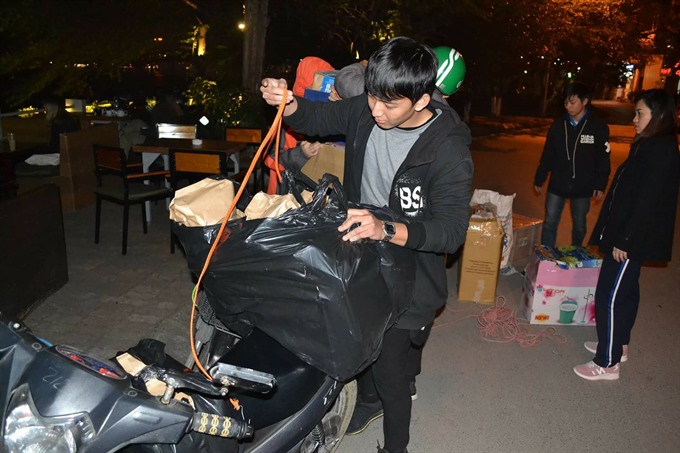
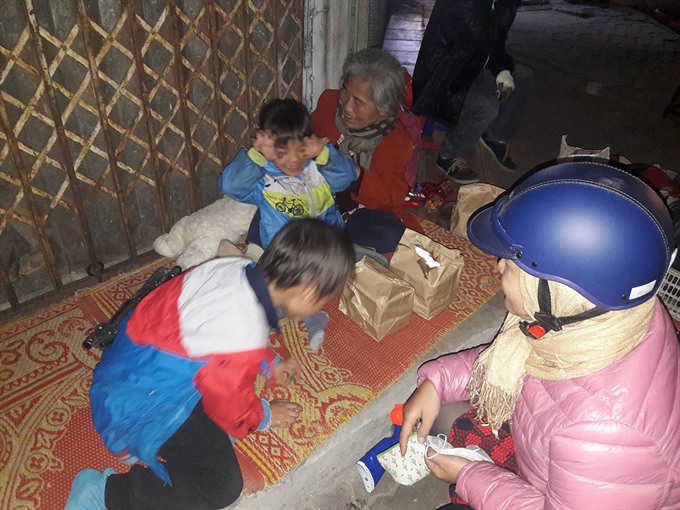
Together they have launched Hanoi Christmas Kitchen, a project preparing and giving hundreds of gifts to the city’s less fortunate.
Started last year, the project has since attracted many more people.
Basic hygiene products such as toothbrushes, soap and towels are among the gifts that many have received from the Christmas Kitchen.
“We thought there were a lot of poor people in the cold in Việt Nam during December. At home, Christmas is the time when we give to people, so we thought why don’t we do something similar here,” said Naim Hydal, a Canadian musician who has been living in Hà Nội for nearly four years – and the initiator of the project.
“Why hygiene products? I think it’s a good thing to give, something that people need. I know some of the people that live under the Long Biên Bridge. They live in very bad condition so I hope to help them have a better outlook,” he added.
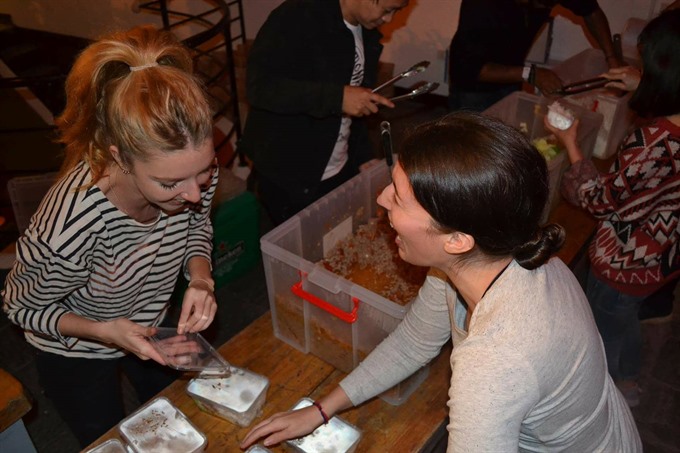
In addition, this year the group also prepared more than 250 free meals which they cooked themselves and delivered on December 9. The event was supported by Den, a café and bar in Yên Phụ Village, Tây Hồ District that provided the group with a kitchen as well as the location for the fundraiser. The volunteers prepared the ingredients and cooked all the meals themselves.
The gift packages and meals were delivered to poor patients and homeless people by members of charity groups called Ấm (Warmth), Sunshine as well as the volunteers from the Foreign Trade University before Christmas.
“Christmas Kitchen project is a simple idea. There is no corporation. We can do this as a group of friends. Everybody takes a role, for example, somebody went to local businesses or shops,” Hydal continued.
“Lots of restaurants donated quite a lot, which was probably one of the greatest things. And we also raffled to make money to buy all of the supplies and then contacted the charity groups.”
It took the volunteers nearly two weeks to prepare for the project by launching two events – one was held to raise fund on December 2, which included the venue vibes, live music, a raffle, carnival games, and games of chance all with prizes donated by businesses around Hà Nội. The second one, held on December 9, was for cooking all the food and wrapping gifts.
“It was my idea but everybody else joined in, particularly my friend Leah Fairchild, who did all the contacts for charities and the buying,” said the 36-year-old musician, who is a member of Rebel Monk band. “We all met here in Việt Nam. Everyone came together, even my band’s friends. We all play music and we all know each other, so everyone just helped out quickly, despite our limited time. The project is a big group effort.”
Last year, Hanoi Christmas Kitchen raised over VNĐ25 million (US$1,098), which was given to the charities the project was working with.
Hydal said he was lucky to a part of the expat community in Hà Nội, particularly as a musician performing in the city. This helped him know a lot of people always willing to help.
“I hope that the project will keep going with or without me. I hope the idea will stay for the generations.
“This is a growing city. There are big gaps between the rich and the poor, and people can really the see the difference. I believe we should always take care of each other. Charity begins at home and I now call this place my home, so I want to do something better for it.
“If you want to do something for society and people, you do not need a lot of money, but just a great business idea and a strong team. That is the blessing we have with everybody involved,” Hydal said. — VNS
Uber and Grab will need business registration certificates in Vietnam and pay taxes to the Vietnamese government.
This was announced by Le Dinh Tho, Deputy Minister of Transport, at the meeting reviewing the implementation of the two-year pilot programme of ride-hailing services via technology application, organised on December 19 in Hanoi, according to newswire Vnexpress.
Tho said that during the past two years, Uber and Grab have expanded the transport market by bringing a larger variety of choices for customers. Besides, Uber and Grab’s appearance created competition with traditional taxi brands, forcing traditional taxi companies to adjust fares as well as improve service quality.
However, Tho stated that the authorities’ management of Uber and Grab is still loose as the regulations on the enterprises operations have yet to be clarified, allowing them to take advantage of loopholes. Thus, Uber and Grab must have business registration certificates in order to create a fair playground for all stakeholders.
Tho added that the Ministry of Transport (MoT) will propose the government plans as well as adjustments to regulation to improve the authorities’ control over the operation of ride-hailing services.
In the framework of the meeting, a representative of MoT stated that Uber’s operations in Vietnam lack transparency and the company has yet to complete its tax obligations. The representative of Uber Vietnam only gave general answers without addressing MoT’s questions.
“Uber has yet to receive any proposals, the company will listen to the authorities’ opinions and co-operate to ensure the transparency of Uber’s operations in Vietnam,” the representative said.
Previously, MoT issued Decision No.24/QD-BGTVT on the pilot scheme for ride-hailing services. The pilot duration was two years, lasting from January 2016 to January 2018.
The appearance of ride-hailing services, especially Uber and Grab, has impacted the operations of traditional taxi companies. Notably, Mai Linh Group released bleak business results in the first six months of this year. Accordingly, the number of Mai Linh employees decreased by approximately 6,000 to 24,000, falling 20 per cent on-year.
Besides, the company’s net revenue was VND1.72 trillion ($75.4 million), down 5 per cent on-year. Profit from other activities decreased to VND29 billion ($1.29 million), only half of what it was in the first half of last year.
Furthermore, as of the end of June 2017, the company bore an accumulated loss of VND800 billion ($35.1 million), equalling 80 per cent of its charter capital. In the first six months alone, its net loss from business operations was VND47.5 billion ($2.08 million), doubling on-year due to a sharp increase in sales and management expenditures.
Similarly, in the second quarter of this year, Vinasun’s net revenue reached VND810 billion ($35.7 million) only, a record low since 2014. Besides, quarterly after-tax profit fell by 50 per cent on-year, to VND16 billion ($706,299). The cumulative figure for the first six months was VND1.9 trillion ($706.29 million), signifying a decrease of 15 per cent.
Within the first six months of this year, the number of Vinasun employees decreased by approximately 8,000 to 9,179. According to a Vinasun representative, the company’s business results may remain gloomy until the end of this year.