

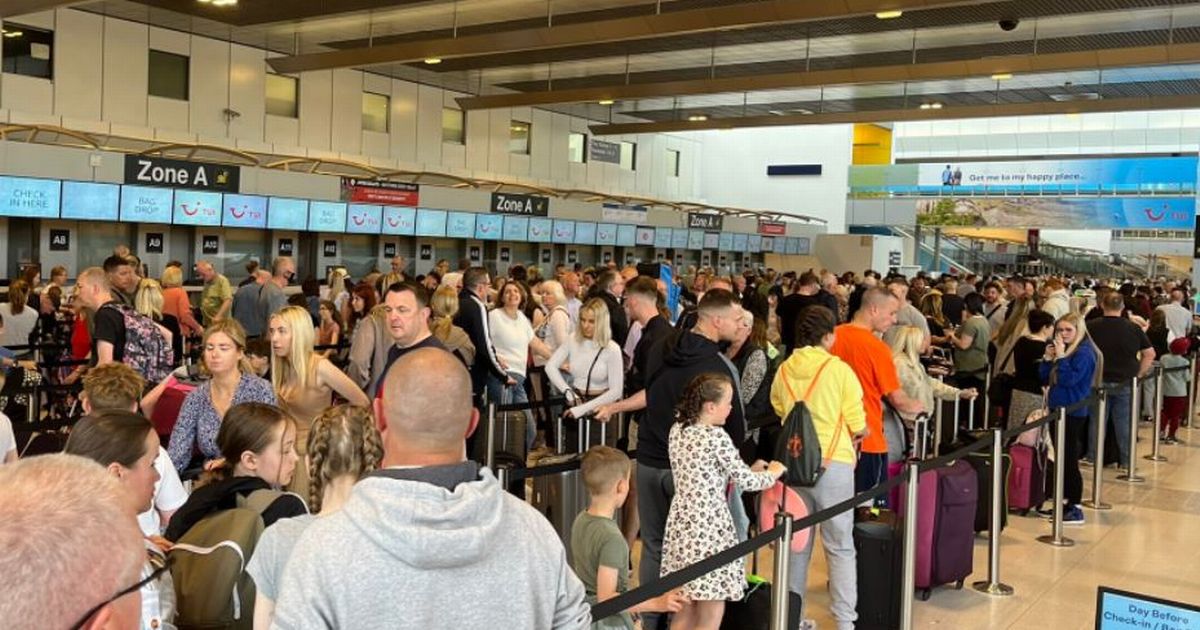
Missing a flight is every traveler’s nightmare. Yet while most passengers obsess over traffic, check in times, and boarding gates, one of the biggest sources of airport stress often comes down to a simple question: which security line should you choose?
According to queueing experts and behavioral scientists, the answer may be more strategic than most travelers realize.
Research into human behavior suggests that small decisions at airport security can significantly reduce waiting times, helping passengers move through checkpoints faster and with less stress.

One of the simplest tips is also one of the most surprising: choose the line on the left.
Studies have found that people naturally gravitate toward the right when presented with multiple options. Because most individuals are right handed and many cultures read from left to right, travelers often unconsciously favor security lanes positioned in the center or on the right side. As a result, left side lines can sometimes be shorter and less crowded.
The busiest line is often not the longest one.
Experts advise looking beyond the number of people waiting and paying attention to who is standing in front of you. A line filled with experienced business travelers carrying only a backpack may move significantly faster than a shorter queue made up of families, tour groups, or passengers managing multiple suitcases.
In other words, the people in the line often matter more than the line itself.
Frequent flyers tend to understand security procedures, have documents ready, and move efficiently through screening. Travelers carrying minimal luggage also generally require less inspection time.
Conversely, passengers with large amounts of carry on baggage often create bottlenecks as they organize belongings, remove electronics, and prepare items for screening.
Airport experts also caution against relying too heavily on estimated waiting times displayed on electronic signs.
While these systems can provide a useful overview, they are often updated periodically rather than in real time. Conditions may have changed by the time passengers reach the checkpoint. Observing the actual flow of people and the efficiency of security staff can sometimes provide a more accurate picture than the numbers displayed on a screen.
Another overlooked factor is preparation.
Many delays occur not because of security procedures themselves but because travelers arrive unprepared when it is their turn. Having identification and boarding passes ready, removing metal objects before reaching the scanner, and organizing liquids and electronics in advance can dramatically speed up the process.
Travelers are also encouraged to wear simple clothing and footwear that can be removed easily if required. Shoes with complicated laces, excessive metal accessories, and bulky outerwear can add unnecessary delays during screening.
For passengers carrying reusable water bottles, experts recommend emptying them before reaching security checkpoints. Bringing a full bottle through screening remains one of the most common reasons travelers are stopped for additional inspection.
Ultimately, the fastest way through airport security combines observation with preparation.
Rather than automatically joining the shortest queue, experienced travelers assess the people ahead of them, monitor how quickly lines are moving, and arrive at the checkpoint ready for inspection.
It may not sound revolutionary, but when flights, connections, and travel schedules are on the line, a few minutes saved at airport security can make all the difference.
In an era when airports are handling record numbers of passengers, mastering the science of queue selection may be one of the most valuable travel skills you can learn.
Discover more from Vietnam Insider
Subscribe to get the latest posts sent to your email.