

THACO AGRI, the agricultural arm of billionaire Tran Ba Duong’s THACO Group ecosystem, is actively expanding its tropical fruit portfolio across Vietnam, Laos, and Cambodia. Alongside bananas, pineapples, and durian, mangoes have emerged as a cornerstone of the corporation’s large-scale production blueprint.

Thaco president Tran Ba Duong (Photo: Thaco)
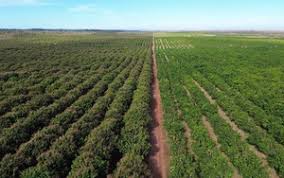
According to disclosures on THACO AGRI’s official website, the total planned area for mango cultivation reaches 5,400 hectares, with a projected annual yield of 100,000 metric tons. Cultivars selected for production include Taiwanese mango (xoài Đài Loan), Australian mango (xoài Úc), and Cambodian Keo mango (xoài keo). Output is primarily targeted toward key consumer markets, including China, South Korea, and other international destinations.
With this substantial footprint, mangoes represent a vital component in THACO AGRI’s overarching strategy to establish vast fruit raw-material zones across three Southeast Asian nations.
Integrated Mango Farming and Cattle Ranching
A defining operational feature of THACO AGRI’s mango production model is the integration of orchards with cattle pasturelands. This spatial design aligns directly with the integrated, circular agricultural framework the conglomerate is rolling out in Vietnam, Laos, and Cambodia.
Under this setup, cultivation and livestock farming operate in an interconnected closed loop. Crop byproducts are repurposed as cattle feed, while bovine manure is composted into organic fertilizer to nourish the fruit plantations. This circular approach optimizes resource efficiency across operational units while significantly curbing reliance on external chemical inputs.

THACO AGRI is constructing centralized agro-industrial complexes that encompass the complete value chain—from cultivation and livestock husbandry to primary post-harvest handling, industrial processing, and logistics. Rather than managing fragmented, standalone groves, the enterprise focuses on large-scale industrial farming, deploying extensive mechanization and digital management systems.

Investing in Processing to Drive International Exports
Beyond fresh fruit distribution, THACO AGRI utilizes specialized heat treatment facilities in its mango processing lines. This technology regulates critical parameters such as temperature and humidity, eradicating quarantine pests and pathogens while preserving nutritional integrity and natural flavor profiles. Capital investments in post-harvest processing play an essential role in diversifying export avenues for Vietnamese and regional agricultural produce.


 With target markets focused on China, South Korea, and broader international buyers, raw-material expansion must strictly adhere to demanding quality benchmarks, origin traceability, phytosanitary requirements, and technical import standards. These operational thresholds remain pivotal to securing entry into Tier-1 global retail networks and supply chains.
Expanding the Tropical Fruit Portfolio
According to THACO Chairman Tran Ba Duong’s 2026 strategic address, by the end of 2025, THACO AGRI had largely operationalized four major agricultural production complexes located across Cambodia, Laos, and Gia Lai Province (Vietnam). These facilities cultivate a diversified basket of tropical fruits—including bananas, pineapples, durians, mangoes, and grapefruits—coupled with cattle breeding under an integrated, circular agro-industrial paradigm. For 2026, the company aims to scale banana plantations to 15,800 hectares, while expanding the combined acreage of its premium fruit group (durian, mango, and grapefruit) to 8,200 hectares.
Cultivating a multi-crop portfolio enables THACO AGRI to diversify its agricultural revenue streams and mitigate risks associated with monoculture dependencies. In the mango segment, the 5,400-hectare master plan and 100,000-ton annual projection underscore an aggressive, forward-looking commitment. The ongoing imperative will center on bringing these zoned plantations into peak operational yield, ensuring uniform quality grades, and securing sustainable commercial off-take agreements for high-volume harvests.
Source: soha.vn
Discover more from Vietnam Insider
Subscribe to get the latest posts sent to your email.