

Vietnam is taking a major leap toward modern rail infrastructure — and it’s doing so with technology inspired by Japan’s legendary Shinkansen.
A new high speed rail line connecting Hanoi to Ha Long Bay is now under construction, promising to cut travel time from over two hours to just 30 minutes. For investors, expats, and travelers, this is more than just a transport upgrade. It signals Vietnam’s accelerating push into next generation infrastructure.
The Tech Behind It — Why This Train Matters
The trains powering this line will use a distributed power system, the same engineering approach pioneered by Japan’s Shinkansen in 1964.
Instead of relying on heavy locomotives at the front and back, power is spread across multiple cars throughout the train. The result:
- Faster acceleration and smoother operation
- Better performance on Vietnam’s mixed terrain
- Reduced track wear and infrastructure costs
- More efficient energy consumption
This matters in Vietnam’s context, where the route transitions from the flat Red River Delta to more complex terrain near Ha Long Bay.
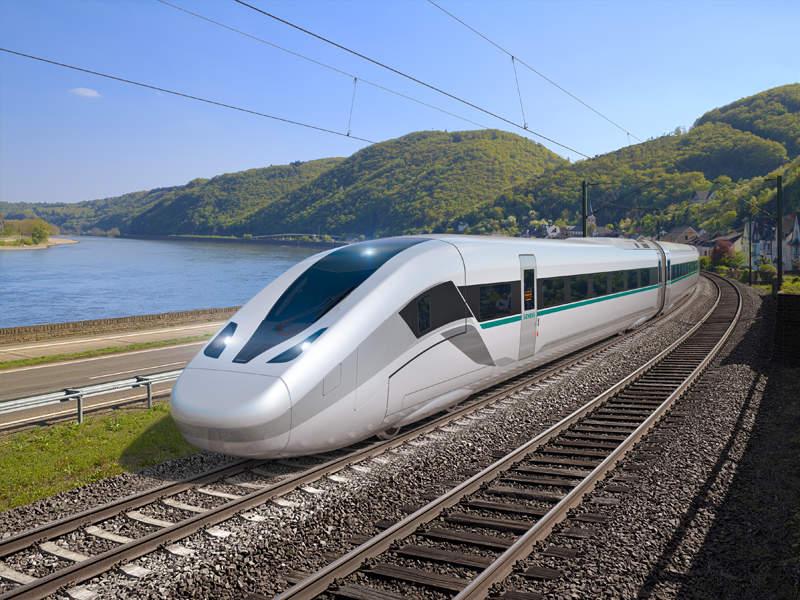
The trains themselves will be supplied by Germany’s Siemens Mobility, using its latest generation Velaro Novo platform — a model already deployed across Europe, China, and the Middle East.
Speed, Capacity, Efficiency — The Key Numbers

Here’s what makes this project globally competitive:
- Top speed: up to 350 km per hour
- Travel time: Hanoi to Ha Long Bay in under 30 minutes
- Capacity: at least 10 percent higher than previous Velaro models
- Energy use: about 30 percent lower than earlier generations
- Signaling: ETCS Level 2 with automatic train operation
The signaling system allows tighter train spacing and higher frequency service — a critical factor for long term scalability.
Why Investors Should Pay Attention
This is not just a standalone project. It is part of a broader strategy.
The $5.58 billion line is being developed by VinSpeed, a subsidiary of Vietnam’s largest private conglomerate, Vingroup. Completion is targeted for 2028.
More importantly, Siemens has committed to:
- Technology transfer
- Localized maintenance capabilities
- Long term system integration support
This positions Vietnam to build out a domestic high speed rail ecosystem, rather than relying entirely on foreign expertise.
Notably, the same generation of train will also launch in the United States around the same time, marking one of the first parallel rollouts of a Siemens high speed platform across continents.
A Shift in Vietnam’s Infrastructure Story
For years, Vietnam’s transport narrative has centered on roads, aviation, and incremental rail upgrades.
This project changes that.
It introduces:
- True high speed rail capability
- European standard signaling systems
- Integrated turnkey delivery including electrification and telecoms
It also reflects a broader shift toward premium, time saving travel experiences — especially relevant for international tourists visiting Ha Long Bay, one of Vietnam’s most iconic destinations.
Bottom Line
Vietnam’s first bullet train is not just about speed. It is about signaling intent.
By combining Japanese inspired engineering, German manufacturing, and domestic investment, the country is positioning itself for a new phase of infrastructure development — one that aligns more closely with global standards.
For travelers, it means dramatically easier access to Ha Long Bay.
For investors, it signals a market moving decisively up the value chain.
Discover more from Vietnam Insider
Subscribe to get the latest posts sent to your email.