

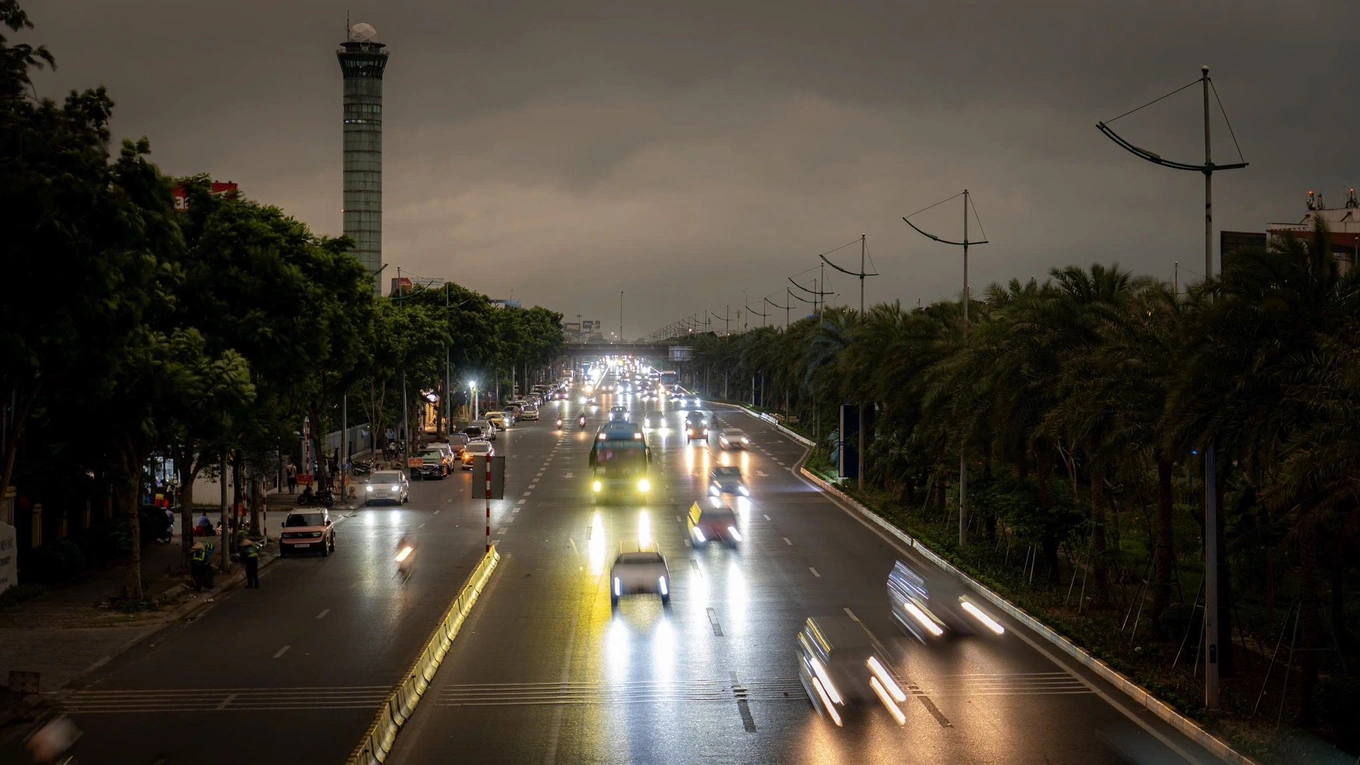
Residents across Hanoi and northern Vietnam experienced an unusual sight on April 17. Just after sunrise, the sky turned so dark that drivers had to switch on their headlights during rush hour.
While the scenes felt dramatic, meteorologists say the phenomenon is not rare. It is a classic example of how seasonal weather transitions in northern Vietnam can produce sudden and intense atmospheric conditions.
What Actually Happened
According to climate experts, the “mid morning darkness” was caused by dense thunderstorm clouds forming unusually early in the day.
The key driver was the interaction between two opposing air masses:
- A hot and humid air layer built up after weeks of temperatures reaching 35 to 37°C
- A cooler, drier air mass moving south as late season cold air
When these two systems collide, the atmosphere becomes highly unstable. This instability triggers strong upward air movement, allowing storm clouds to develop rapidly.
Why It Looked Like Nighttime
The main culprit is a type of cloud known as cumulonimbus, the same clouds responsible for thunderstorms.
These clouds have several key characteristics:
- They grow vertically and can reach heights of tens of kilometers
- They contain dense concentrations of water droplets and ice particles
- They block and absorb sunlight very effectively
When large clusters of these clouds cover a wide area, they can significantly reduce daylight. Combined with rain and airborne moisture, visibility drops sharply, creating the impression of nighttime conditions.
Why It Happened in the Morning
Thunderstorms in northern Vietnam often form later in the day. However, in this case, storm activity began overnight and intensified after sunrise.
This timing created the unusual effect where:
- The sun had already risen
- But thick storm clouds quickly covered the sky
The result was a sudden transition from daylight to near darkness during peak morning hours.
A Seasonal Pattern, Not a One Off Event
This type of phenomenon is typical during seasonal transition periods, especially:
- April to May
- September to October
During these months, northern Vietnam frequently experiences rapid weather changes within a single day, including thunderstorms, strong winds, lightning, and even localized hail.
What makes events like this feel more unusual today is the speed at which images and videos spread online, amplifying public attention.
What to Watch Going Forward
Meteorologists warn that similar conditions may continue in the coming weeks.
Key risks include:
- Sudden thunderstorms with little warning
- Strong wind gusts and lightning
- Reduced visibility affecting traffic and aviation
For residents and travelers, monitoring real time weather updates is essential, particularly during the current transition period.
Bottom Line
The dark skies over Hanoi were not a mystery but a textbook case of atmospheric instability during a seasonal shift.
For international observers, it is a reminder that Vietnam’s tropical climate can produce rapid and dramatic weather changes, even in the middle of the morning commute.
Discover more from Vietnam Insider
Subscribe to get the latest posts sent to your email.