

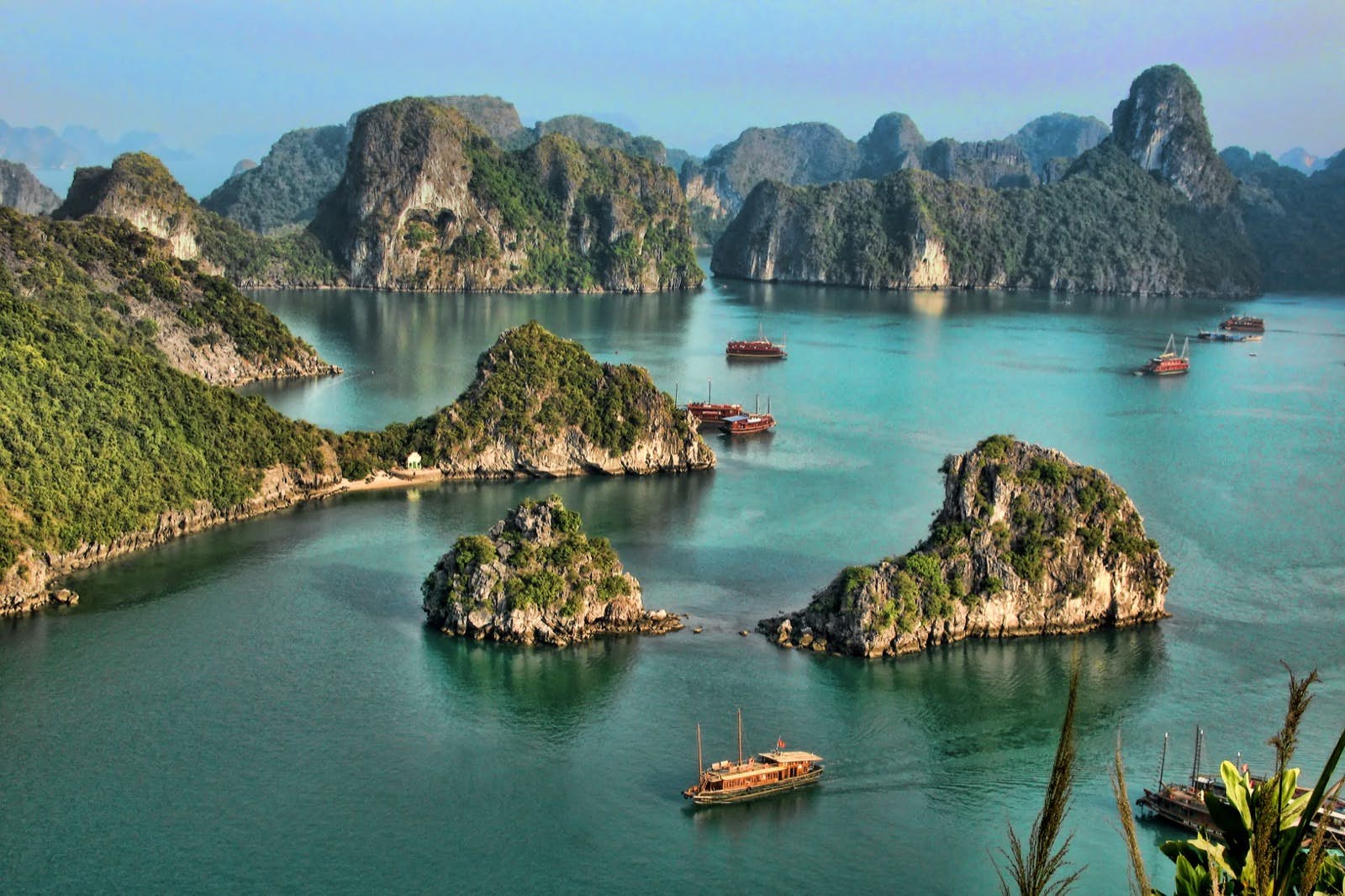
Worry and confusion after the boat capsized in Ha Long caused some tourists to cancel or postpone their visit to the bay.
After the boat capsized in Ha Long Bay and concerns about the impact of Typhoon Wipha, a group of 20 people from a technology company in Hanoi tried to postpone a team building trip to Ha Long (Quang Ninh) scheduled for this weekend. However, the travel company refused because the storm had passed and the deposit contract for the bay tour was not refundable. Unable to cancel the trip completely, the group kept the schedule but skipped the bay tour, only organizing fun activities on shore.
“The whole room was scared, no one dared to go down to the bay anymore. We negotiated with the tour company, accepting to lose the 5 million deposit for the boat trip to change to a safer schedule,” Anh Vu shared.
Brenda, a tourist from Mexico, said she had visited Ha Long Bay on a cruise from July 17 to 19 and was currently in Hanoi. Brenda’s group had gone on a cruise on the same day the Green Bay 58 capsized. The tourist said her group returned to shore earlier, around 12-1 p.m., so they were not near the accident site. She learned about the incident from a Canadian friend who was back home.
“When I heard the news, I was shocked, felt sorry for the victims and felt grateful that I was safe, but scared when I thought that I could have been the victim,” said the female tourist.

The Blue Bay 58 boat carrying 46 passengers and 3 crew members encountered a storm on July 19 while visiting Ha Long Bay route 2, causing the boat to capsize. 37 people died, 2 people are missing and 10 people were rescued.
Some boat and cruise ship owners in Ha Long said the tragic accident happened right when Typhoon Wipha was making landfall, causing many tourists to panic and cancel their trips. A boat owner who specializes in welcoming international tourists said most of the guests canceled their trips on July 24-2.
“The ship has 20 cabins, usually welcoming 20-30 guests at a time, the number of guests canceling about 10 people mainly falls this week,” the ship owner said, hoping that after 7-10 days, the psychology of guests and sea tourism activities in Ha Long will gradually stabilize.
A representative of Paradise Vietnam said that the company has proactively adjusted and rescheduled tours for tourists since July 19, waiting for official notice to resume operations. About 10-15% of guests have canceled or reserved their trips, the rest have mostly postponed their trips to the following week. The cruise also supports extending the reservation period for tourists to conveniently arrange. Currently, the cruise continues to accept new booking requests.

Navy soldiers and other forces at the scene searching for missing people. Photo: Le Tan
Dr Joe Othman, Senior Lecturer in Psychology at RMIT University Vietnam, said that after accidents like the Ha Long boat capsize, most people are likely to experience a combination of emotions such as fear, anxiety, sadness, guilt and anger. For tourists, the most prominent emotions are fear and concern about safety. The concept of a “holiday” – which usually brings relaxation and a sense of escape – is disrupted, replaced by a sense of vulnerability. Tourists tend to worry about their own safety and have less trust in service providers.
For boat owners, the emotions are often one of guilt and “what if” anxiety – they may wonder what would happen if they or their boat were in such a situation. Since Ha Long is a small city where people tend to be closely connected, the cruise operators can feel the collective pain and sense of community responsibility.
“While not immediately, some business owners may start to worry about their livelihoods, as the reputation and tighter regulations could impact future customer traffic,” said Joe Othman.

Authorities search for victims of the ship Bay Xanh 58. Photo: Le Tan
Dr Justin Matthew Pang, Senior Lecturer in Tourism and Hospitality Management, RMIT University Vietnam, said “during this sensitive time and in the future, ship owners need to be aware of their responsibility to ensure passenger safety”.
According to him, all ships should apply the highest safety standards, from controlling capacity, arranging enough life jackets, requiring life jackets to be worn throughout the journey, to providing first aid kits and full rescue equipment. Ship owners should install signs indicating the location of life-saving equipment, and show videos or illustrate safety instructions before departure, similar to the procedures on airplanes. These actions will raise awareness, gradually form a safety culture, and eliminate subjective behaviors. In the long term, this is also a way to build a type of tourism that prioritizes safety, is sustainable, and is managed by responsible standards.
Dr. Justin Matthew Pang cited the 2014 example of the MV Sewol ferry carrying 476 people, including 250 schoolchildren, capsized while traveling from Incheon to Jeju, killing 304 people and sending shockwaves throughout South Korea. “It took years for South Koreans to gradually overcome their grief, tighten safety standards, and build grassroots community oversight organizations,” Pang said.
The Ha Long accident could leave a deep scar on the local tourism industry. The government needs to reinforce its duty of care to passengers and force cruise operators to put safety first to restore trust from both tourists and the community.
Safety consultants should be invited to Ha Long to study the impact of tropical storms, sharing standards and best practices with residents, businesses, industry leaders and maritime associations.
“The lesson from Sewol reminds Ha Long that this cannot be considered an isolated accident, but must be seen as a wake-up call to raise maritime safety standards to the highest level, otherwise the consequences can be long-lasting and hurt the whole community,” said Dr. Pang.
Source: vnexpress.net
Discover more from Vietnam Insider
Subscribe to get the latest posts sent to your email.