

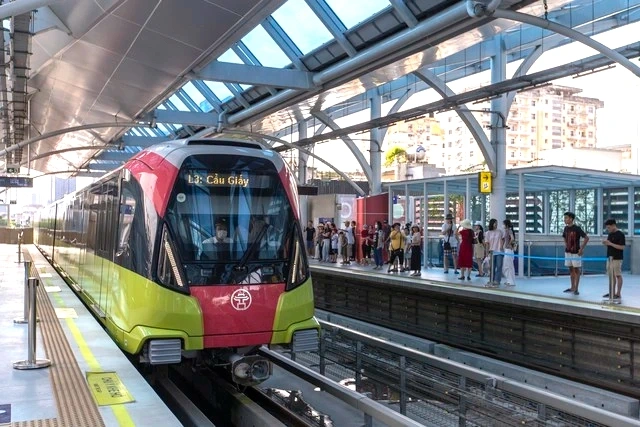
Hanoi is taking a major step toward building a fully integrated public transport system, with officials aiming to replicate a model similar to London where commuters can access all transport services using a single card.
The push reflects a broader ambition to modernize urban mobility in one of Southeast Asia’s fastest growing capitals, improving convenience for residents while unlocking valuable data for city planning.
A shift toward seamless, cashless travel
Hanoi Metro has already made significant progress. After more than eight months of rolling out an automated ticketing system, over 5.7 million passenger trips have been processed through upgraded smart gates across two key lines.
The system supports a wide range of cashless payment options, including chip based national ID cards, contactless bank cards, QR codes, and mobile applications. Adoption has been rapid, with around 85 percent of users now utilizing digital identification or biometric verification.
The result is a noticeably smoother passenger experience, with reduced waiting times and simplified access to services.
More than convenience, a foundational upgrade
Officials emphasize that this is not just a technology upgrade but a structural shift in how urban transport is managed.
The benefits extend across three key groups:
For passengers, travel becomes faster and more convenient, without the need for cash or multiple tickets.
For operators, digital systems improve transparency and reduce revenue leakage.
For city planners, integrated data enables better infrastructure decisions and long term investment strategies.
Revenue on Hanoi’s metro lines has already increased by 48 percent, while ridership has grown by 15 percent compared to the same period last year.
Toward a fully integrated transport network
Hanoi plans to unify ticketing across all urban rail lines and expand integration to other modes of transport, including buses, bus rapid transit, taxis, and ride hailing services such as Grab, GSM, and Be.
A pilot program expected in the second quarter of 2026 will test connections between urban metro lines and the national railway network at Hanoi Station. The long term goal is a seamless mobility ecosystem where users can plan and pay for an entire journey across multiple transport modes on a single platform.
The London benchmark
The vision draws clear inspiration from London’s transport system, widely regarded as one of the most efficient in the world. There, commuters use a single payment method across underground trains, buses, and other services.
Vietnamese officials see this as a practical model for Hanoi, where rapid urbanization is placing increasing pressure on infrastructure.
Why this matters for investors and residents
For international businesses and expatriates, a unified transport system signals a maturing urban environment with improving quality of life.
For investors, it reflects a broader push toward smart city development, digital infrastructure, and data driven governance, all of which are critical for long term economic growth.
The bottom line
Hanoi’s move toward a single, integrated transport card is more than a convenience upgrade. It is a strategic shift toward building a smarter, more connected city.
If successfully implemented, it could redefine daily mobility for millions and position Hanoi alongside leading global capitals in urban transport innovation.
Discover more from Vietnam Insider
Subscribe to get the latest posts sent to your email.