

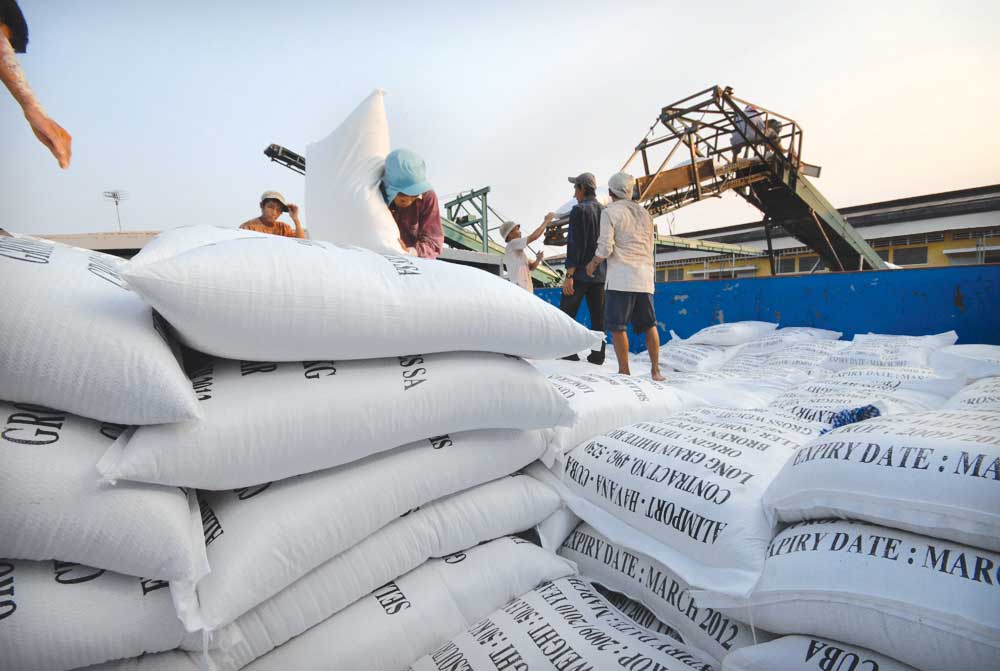
A survey by Thanh Nien shows domestic paddy prices dipped slightly by 100 to 150 VND per kg. Fresh long-grain fragrant paddy at the field currently fetches 6,600 to 6,850 VND per kg. Standard paddy sells for 6,300 to 6,400 VND per kg, depending on quality and region. In contrast, export prices held steady, with 5% broken fragrant rice trading near $520 per ton and Jasmine rice around $545 per ton.
From the Mekong Delta rice bowl, Nguyen Vinh Trong, Director of Viet Hung Co., Ltd. (Dong Thap), stated that the price competition remains intense. Earlier this month, the Philippines announced open rice imports throughout 2026 to ensure food security amid severe El Niño risks. However, authorities have not yet issued new Sanitary and Phytosanitary Import Clearances (SPS-IC) for fragrant rice. Consequently, Vietnamese exporters have not secured new orders in this segment. While waiting, Philippine buyers are focusing on Japonica and glutinous rice varieties.
Meanwhile, African and Chinese buyers maintain regular purchase volumes without significant increases because Vietnam’s ongoing summer-autumn harvest has expanded available supply. “This year, rising input costs and lower yields justify the VFA’s call for a floor price on farmgate purchases and export sales. The industry can only sustain itself when farming and trading remain viable,” Trong noted.
Industry peers share this view, noting that El Niño will significantly constrain global grain supplies. They stress the need to safeguard domestic production with fair pricing for both farmers and exporters. To meet this target, enterprises require access to low-interest credit to finance crop purchases and defend floor prices.
Facing tighter domestic supplies and heightened global demand driven by El Niño, the VFA called on exporters to uphold a purchasing floor of 7,000 VND per kg for fragrant paddy and a minimum export floor of $500 per ton.
By late July, the Philippines imported 3.27 million tons of rice, up 650,000 tons (or 27%) year-on-year. Although the Philippines works to diversify sources—importing 343,227 tons from Thailand, 233,922 tons from Myanmar, 80,678 tons from Cambodia, and 68,313 tons from Pakistan—Vietnam remains its primary supplier at 2.53 million tons, accounting for 77% of total imports.
The Philippine Department of Agriculture projects domestic output could drop by 750,000 tons, an increase of 50,000 tons over initial estimates. The United States Department of Agriculture (USDA) forecasts that the Philippines will remain the world’s largest rice importer across 2026 and 2027, taking in approximately 5.6 million tons annually.
Discover more from Vietnam Insider
Subscribe to get the latest posts sent to your email.