

At the invitation of General Secretary and State President To Lam and his spouse, President of the Republic of Panama José Raúl Mulino and his spouse are paying an official state visit to Vietnam from October 5 to 8.
According to the Ministry of Foreign Affairs, this milestone represents the first visit by a Panamanian head of state to Vietnam in 14 years. Consequently, the visit marks an essential diplomatic juncture in the history of bilateral relations between Hanoi and Panama City.
Over recent years, bilateral ties have flourished steadily through high-level visits, multi-tiered delegations, and structured dialogue mechanisms. The two governments previously concluded a Memorandum of Understanding on establishing political consultations between their respective foreign ministries in October 2012, an Agreement on Economic and Trade Cooperation in April 2013, a Double Taxation Avoidance Agreement in August 2016, and a Mutual Visa Exemption Agreement for ordinary passport holders in June 2019.

On July 29, 2026, Deputy Minister of Industry and Trade Phan Thi Thang hosted a high-level working session with Panamanian Deputy Minister of Foreign Affairs Carlos A. Hoyos in Hanoi.
Alongside warm diplomatic relations, two-way economic and trade partnerships have sustained strong upward momentum, serving as a bright highlight on the bilateral agenda. Officials from the Foreign Market Development and Multilateral Trade Department under the Ministry of Industry and Trade noted that Panama consistently ranks among Vietnam’s top ten trading partners across Latin America.
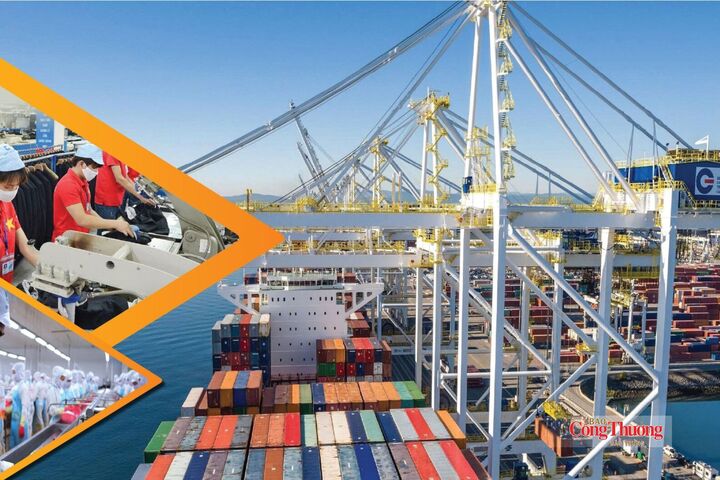
Citing data from Vietnam Customs, the department highlighted that two-way merchandise turnover reached $478.1 million in 2025, climbing 19.2% year-on-year. Vietnamese exports accounted for $462.6 million, up 18.42%, while imports from Panama rose 48.14% to $15.5 million.
Vietnam’s primary outbound shipments include footwear, mobile phones and components, computers and electronic parts, garments and textiles, transport vehicles and spare parts, and processed seafood. In return, Vietnam imports raw timber and wood products, seafood, and scrap steel from Panama.
During her July meeting with Deputy Foreign Minister Carlos A. Hoyos, Deputy Minister Phan Thi Thang commended the robust trade gains recorded in 2025. She expressed a desire for both governments to coordinate closely, positioning Panama as a springboard for Vietnamese goods entering Latin America and the Caribbean, while simultaneously helping Panamanian merchandise penetrate Southeast Asian supply chains via Vietnam.
To realize this vision, Thang recommended that both administrations intensify trade promotion campaigns, exchange trade missions, and assist Vietnamese enterprises in accessing the Colón Free Trade Zone. Furthermore, she urged expanded collaboration in maritime logistics and port operations, advocating feasibility studies for dedicated shipping lanes and consolidated cargo services to compress freight times and shipping overhead between Vietnam and Latin America.

The Panama Canal
By the end of May 2026, Panama maintained 14 active FDI projects in Vietnam with total registered capital of $52.4 million, ranking 59th out of 154 investing nations and territories.
Both partners hold substantial untapped headroom across agriculture, telecommunications, infrastructure, maritime shipping, civil aviation, banking, higher education, and clean energy. Maximizing the transit throughput of the Panama Canal can reinforce supply chain security between Latin America and the Asia-Pacific region.
Sharing this outlook, Vietnamese Ambassador to Mexico concurrently accredited to Panama Nguyen Van Hai emphasized that Vietnam boasts expanding manufacturing, processing, and export capacities backed by an open-market economy, standing ready to connect Panamanian firms with ASEAN and Asia-Pacific supply chains.
Conversely, Panama commands an unmatched geostrategic presence with world-class maritime ports, the Panama Canal, modern logistics hubs, and sophisticated commercial infrastructure.
“Therefore, both nations enjoy ample room to scale up and diversify bilateral trade structures,” Ambassador Hai observed.
Analyzing this operational synergy, Ambassador Hai underlined that Panama acts as both a promising consumer market and an essential transshipment distribution platform. The Panama Canal links more than 180 maritime routes, roughly 170 countries, and 1,900 commercial ports worldwide. In addition, the Colón Free Trade Zone operates as Latin America’s primary free trade nexus, supported by established corporate networks, warehousing infrastructure, and re-export channels.
To harness these advantages, Ambassador Hai urged businesses to build direct connections, assess market-specific import standards, facilitate customs clearing, harmonise standards, and establish enduring distributor partnerships. Organizing periodic trade missions, investment forums, and business matchmaking sessions remains a crucial policy pillar.
Looking ahead to President José Raúl Mulino’s official visit, Ambassador Hai stated that high-level engagements will deepen mutual political trust, delivering senior momentum to convert diplomatic frameworks into concrete commercial ventures, logistics agreements, and investment projects.
Multiple cooperation pacts expected during the visit will lay a firm legal bedrock for long-term bilateral growth, delivering practical economic benefits to both peoples while contributing constructively to regional stability and international supply chain resilience.
(Source: congthuong.vn)
Discover more from Vietnam Insider
Subscribe to get the latest posts sent to your email.