

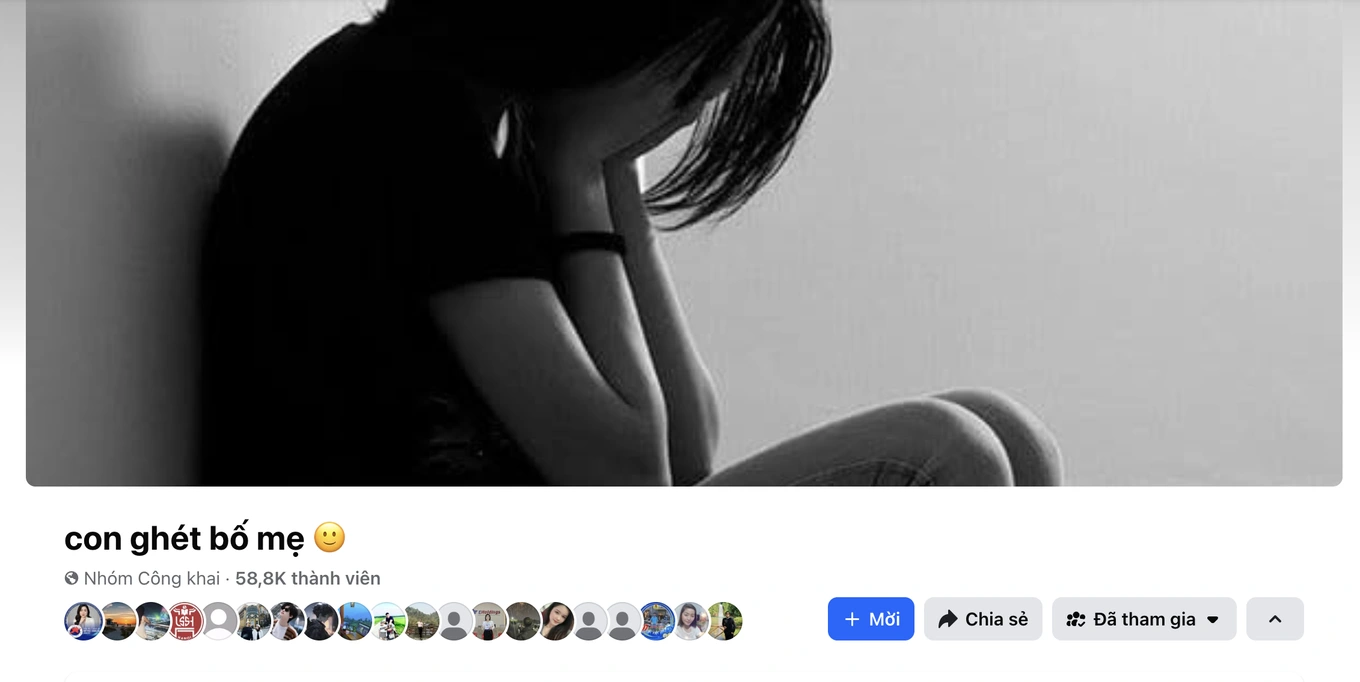
Despondent confessions such as “I hate my parents,” “I dread returning home,” or detailed chronicles of bitter family arguments appear daily inside the Vietnamese Facebook group “Con ghét bố mẹ” (“I Hate My Parents”).
As of September 28, the group recorded approximately 58,000 members, a metric continuing to fluctuate as the community commands widespread public scrutiny across Vietnamese cyberspace.
The moniker “I Hate My Parents” readily evokes images of a toxic enclave cultivating sheer teenage rebellion. However, a deeper examination of its daily feed uncovers narratives far more nuanced, vulnerable, and fractured than its abrasive title implies.
Countless members take to the feed to recount heated disputes with elders, crushing academic demands, the perennial burden of being compared to “other people’s children”, invasive parental surveillance of mobile phones, and intrusive interference in dating lives or individual aspirations.
While certain posts trace back to mundane domestic friction over daily chores, others unearth deep-seated trauma festering across decades.
A substantial volume of posts are published via anonymous contributor mode. Concealing their real identities, writers articulate intimate accounts of household realities and express thoughts they find impossible to voice directly to their own mothers and fathers.
Beneath these confessions, fellow peers routinely leave words of solidarity, sharing that they too navigate identical pressures. Commenters offer reassurance, pragmatic coping advice, or simply write that the author’s silent agony is recognized and heard.
The Influx of Older Generations
The dynamic within the community shifted dramatically once the group began circulating across mainstream Vietnamese social media channels.
As membership figures surged, an escalating wave of accounts self-identifying as mothers, fathers, or older relatives joined the fray.
Once a quiet sanctuary where youth engaged in peer-to-peer commiseration, the group evolved into an active battleground for cross-generational sparring.
A faction of conservative adults reacted with indignation toward the confessional posts. Harsh reprimands soon flooded the comments, with older users branding the youth as “ungrateful” or “filially disobedient”, frequently berating them for failing to appreciate the immense sacrifices parents make.

Conversely, another segment of older visitors adopted an empathetic approach.
These parents clarified that their objective was never to police or argue, but rather to observe authentic perspectives from modern youth. One mother noted that reading these raw accounts forced her to realize how innocuous words or routine actions from adults can cause unintended emotional wounds in sensitive adolescents.
She regarded the forum as an invaluable opportunity to hear the truths her own children might be holding back, prompting introspection regarding communication habits within her own household.
Other parents similarly voiced understanding. Rather than fixating defensively on the provocative word “hate,” they emphasized examining what structural isolation drives a young person to confess domestic wounds to strangers online.
A Sanctuary Crowded by the Very Figures Youth Sought to Escape

The swelling presence of older adults has birthed an unexpected irony.
Across recent discussion threads, younger members voiced bitter disillusionment, seeing their confidential shelter overrun by parental figures.
Many teenagers argued that once mothers and fathers entered the room—bringing defensive lectures and moral judgments—the safe perimeter vanished, leaving them reluctant to articulate their unfiltered inner lives.
At the same time, open-minded parents also lamented this shift.
These elders noted they initially sought out the group to quietly observe adolescent psychology, hoping to bridge the emotional divide with their own kids. Instead, they increasingly find the comment sections derailed by hostile shouting matches among older participants arguing over parenting philosophies.
“I came here to see what kids are truly thinking so I could have better conversations with my child at home. But now, all I see here are other parents arguing,” one user remarked.
From a provocative fringe community, “I Hate My Parents” has transformed into an uneasy intersection where conflicting demographics collide with starkly divergent motivations.
Some seek an anonymous outlet to weep. Others search for peers who share their quiet misery. Well-meaning parents enter to decipher their offspring’s silence. Meanwhile, vocal moralists arrive strictly to denounce, preach, and defend parental authority.
This dramatic evolution poses vital questions regarding the life cycle of digital support forums once they achieve mass visibility. When guardians infiltrate and police the very spaces created for vulnerable expression, where can young people turn to navigate the intricate wounds of domestic life?
Behind each screen lies a complex tapestry of intergenerational misunderstanding. What drives so many individuals to confide in unseen strangers on the internet rather than engaging in honest dialogue with their own families?
(Source: dantri.com)
Discover more from Vietnam Insider
Subscribe to get the latest posts sent to your email.