

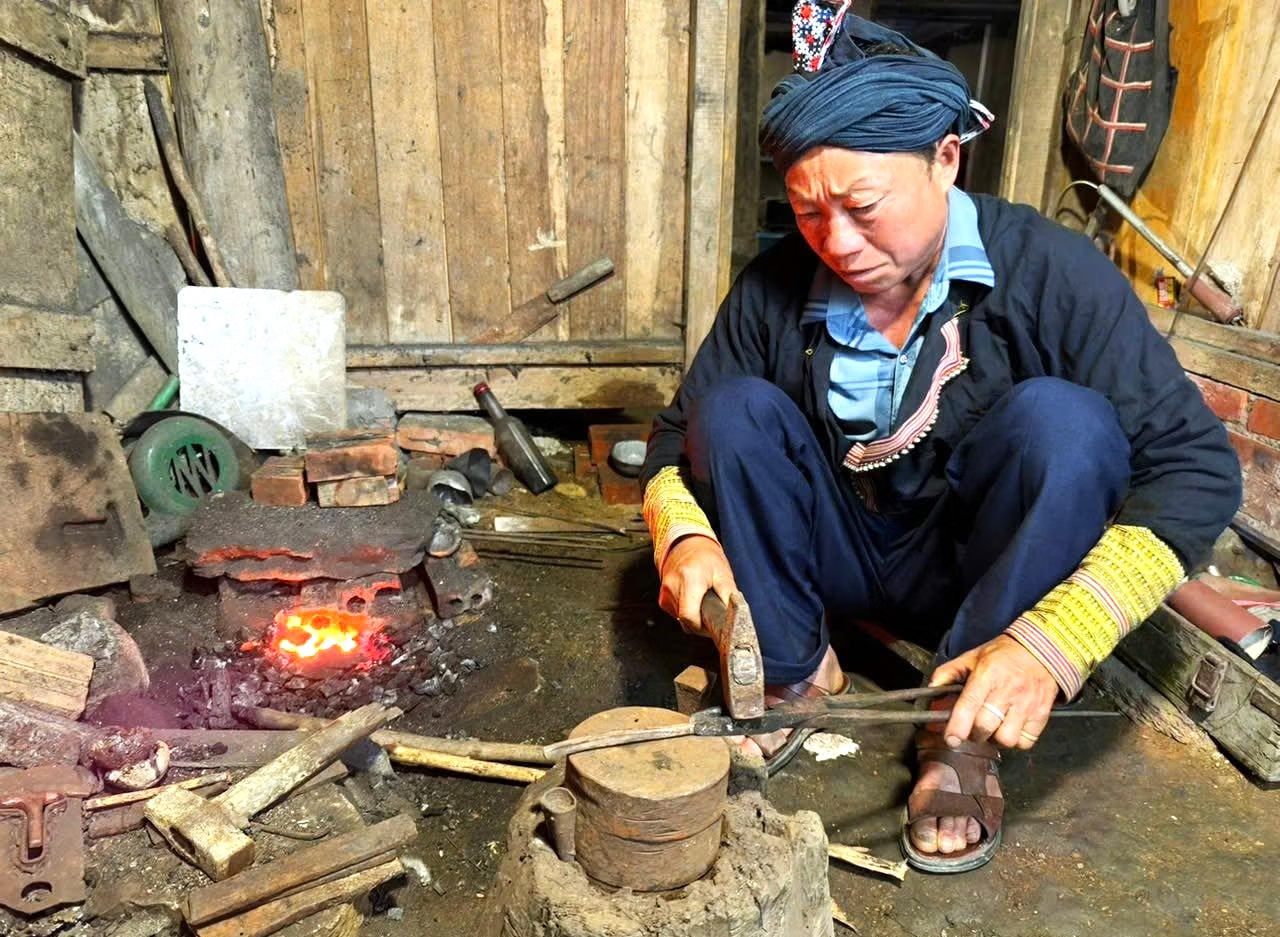
From Raw Silver to Intricate Masterpieces
In the traditional attire of Red Dao women, vibrant crimson highlights set against dark indigo fabric blend with hand-stitched embroidery and silver jewelry to create an unmistakable aesthetic. Necklaces, bracelets, buttons, and xa tich (ornamental waist chains) serve not merely as accessories, but as expressions of the community’s artistic sensibility and cultural identity.
Behind the luminous sheen of every silver piece lies an elaborate crafting process demanding seasoned experience, patience, and deft hands. In Ta Phin, artisan Phan Dao Vang remains dedicated to the silver carving trade, safeguarding traditional handcrafting techniques handed down from earlier generations.

An artisan performs intricate carving to create patterns on traditional silver pieces of the Red Dao people in Ta Phin (Photo: Ta Phin Commune People’s Committee).
To produce a finished item, a silversmith must navigate multiple stages—from raw material processing, smelting, and casting ingots to shaping, engraving motifs, and polishing. Every step carries strict technical demands requiring meticulous care and practical mastery.
Primary raw materials consist of silver bars or reclaimed silver melted down from older pieces. Placed inside a furnace, the metal is heated using a traditional blowpipe to maintain steady temperatures until it liquefies completely. The molten silver is then poured into clay or metal molds to form rough blanks. Once cooled, these blanks are hammered and drawn into rods sized specifically for each type of ornament.
From raw silver materials, through multiple stages of handcrafting, artisans create pieces of enduring aesthetic and cultural value (Photo: Nhip song Ta Phin).
From these initial silver rods, the artisan shapes rings, chains, garment clasps, or delicate jewelry components. Precision is paramount at this stage, as the dimensions, thickness, and contour of each piece directly govern its structural integrity and visual harmony.
In particular, motif engraving showcases the artisan’s highest level of skill and creative signature. Alongside steady hands, the craftsperson must possess an intuitive grasp of volume, composition, and proportion to etch balanced lines across the silver surface. Many designs are carved freehand from seasoned experience and keen observation rather than relying solely on pre-drawn templates.
Once shaping and engraving are complete, the piece is cleaned and burnished to remove residues from the forging process, bringing out silver’s signature bright white luster. Each consecutive stage calls for unwavering patience and precision, as even a minor slip during shaping can throw off the symmetry of the entire ornament.
To a Red Dao silversmith, a piece’s true worth lies not merely in the weight of precious metal used, but in the refinement of its patterns, the polish of its finish, and the cultural meaning imbued within every detail.
Every Silver Piece Preserves a Cultural Story
What makes Red Dao silver jewelry in Ta Phin truly distinctive is not only its craftsmanship, but also its system of motifs deeply rooted in ethnic heritage. Engraved lines typically draw inspiration from the natural world, daily community life, and spiritual beliefs.
Floral and foliage patterns, geometric forms, stars, and depictions of birds, dragons, and phoenixes appear across a wide array of ornaments. Each motif carries its own stylistic expression and symbolism, reflecting the Red Dao people’s imagination, aesthetic taste, and worldview. The interplay between delicate decorative engravings and gleaming white silver produces an elegance that is both understated and refined.

Traditional silver items hold not only aesthetic appeal, but also deep cultural and spiritual significance for the Red Dao community.
In Red Dao daily life, silver is regarded not just as valuable wealth, but as a symbol of prosperity, good fortune, and peace. According to folk beliefs, wearing silver helps ward off cold drafts (tranh gio), dispel bad luck, and safeguard health. Passed down through the community, these beliefs imbue traditional silver ornaments with distinct spiritual value.
During major life milestones, silver jewelry plays an even more prominent role. At weddings, silver pieces are customarily prepared as betrothal gifts or dowry presents from parents to their daughters, carrying blessings for a happy and prosperous married life. Gifted bracelets, necklaces, and jewelry sets hold far more than material value—they embody family affection and intergenerational bonds.
Silver also occupies an essential place in spiritual rituals, notably the Cap Sac coming-of-age ceremony—a pivotal rite marking a Red Dao man’s maturity. Woven through customs and sacred ceremonies, silver artifacts become an integral thread of cultural life, mirroring the beliefs and identity of the community.
In 2018, the Ministry of Culture, Sports and Tourism inscribed the silver carving craft of the Red Dao people in Sa Pa onto the National List of Intangible Cultural Heritage, recognizing the historical, cultural, and artisanal values preserved by the community across generations.
Nevertheless, amid rapid modern development, traditional silver carving faces pressing challenges. Mass-produced industrial jewelry with diverse designs has grown increasingly prevalent, whereas handcrafting silver demands substantial time, physical effort, and years of mastery. Sustaining the craft therefore depends not only on the dedication of veteran artisans, but also on passing the torch to younger generations.

Silver carving remains one of the signature cultural traditions preserved across generations by the Red Dao people of Ta Phin.

Hand-carved motifs lend intricate, one-of-a-kind beauty to Red Dao silver jewelry (Photo: Nhip song Ta Phin).
Experienced master silversmiths play a vital role in safeguarding technical secrets and mentoring apprentices. At the same time, stronger efforts to showcase and promote traditional silver products are essential to linking the craft with cultural and community-based tourism.
Ta Phin boasts a rich tapestry of Red Dao heritage. Connecting silver carving with living traditions such as the Cap Sac ceremony, Nom Dao script, brocade embroidery, and ancestral customs will enrich visitor experiences while opening sustainable livelihood opportunities for local residents.
Preserving the silver carving craft means far more than keeping a manual trade alive—it means protecting a vital pillar of Red Dao cultural heritage. Through the gifted hands of local artisans, silver ornaments continue to emerge, carrying forward technical mastery, aesthetic grace, and spiritual values nurtured over centuries. So long as the craft is practiced, taught, and lived within the community, the distinctive cultural legacy of the Red Dao people in Ta Phin will continue to endure and shine.
Source: Nguyen Hai – Huu Truong / baophapluat.vn
Discover more from Vietnam Insider
Subscribe to get the latest posts sent to your email.