

Three days before boarding his flight from Australia back to Vietnam, Phan Minh Duc—born in 1992 and champion of the 2010 Road to Mount Olympia competition—called his father to break the news.
“I’m coming home to Vietnam to build a startup,” he said over the phone.
On the other end, his father paused in surprise before asking: “Are you certain?” Duc answered with conviction: “I am sure… Vietnam is my home.”
That phone call marked a defining turning point in Duc’s life after 13 years of studying and working in Australia.

Building a startup has not been easy, but Duc has never second-guessed his decision to return home (Photo: Tran Thanh Cong)
Leaving Australia, Duc returned home to pursue education. He co-founded a center in Hanoi specializing in foreign languages and SAT preparation—a standardized test used for university admissions in the United States and global institutions.
While the venture remains in its early stages, Duc firmly believes this path allows him to pass on his knowledge to the younger generation.
“I have no regrets about pausing my doctoral studies to build a venture in Vietnam. The insights and experience gained from my years in Australia serve as foundational capital to develop right here in my homeland,” he shared.
Starting Out in Australia
Born into an intellectual family in Hanoi, Phan Minh Duc demonstrated exceptional academic talent from an early age. Scoring 295 points in the national Olympia finals, he secured the prestigious laurel wreath, unlocking an entirely new path for the former physics-specialized student.
“The laurel wreath was not just an unforgettable milestone; it reshaped my entire life. That title took me to Australia, opening doors to opportunities and experiences across more than a decade,” Duc reflected.
A year after winning the competition, he departed for Australia with the eagerness of a first-time international student. However, that early confidence quickly turned into disorientation as he adjusted to student life in Melbourne.
During his initial months studying Accounting and Finance at Swinburne University of Technology, Duc felt overwhelmed. He struggled to catch the rapid pace and local accent of Australian peers, which differed sharply from what he had studied back home.

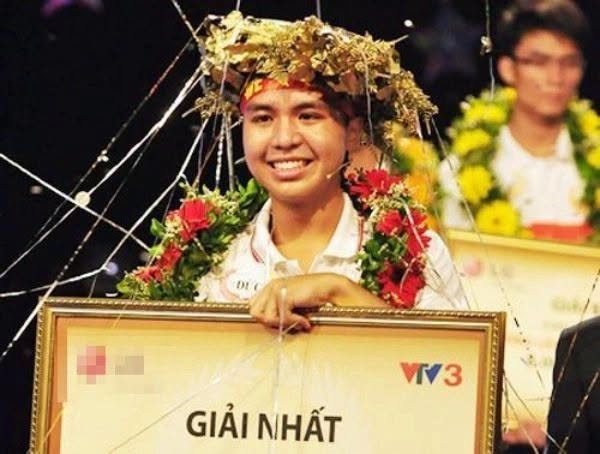
Duc during his crowning victory at the 10th Road to Mount Olympia finals. (Photo: Provided by the subject)
The academic approach in Australia presented fresh challenges. Lecturers expected students to proactively source research materials and uncover concepts independently, rather than passively copying down lectures.
Each course involved three hours of weekly class time, requiring a minimum of 10 to 14 hours of independent study. The campus library remained open around the clock, closing for only 15 minutes daily.
To sharpen his language fluency, Duc actively joined study groups with Australian students. This initiative helped him learn how to present arguments concisely, clearly, and with strict focus.
Through discipline and perseverance, Duc spent most of his waking hours reviewing textbooks and dissecting complex course materials.
“During the first few months, I felt completely lost, wondering how far I could realistically push my studies. After achieving solid exam scores in the first semester, I gained confidence and found my footing,” he recalled.
From Washing Cars to Doing Dishes
Alongside his demanding coursework at a top university, Duc took up various part-time manual jobs starting in his freshman year. These labor-intensive roles taught him practical skills and ironclad discipline.
At the end of his first year, he landed a job at a semi-automated car wash located over an hour by train from his apartment. The role proved physically exhausting, requiring long hours on his feet.
Under blistering heat, he hand-dried every vehicle surface after washing and scrubbed tires clean. It was demanding physical work for someone accustomed strictly to academic environments.
On summer days when temperatures climbed to 42°C (108°F), accidentally brushing against sun-heated car metal left burns on his hands. Because shop rules prohibited gloves, skin contact with cleaning chemicals caused painful blisters, forcing him to take a week off work.
“After a month, I earned roughly 800 AUD. I saved the entire amount to buy gifts for my parents and younger sister. That was the very first time I truly understood the value of hard physical labor abroad,” Duc said.

Duc spent five years working as a dishwasher and kitchen hand at a busy wedding reception venue. (Photo: Provided by the subject)
After the car wash, Duc took on diverse part-time roles, from delivering newspapers on foot, bartending, and cooking, to tutoring high school students in math and physics. However, his longest-running role was working as a kitchen hand at a large wedding reception hall.
Hosting 300 to 500 guests per event, shifts ran from 5:00 PM until 2:00 AM the following morning. Inside the bustling kitchen, staff moved constantly without breaks, handling everything from prepping ingredients to managing hundreds of banquet plates.
Once fully trained, Duc joined two colleagues managing the commercial dishwashing station.
The biggest operational pressure was cycling nearly 300 place settings within a strict 40-minute window between courses. The entire sequence—washing, rinsing, drying, and stacking—had to run seamlessly to supply table setups on schedule.
Shifts routinely stretched late into the night. Returning to his flat, Duc would eat a quick bite and sleep immediately to recover for morning lectures.
“Despite the exhaustion, that period taught me teamwork, strict workplace discipline, and an understanding of how single operational bottlenecks can disrupt an entire organization,” he noted.
Returning to Vietnam to Build a Venture
Graduating with High Distinction, Duc earned direct entry into a Ph.D. program in Energy Economics at Swinburne University of Technology. With a clear academic track ahead, he chose a different direction.
After spending 18 months navigating his dissertation topic without producing meaningful breakthroughs, Duc faced mounting academic strain.
Before deciding to withdraw, he spent many sleepless nights weighing his family’s expectations and years of Ph.D. coursework against the realization that a pure research career no longer aligned with his goals.
“I asked myself whether I truly wanted a career in academic research. Earning a doctorate without genuine passion felt like a massive waste of resources. After deep reflection, I stepped away to pursue new opportunities in Vietnam,” Duc shared.
Pausing his doctorate, Duc worked as a private tutor and joined an agricultural investment initiative run by a major Vietnamese corporation in Australia. However, the role did not keep him long, as the daily responsibilities diverged from his core academic training.
Observing Vietnam’s rapid technological growth, Duc recognized education as the essential pillar of national development. He wanted to use his knowledge to foster critical thinking and practical skills among Vietnamese youth navigating a globalized economy.

Duc remains fully dedicated to his educational venture, confident in the lasting impact he is delivering for young students. (Photo: Nguyen Ngoan)
“In Australia, I was an ordinary international student among thousands. Back in Vietnam, I have the opportunity to create tangible value for my community. If I did not pursue this vision now, I might look back with deep regret,” he said.
Wrapping up his life in Australia, Duc boarded his flight home. As his plane took off, memories of his student years flashed by like a slow-motion film—a mix of nostalgia and nervous anticipation for the path ahead.
Upon arriving in Hanoi, Duc quickly embraced the energetic pace of a country full of emerging opportunities.
“When I lived in Australia, I frequently dreamed of waking up back in Vietnam. Yet when I was home with family, I never once dreamed of being abroad. That confirmed my choice to return was the right one,” he remarked.
In July 2025, Duc partnered with a friend to launch an SAT preparation and language center. Moving from quiet lecture halls into the business world, he took charge of operations, partner outreach, parent consultations, and student career workshops.
Contrary to what many might assume of an Olympia champion, Duc draws a modest base salary of just 5 million VND ($200) per month. Even so, he finds fulfillment in doing meaningful, direct work.
Despite his deep knowledge base and international experience, Duc readily admits building a startup is tough.
At one point, the business faced severe cash-flow crunches and could not cover payroll. Duc chose to forgo his salary for two months, relying entirely on personal savings to cover living expenses.
Fortunately, his wife, who also works as a teacher, understands his vision and supports his ambitions. The couple currently lives in a rented apartment in Hanoi.
“There are moments of stress, especially bearing responsibilities as a family provider. But running into hurdles while building a business is nothing to be ashamed of. The key is being completely transparent with your family, owning your path, and never passing blame,” Duc said.
Duc openly acknowledges that he and his co-founder have not yet recouped their initial seed capital. Nevertheless, both founders remain driven to develop distinctive educational programs and embrace the journey’s challenges.
“There is still considerable work ahead, but I am genuinely content with my current life. Deciding to return home required deep deliberation, and I take full accountability for it. It was the most sensible, correct decision for me at that point in time,” he affirmed.
Olympia Champions and the Quiet Return
As an Olympia winner building a business at home, Duc hopes the public will adopt a more open-minded perspective regarding whether former champions choose to remain abroad or return to Vietnam.
He notes that overseas Vietnamese can actively support their homeland through financial contributions, academic exchange, and global mentorship networks without needing to reside in the country full-time.
When they won the laurel wreath, champions like Duc were teenagers between 17 and 19. After years abroad, each individual builds distinct careers, families, and personal obligations. Duc emphasizes that one person’s choice should not serve as an absolute standard for every champion.
“By their 30s and 40s, deciding whether to stay abroad or return home is rarely just an individual choice. People must weigh career trajectories, spouses, children, living environments, and financial security. Every champion has their own priorities, and no one should be forced into a single mold,” he explained.
Duc also pointed out that multiple past champions have quietly returned to work in Vietnam, choosing to live out of the media spotlight.
Following every annual Olympia finale, public debates resurface over whether winners will settle abroad or return home. For Duc, behind every personal choice lies an individual life, unique circumstances, and distinct priorities.

Duc emphasizes that for Olympia alumni in their 30s and 40s, relocation decisions involve intricate considerations regarding family, children, and lifestyle. (Photo: Nguyen Ngoan)
“Facing differing opinions comes with the territory when you are in the public eye. As Vietnamese, none of us forget our roots or responsibility to our country. In recent years, many former contestants have run collaborative initiatives with domestic partners without seeking media attention,” Duc noted.
More than two years after returning, Duc remains grateful for the knowledge and work ethic developed during his time in Australia. He hopes to serve as a bridge fostering closer ties between the two nations.
His years abroad showed him that bilateral connections thrive not only on high-level agreements, but also on genuine grassroots relationships between everyday people.
Beyond education, Duc sees substantial room for collaboration, particularly in modern agriculture.
Australia possesses large-scale, highly mechanized farming operations powered by advanced technology. Vietnam can leverage these models to upgrade domestic management and crop yields.
Conversely, Vietnam offers rich cultural traditions and historic heritage, while Australia draws visitors with pristine natural landscapes and sweeping coastal routes. Closer cross-border collaboration and knowledge-sharing in sustainable tourism could create unique experiences for international travelers in both countries.
Source: Dan Tri Newspaper
Discover more from Vietnam Insider
Subscribe to get the latest posts sent to your email.